Large Egg vs Extra Large: Gram Differences
Large and extra large eggs look close, but the gram gap can quietly change cake texture, cookie spread, and even shipping weight. This guide gives the real gram ranges for whole eggs, whites, and yolks, plus easy swaps and a quick way to estimate egg weight from a photo when you do not have a scale.
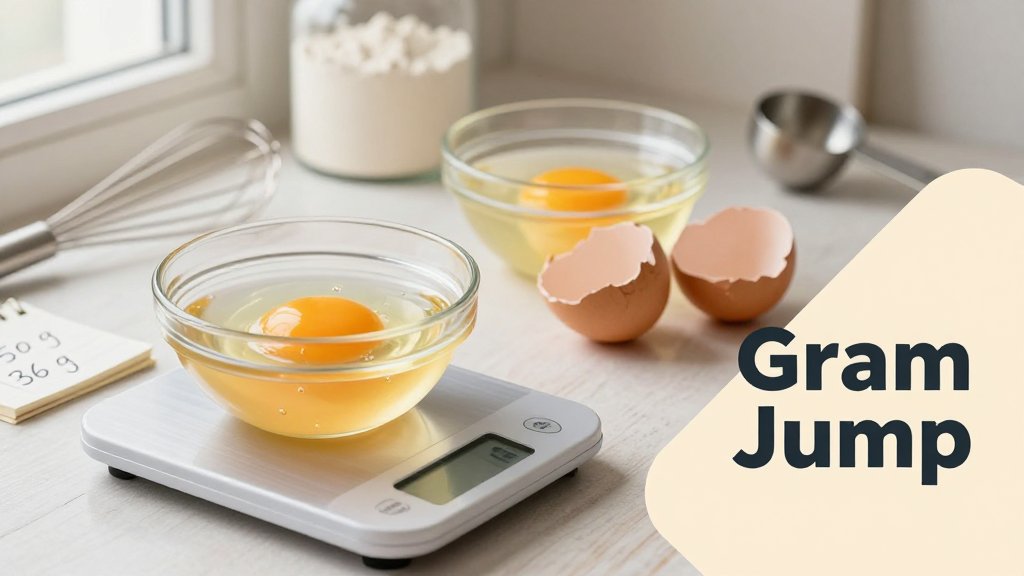
If a recipe calls for large eggs and you only have extra large, you are not alone, and it can change more than you think. A few grams per egg can affect moisture, structure, and bake times, especially in cakes, custards, and delicate batters. In this guide, you will get clear gram numbers for large versus extra large eggs, learn why the difference matters, and see simple swaps to keep your results on track. You will also get no-scale methods, including quick photo-based estimation.
Large vs extra large egg weight in grams
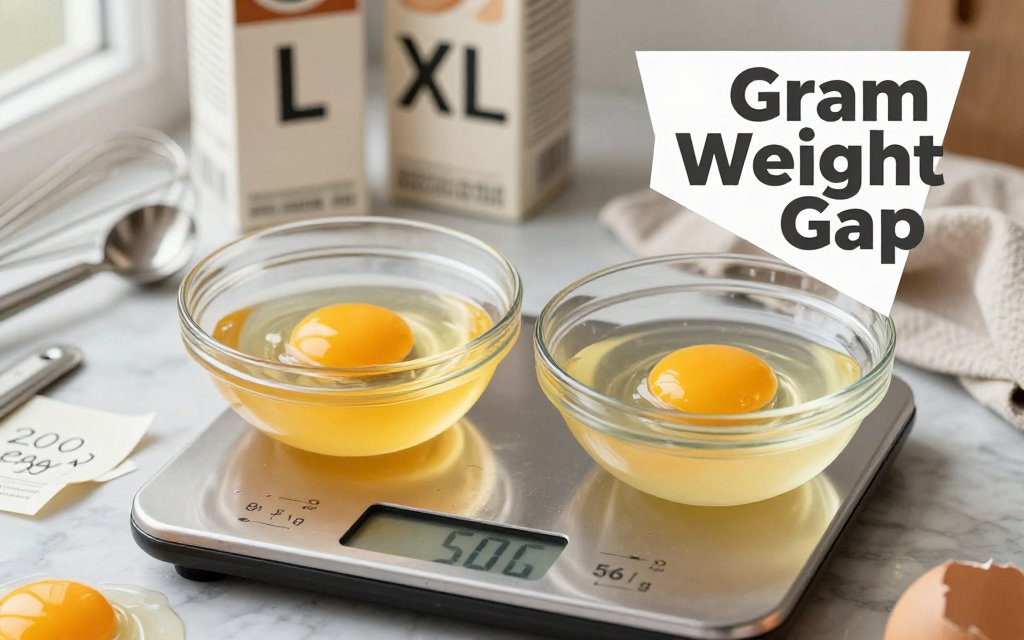
US large vs extra large is a small but real jump: plan on about a 6 g difference per egg (edible portion, without shell). A typical large egg yields about 50 g once cracked and emptied, while a typical extra large yields about 56 g. That sounds tiny until you are baking by weight or scaling a recipe up, because 4 eggs can quietly add about 24 g of extra liquid and protein. For small businesses, that same “a few grams” thinking can also sneak into shipping decisions, especially when you are trying to avoid paying for the next ounce bracket and you are also watching package volume for DIM weight USPS postage. The practical takeaway is simple: treat egg size as a range, not a single number.
The quick answer: typical grams for whole egg, white, yolk
Use these as dependable working ranges for the edible egg only (no shell, no carton math). For a whole cracked large egg, plan on about 48-52 g. For a whole cracked extra large egg, plan on about 54-60 g. If a recipe is written by weight (for example, “200 g egg”), this is why it stays consistent across brands. If a recipe is written by count (for example, “4 large eggs”), the grams can drift. Also remember that eggs are sized by the weight of the dozen, not by making every single egg identical, so one “large” can be on the small end while another in the same carton can be unusually hefty.
Separated eggs show the difference more clearly, and the white is the part that tends to swing more than the yolk. A large egg white typically lands around 30-34 g, while an extra large egg white is commonly 34-40 g. Yolks vary too, but usually in a tighter band: a large yolk is about 16-18 g, and an extra large yolk is about 18-20 g. If you are making macarons, angel food, meringue cookies, or any frosting that depends on a stable foam, you will feel white variation first. For custards and curds, yolk weight matters, but it usually changes less from egg to egg than the white does.
Here is a simple visual concept you can keep in your head mid-recipe: that 6 g “large to extra large” gap is about 1 teaspoon of water. So, if you crack three extra large eggs into a bowl instead of three large, you have roughly a tablespoon of extra egg in play. One short rule of thumb that stops most guessing is this: count eggs for flavor, weigh eggs for texture. If your cake is finicky (genoise, sponge, chiffon), crack the eggs into a cup, whisk briefly, then weigh out 50 g per “large egg” the recipe expects. If you do not have a physical scale handy, a photo-based estimator like Scale for Grams can help you sanity-check portions and avoid overshooting.
Baking by weight? Treat 1 large egg as 50 g edible egg. If you only have extra large, crack and whisk, then weigh out 50 g per egg called for. Your batter stays consistent.
Why two cartons labeled the same can bake differently
The most common mistake is assuming every “Large” egg is the same egg. In the US, egg sizes are standardized by the minimum net weight per dozen, not by guaranteeing each individual egg hits one perfect target. That is why a carton can include a slightly smaller egg and a slightly bigger one, as long as the dozen meets the class requirement. For example, large is tied to 24 oz per dozen and extra large to 27 oz per dozen in standard charts like the USDA shell egg guide. For bakers, that means two cartons labeled “Large” can still behave differently if one carton skews toward the low end and the other skews high.
Egg age also changes performance, even when the grams are close. Over time, eggs lose moisture through the shell and the air cell grows, which can slightly reduce the edible weight and also make the whites look looser when cracked. Older whites can be thinner and spread more in the bowl, and they can whip differently than very fresh whites. This is why meringue-based baking can feel inconsistent: one day your whites build a strong foam quickly, and the next day they seem to take longer or look a bit less glossy. Macarons and angel food cake are two classic examples where small differences in white behavior show up fast. Brownies, banana bread, and muffins are usually more forgiving.
Finally, there is natural variation from hen to hen. Breed, diet, and even seasonal patterns can change the ratio of white to yolk and how thick the albumen is. Two eggs can weigh the same 50 g without shell but act differently, especially if you rely on structure from proteins (foams, souffles, sponge cakes) instead of structure from flour and fat. If your recipe is sensitive, aim for grams first, then pay attention to texture cues: how quickly whites foam, whether peaks look stiff or droopy, and whether yolks look unusually large. If your recipe is not sensitive, keep it simple: large and extra large are interchangeable for most weekday cooking, and the only time you truly “need” precision is when texture is the goal.
Baking substitutions when you have the wrong eggs
You can usually “get away with it” when a recipe says “2 large eggs,” and you only have extra large, but the results can drift in predictable ways. Extra grams of egg add more water and more protein, which can tighten crumb in cakes, increase chew in cookies, and make quick breads set a little firmer. Too little egg can do the opposite, giving you more spread, less lift, and a drier bite. The fix is simple: stop thinking in egg count and start thinking in target grams of edible egg (the cracked contents, not the shell). Once you do that, you can swap sizes with confidence and keep your rise, crumb, and texture where the recipe intended.
Convert egg counts to grams for baking by weight
The method has two steps: (1) translate the recipe’s egg count into a target gram weight, then (2) add or remove egg to hit that number. A practical baseline for many home recipes is that 1 large egg (without shell) is about 50 g of edible portion, so “2 large eggs” targets about 100 g. Crack your eggs into a bowl, beat just until uniform (no need to whip in air), then portion out the exact grams you need. If you are baking away from your kitchen scale, you can still estimate portions by photographing the beaten egg in a known spoon or small cup and using an app like Scale for Grams to get close enough for most bakes.
Here is the most common situation: the recipe calls for 2 large eggs (about 100 g), but you only have extra large. If your extra large eggs are roughly 56 g each (edible portion), two of them may land around 112 g, so you are about 12 g heavy. The cleanest fix is the “partial egg” trick. Beat one of the eggs in a small bowl, then remove about 12 g (about 2 to 2.5 teaspoons, depending on density) and set it aside. Add the remaining beaten egg into your batter along with the other whole egg. This keeps the batter’s moisture and protein closer to the original formula, which helps your cake rise evenly and keeps cookies from turning cakey.
How precise do you need to be? For many butter cakes, muffins, brownies, and drop cookies, being off by about 5 to 10 g per egg is usually fine, especially if your recipe also contains strong structure builders like flour, sugar, and cocoa. You will mostly notice a small shift in spread and chew. For custards, lemon curd, pastry cream, and delicate sponge cakes, precision matters more because egg proteins are doing more of the setting. Too much egg can make custard rubbery or a sponge slightly tough; too little can make it slack, weepy, or prone to collapsing. If the recipe already feels “edge of failure,” treat egg grams like you treat gelatin, yeast, or salt, and measure carefully.
If your batter looks thicker than usual after adding eggs, do not panic. Pause, beat one egg in a cup, then add it by grams or teaspoons until the batter matches the texture you remember.
Quick swap cheat sheet for large vs extra large
If you want a fast rule, use the weight class standards as your anchor: in the US, large eggs are a minimum of 24 oz per dozen and extra large are 27 oz per dozen, which works out to about a 12.5 percent bump in egg mass across the carton. That is why “just use the same number of eggs” can quietly change your recipe’s hydration and protein. For quick math in the bowl, treat 1 large egg as 50 g edible portion and 1 extra large egg as about 56 g, then trim the difference with the partial egg trick. The swaps below keep your spread, rise, and crumb closer to the original target while staying easy to do mid-recipe. See USDA egg size standards for the official weight classes. (ams.usda.gov)
A couple of counterintuitive notes help you decide when to fuss and when to relax. Cookies often tolerate a few extra grams of egg better than cakes because flour and sugar structure dominate, and the extra egg just nudges chew and browning. Cakes and quick breads are less forgiving because the batter needs a specific balance of liquid, fat, and protein to trap gas and set at the right moment, which shows up as height and crumb. Meringues are weirdly tolerant of small gram differences in whites, but they absolutely hate fat contamination. If a recipe is “white-forward” (angel food, pavlova, macarons), separate carefully and measure whites by weight, rather than swapping whole eggs by count.
You should also separate whites and yolks instead of swapping whole eggs whenever the recipe uses them for different jobs. Yolks bring fat and emulsifiers that make batters smoother and richer, which can tighten a crumb and reduce spread. Whites are mostly water and protein, which build structure and lift when whipped, but can make a finished bake feel drier if you overdo them. So if your recipe says “3 egg whites,” do not assume “2 extra large eggs” is close, because you are adding yolk fat that can sabotage foam. Likewise, if it says “4 yolks” for a silky custard, whole eggs can water it down and change how it sets. In those recipes, weigh the specific part (whites or yolks) and treat the leftover parts as tomorrow’s scrambled eggs.
Weigh eggs without a scale using a photo
No kitchen scale, but the recipe still says “2 large eggs” or “150 g of egg”? The lowest-friction fix is to switch from guessing by “looks” to estimating edible grams. A photo-based scale app can get you close enough to bake confidently, especially when you crack the egg into a bowl first (so you are measuring what actually goes into the batter). This approach also helps when you are not baking. If you are tracking breakfast protein, packing a small parcel, or prepping jewelry orders, a few grams can matter, and a quick photo estimate beats the usual panic math.
The no-scale workflow that actually works at home
Here is the workflow that stays practical on a busy morning: crack the egg into a plain bowl, spread it out a little (a wider bowl makes the surface easier to “read”), then take a clear top-down photo in good light. If you can, include a reference object near the bowl (a coin or a credit card works) so the app can judge scale. In an app like Scale for Grams, estimate the grams of the cracked egg. Then beat it briefly with a fork and adjust: spoon out a little egg into a separate cup to reduce grams, or add more beaten egg (from a second egg) until you hit the recipe target.
The most common mistake is trying to eyeball egg volume in tablespoons. It sounds “exact,” but it fails because egg whites vary in thickness, they trap bubbles, and they foam differently depending on how fresh the egg is and how aggressively you stir. That makes a tablespoon of egg white a moving target. For fitness logging, that variation shows up fast: 1 extra large egg can be about 10 to 15 percent more edible mass than a small large egg, which can quietly bump calories and protein for the day. If your log assumes “large,” weighing by grams keeps your macro tracking honest.
If the egg is already cracked and mixed into something else, you still have two decent backups. Backup 1 is the “beat and portion” method: beat the egg well, then measure out what you need by removing small spoonfuls until your mix matches the target amount (this is easiest if the recipe gives grams, like 50 g per large egg). Backup 2 is a volume-only emergency method: use a marked measuring spoon or cup to portion a consistent amount for your recipe, then expect small texture differences and compensate with mixing time and bake time. Photo estimates are still better because they aim for edible grams, not foam.
This “photo to grams” habit transfers well beyond the mixing bowl. Fitness example: you can crack eggs for scrambled eggs, estimate the grams, and log exactly what you ate, even if one yolk is unusually large. Shipping example: if you sell small items, like a set of earrings in a padded mailer, being off by a few grams can push you over a postage step once you add tissue, a thank-you card, and tape. Jewelry packaging example: a little zip bag plus a tiny box might feel weightless, but adding two foam pads and a thicker insert can change the total enough to affect shipping labels and inventory counts. Estimating grams from a quick photo helps you stay consistent when you do not have a scale nearby.
Beat the egg, snap one clear top-down photo, and trust grams, not tablespoons. Egg white foams and yolks spread differently, so volume lies. Grams stay consistent, recipe after recipe, even if your bowl is oversized.
How many grams in a large egg without the shell?
A US “large” egg is defined by carton weight, not by one perfect egg, so individual eggs vary. The official minimum for large is 24 oz per dozen (about 56.7 g per egg in the shell), and extra large is 27 oz per dozen (about 63.8 g in the shell), per USDA egg size weights. Once you remove the shell, a practical baking number for a large egg is about 50 g edible (often 48 to 52 g). Takeaway: if a recipe needs 100 g egg, you are aiming for about two large eggs worth of edible mass.
How much do egg whites and yolks weigh in grams?
For a typical large egg (no shell), a reliable rule of thumb is about 30 to 33 g for the white and about 17 to 18 g for the yolk, totaling roughly 50 g edible. Extra large eggs usually scale up a bit, often landing around 34 to 38 g white and 19 to 21 g yolk, depending on the hen and the carton. Practical takeaway: if your recipe wants “2 yolks” for custard, you are usually targeting about 34 to 36 g yolk total. If you are separating eggs, you can photograph the separated white or yolk in a small bowl and estimate each part in grams for tighter control.
If a recipe calls for large eggs, how do I substitute extra large?
Substitute by edible grams, not by “one egg equals one egg.” If your recipe assumes 1 large egg is about 50 g edible, an extra large egg often gives you about 56 to 58 g edible. That means you usually remove about 6 to 8 g from one beaten extra large egg to match one large egg. For two large eggs (about 100 g edible), beat two extra large eggs together, then spoon out about 12 to 16 g into a separate cup before mixing into your batter. Practical takeaway: this matters most in tight formulas like macarons, sponge cakes, and custards, where extra egg can make the texture rubbery or too wet.
Need to weigh something fast, or confirm your eggs without pulling out a scale? Download Scale for Grams to get an AI-powered weight estimate from a photo in seconds. It is a practical way to double-check ingredients when you are baking, meal prepping, or adjusting a recipe on the fly. Grab the app here: iOS, then snap a photo and get a quick estimate.
Scale for Grams
Need to Weigh Something?
Download Scale for Grams and get an AI weight estimate from a photo in seconds.