How Much Do Boxed Sneakers Weigh for Shipping
Need a realistic boxed sneaker shipping weight estimate without a scale? This guide gives weight ranges in grams and ounces for common sneaker types, then shows how to estimate the total shipped weight including shoebox, outer box, and packing so you can buy labels confidently on USPS, eBay, Mercari, or Pirate Ship.
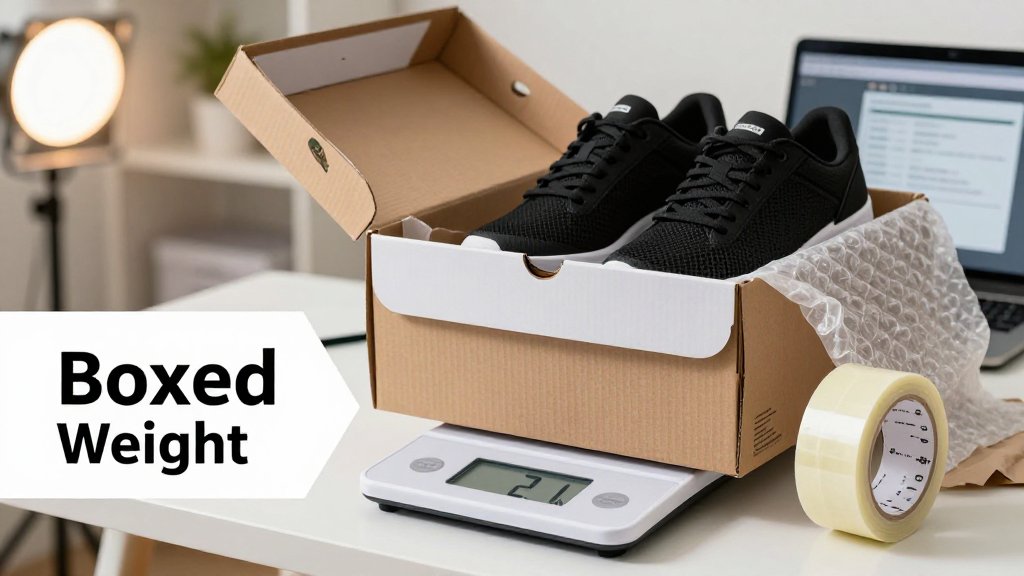
Getting the shipping weight of boxed sneakers wrong can mean surprise postage fees, rejected labels, or an annoyed buyer waiting on a delayed package. The tricky part is that the shoes are only part of the total, the retail shoebox, outer carton, and padding add up fast. In this guide, you will see practical weight ranges for common sneaker types, then learn a simple add-it-up method you can use even without a scale. You will also get a quick photo-based estimate option for last minute shipping.
Average boxed sneaker weights you can plan for
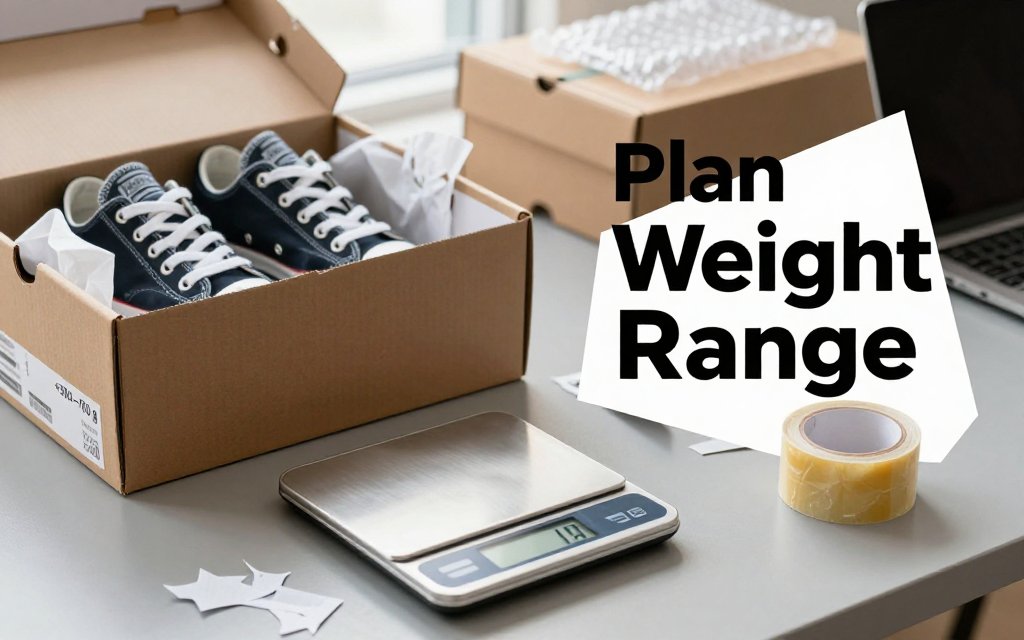
Most adult low-top sneakers shipped in their retail shoebox usually land around 1.4 to 2.6 kg (about 3.1 to 5.7 lb) before the outer shipping box. That is roughly 1,400 to 2,600 g, or about 49 to 92 oz. If you sell online, that baseline is the number you can quote and plan around, because it covers the two big constants: two shoes plus the retail box. What it does not include (and what people forget) is the shipping carton, packing paper, bubble wrap, tape, and the label pouch, which commonly pushes the final shipment into the next pound tier.
Plan your postage using two numbers: the sneakers-in-shoebox weight and the fully packed shipping weight. Most surprises happen in the outer carton. Add 300 to 700 g for box, padding, tape, and label.
Quick reality check: most labels fall in this range
That 1.4 to 2.6 kg range exists because sneakers vary a lot in materials and build. A breathable mesh runner with foam cushioning can be dramatically lighter than a leather lifestyle shoe with a thick rubber cupsole. Size matters too: a US men’s size 12 pair often adds noticeable weight versus a size 7, even in the same model, simply due to more upper material and a bigger outsole. The safest way to use this range is to treat 1.4 kg (49 oz) as your “light” benchmark and 2.6 kg (92 oz) as your “heavy” benchmark for adult pairs that are already in the retail shoebox.
Here is a practical breakdown you can keep in your head for quick estimates. The shoes alone are commonly around 1,100 to 2,200 g (about 39 to 78 oz) for adult low-tops, depending on whether they are knit and foam heavy or leather and rubber heavy. The retail shoebox often contributes about 250 to 450 g (about 9 to 16 oz) by itself. That means a “typical” pair where the shoes are around 1,600 g and the shoebox is around 350 g lands near 1,950 g total (about 4.3 lb) before you add any extras or an outer shipping box.
If you want a quick gut-check using examples, think in categories. Lightweight running-style shoes often sit closer to the 1.4 to 1.8 kg packed-in-shoebox zone (about 3.1 to 4.0 lb) in common adult sizes. Chunkier retro or skate-style shoes often land closer to 2.1 to 2.6 kg (about 4.6 to 5.7 lb) in the same “shoes plus shoebox” setup. If you are estimating without a physical scale, it helps to get comfortable doing this kind of two-part thinking, similar to how makers plan materials with filament spool weight estimation before starting a print.
What adds weight besides the shoes
The “small stuff” can still move your shipment into a higher bracket, especially when you are near a cutoff. Tissue paper is usually light, but it is not zero: call it roughly 10 to 30 g (about 0.4 to 1.1 oz) depending on how much is stuffed in. Extra laces often add around 15 to 40 g (about 0.5 to 1.4 oz). Cardboard inserts, toe-stuffing paper, hang tags, and silica packs can add another 10 to 60 g (about 0.4 to 2.1 oz) combined. A cloth dust bag (more common with some fashion pairs) can be closer to 40 to 120 g (about 1.4 to 4.2 oz).
The most common mistake is underestimating the outer shipping box and void fill. A plain corrugated carton for a shoebox-sized shipment often contributes about 200 to 500 g (about 7 to 18 oz) depending on the box size and thickness. Add packing paper, bubble wrap, or air pillows and you can easily tack on another 50 to 250 g (about 1.8 to 8.8 oz). Tape and a label are small, but still real, often 15 to 40 g (about 0.5 to 1.4 oz). Also remember that carriers can price by “billable weight,” which can be affected by box size through dimensional rules, not just what it weighs on a scale, as explained in UPS weight and size guidance.
For planning, a simple workflow keeps you out of trouble: start with the shoes plus retail shoebox estimate, then add a realistic “shipping materials buffer.” If your boxed sneakers are around 1.9 kg (about 4.2 lb), it is smart to assume the final packed shipment will be around 2.3 to 2.6 kg (about 5.1 to 5.7 lb) once you include the outer carton and padding. If your boxed sneakers are already near 2.6 kg (about 5.7 lb), plan on crossing 3.0 kg (about 6.6 lb) after packing. Those are the moments where switching to a tighter box, using less void fill, or removing a double box can save real money.
Image concept (the quick visual people screenshot): a top-down flat lay showing four labeled piles with weights in both grams and ounces. Pile 1 is “two low-top sneakers” at 1,600 g (56 oz). Pile 2 is “retail shoebox” at 350 g (12 oz). Pile 3 is “extras” at 80 g (2.8 oz). Pile 4 is “outer box + padding + tape” at 450 g (16 oz). Next to it, show the total shipping weight adding up to 2,480 g (87 oz). It makes the point instantly: the outer carton is not an afterthought, it is often the difference between a comfortable estimate and a surprise charge.
Build a shoe shipping weight estimate without a scale
If you have ever had an eBay, Mercari, or Pirate Ship label get hit with a carrier adjustment, it is usually because the real shipped weight was a little higher than the label tier you picked. Carriers can also round up for billing, so tiny fractions matter at the edges. For example, UPS says it can round any fraction of a pound up to the next whole pound for packages, which is why 2.1 lb and 2.9 lb can both bill as 3 lb (see UPS weight rounding rules). The goal of this method is not perfection, it is a repeatable, conservative estimate that keeps you safely inside the label weight you buy.
The add-it-up method that prevents label underbuying
Use this simple formula and plug in defaults: Total shipped weight = shoes (pair) + shoebox + outer box + packing. For the shoes, choose a practical bucket: lightweight knit runners or minimalist trainers often land around 600 to 900 g per pair (about 1 lb 5 oz to 2 lb). Classic leather lifestyle pairs like Nike Air Force 1 or Adidas Forum styles are commonly 1,100 to 1,500 g (about 2 lb 7 oz to 3 lb 5 oz) depending on size. Bulky basketball or hiking shoes can push 1,400 to 1,800 g (3 lb 1 oz to 4 lb). Then add packaging: a typical retail shoebox is often 250 to 350 g, a plain corrugated outer box is often 250 to 450 g, and packing plus tape is usually 50 to 200 g.
Here is a conservative example you can copy. Suppose you are shipping a men’s size 10 pair of leather sneakers that feel “medium heavy,” so you estimate 1,300 g for the pair. Add 300 g for the retail box, 350 g for an outer box that fits with a little room, plus 120 g for paper fill, a label pouch, and a few generous wraps of tape. Total estimate: 1,300 + 300 + 350 + 120 = 2,070 g. That is about 4.56 lb (2,070 g divided by 454). On a platform where you must choose a clean number, you would buy a 5 lb label, not a 4 lb label, because your estimate is already conservative and you still want breathing room for size variation and extra tape.
Packing is where most “I was sure it was under 4 lb” mistakes happen. One crumpled sheet of kraft paper is light, but a thick wad of paper, bubble wrap around the whole shoebox, plus cardboard corner protectors can add up fast. Tape is sneaky too: if you do an H-tape on every seam and wrap the box like it is going overseas, you can easily add a few dozen grams, and that matters when you are hovering near 15.9 oz, 2 lb, or 4 lb tiers. A good habit is to keep your packing plan consistent. If you always use the same outer box size and the same two sheets of paper, your estimates get accurate quickly, even without a scale.
One simple trick: estimate from photos when you are away from home
If you are sourcing at a thrift store, storage unit, or a friend’s house, take a quick top-down photo that helps you estimate dimensions and identify what class of shoe you are dealing with. Set the boxed sneakers on a flat surface, then place one known reference next to it in the same shot, like a sheet of US letter paper (8.5 x 11 in), a credit card, or a standard tape roll. Make sure the camera is directly above the box, and include the full edges so the box shape is obvious. An app like Scale for Grams can use visual cues from the photo to help you approximate size and object type, which makes your shoe plus packaging estimate faster and more consistent.
Once you have the photo estimate, pick a slightly heavier label tier that matches how you will actually pack it. Example: you photograph a boxed pair that looks like a lighter runner in a standard retail box, and your estimate comes out around 3.2 lb after adding an outer box and light packing. If your workflow screen shows 3 lb and 4 lb choices, buy 4 lb, especially if you know you tend to over-tape or double-box. If you later get home and the packed box feels smaller than expected, you can always void and rebuy the label before the carrier accepts it (platform rules vary). The photo step is about speed, and the label step is about safety.
USPS Ground Advantage weights and selling platform tips
USPS Ground Advantage is usually the go-to service for shipping sneakers because it covers most everyday shoebox-sized parcels without Priority pricing. The key is picking a weight that will not get corrected later. Ground Advantage pricing is based on weight, size, and shape, and USPS can also rate by dimensional weight for larger boxes. USPS even publishes a simple DIM formula for Ground Advantage (Length x Width x Height, divided by 166, in pounds), which is why a roomy box can price higher than you expect even if the shoes are not heavy. You can see those rules on the Ground Advantage pricing tiers page.
Carrier adjustments usually show up after the package is accepted and processed, not at the counter. USPS uses automated package verification to re-check weight and dimensions, and platforms and label services pass that charge back to you. That is why under-entering by even a few ounces can cost more than you saved, especially if it pushes you from just under 4 lb to just over 4 lb. On eBay, a common mistake is entering the item weight (shoes only) instead of shipping weight (shoes plus shoebox plus outer box plus all packing). On Mercari prepaid labels, choosing the wrong tier can lead to fees deducted from your sale. On Pirate Ship, the difference typically hits your account as an adjustment.
Common weight tier pitfalls for boxed sneakers
Boxed sneakers love to hover near the annoying breakpoints: 3 lb (about 1,360 g), 4 lb (about 1,815 g), and 5 lb (about 2,270 g). The shoes might be consistent, but packing choices are not. Double-boxing often adds 8 to 16 oz (225 to 450 g) once you include a larger outer carton and more void fill. Thick outer cartons (or reused subscription boxes) can add another 4 to 10 oz (115 to 285 g). Even small upgrades like adding cardboard corner protectors, extra tape wraps, or a printed packing slip pouch can be the difference between a safe 3 lb 14 oz label and a corrected 4 lb 2 oz bill.
Example that bites sellers: a chunky size 12 sneaker (think basketball silhouette with a heavy rubber outsole) weighs about 1,400 to 1,600 g for the pair (3.1 to 3.5 lb) before packaging. Add a thicker shoebox at 450 to 600 g (1.0 to 1.3 lb) and you are already at 1,850 to 2,200 g (4.1 to 4.9 lb). Now add a 16 x 12 x 6 inch outer box, paper, and tape, and it is easy to land around 2,300 g (just over 5.0 lb). Practical move: if your estimate is flirting with 4.8 to 5.1 lb, buy the 6 lb tier instead of hoping it squeaks by.
How much does a pair of shoes weigh with the box?
Most adult sneakers with the shoebox land around 1,600 to 2,400 g (3.5 to 5.3 lb). Lightweight runners can be closer to 1,300 to 1,800 g (2.9 to 4.0 lb), while chunky basketball or lifestyle pairs (especially larger sizes) commonly hit 2,000 to 2,700 g (4.4 to 6.0 lb) once boxed. Next action: add 225 to 450 g (0.5 to 1.0 lb) if you are also using an outer shipping box, then round up to the next whole-pound tier before buying a label.
What should I enter for eBay or Mercari shoe shipping weight?
Enter the shipping weight, not the shoe weight. A safe default for a standard adult pair in its shoebox, then put into a basic outer box, is 2,000 to 2,600 g (4.4 to 5.7 lb). For smaller sizes or light runners, 1,700 to 2,200 g (3.7 to 4.9 lb) is often realistic. Next action: if your estimate is within 4 oz (115 g) of a pound break, bump up one tier. On Mercari prepaid labels, choose the next higher bracket to avoid post-shipment fee deductions. On eBay or Pirate Ship, rounding up reduces adjustment surprises.
How much does a shoebox weigh by itself?
A typical adult shoebox is often 250 to 450 g (0.6 to 1.0 lb). Sturdier, thicker boxes (common with premium sneakers, boots, or larger sizes) can run 450 to 650 g (1.0 to 1.4 lb), especially if the lid and walls are reinforced. Next action: if you are trying to stay under a tier like 4 lb (1,815 g), swapping to a lighter outer shipping box and using minimal paper can matter more than you think. If the shoebox alone feels heavy, plan for the 5 lb tier right away.
Need to weigh something fast before you print a label? Download Scale for Grams and get an AI-powered weight estimate from a photo in seconds. It is a simple way to sanity-check a sneaker shipment when you do not have a scale nearby. Grab it here for iOS, then snap a picture and get a quick estimate to keep your shipping costs on track.
Scale for Grams
Need to Weigh Something?
Download Scale for Grams and get an AI weight estimate from a photo in seconds.