Ounces or Fluid Ounces, Convert Recipes Correctly
Confused by oz vs fl oz on recipes and labels? Learn the real difference between weight and volume, why 8 fl oz is not automatically 8 oz, and how to convert fluid ounces into grams for water, milk, oil, and more without ruining a bake.
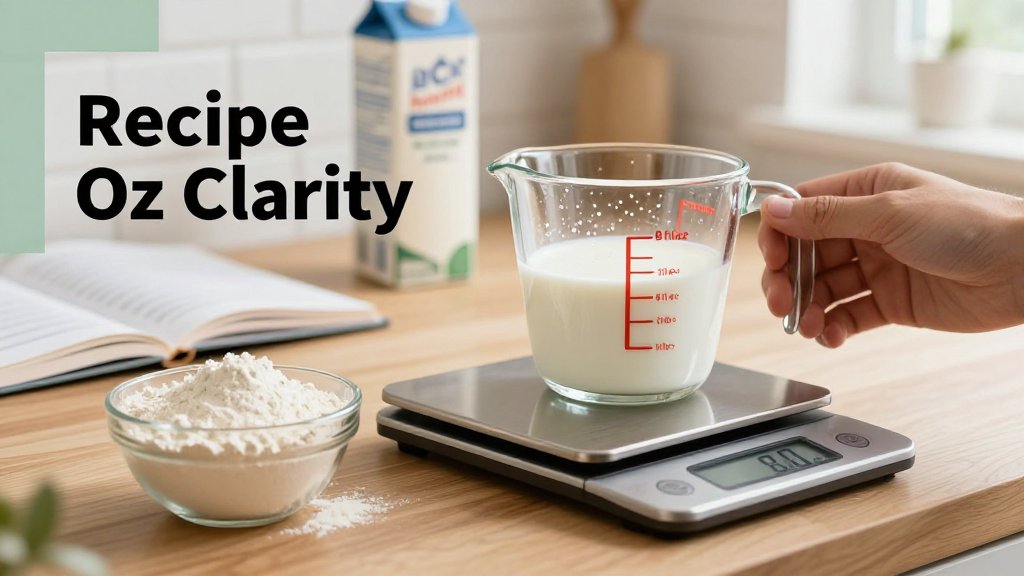
You are halfway through a recipe when you spot “8 oz” in the instructions, but your measuring cup says “8 fl oz,” and it feels like they should mean the same thing. Sometimes they do, and sometimes they can throw off your results more than you expect. In this guide, you will learn the difference between ounces and fluid ounces, when they match, and how to convert common ingredients to grams with an ingredient-aware approach. It is useful for baking, meal prep, shipping, and more.
Ounces vs fluid ounces, what is the difference
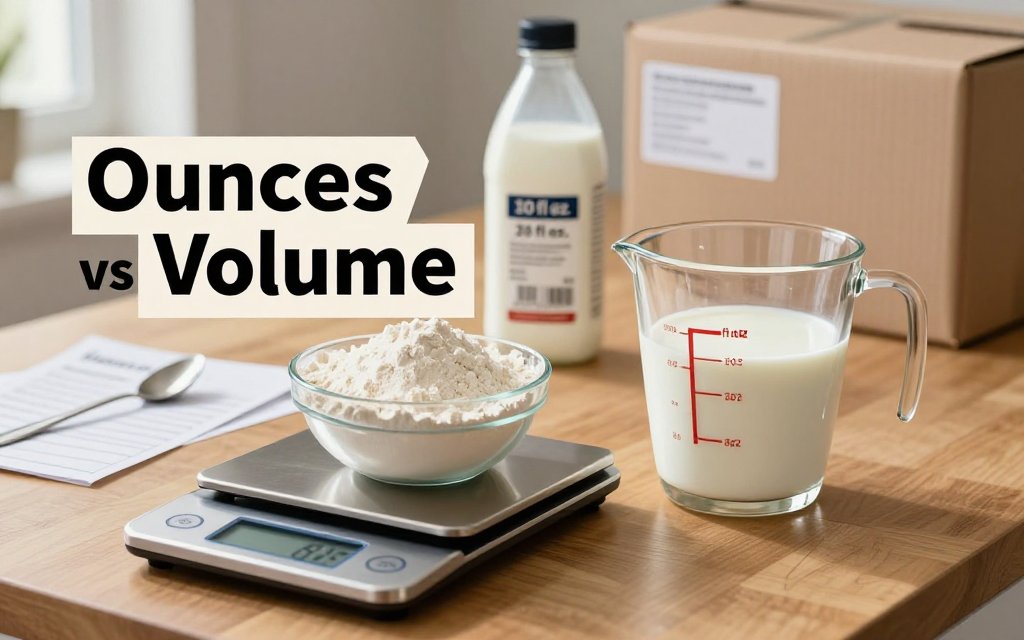
Picture two tools on your counter: a digital kitchen scale and a glass measuring cup with lines on the side. If you are reading “oz” (ounces), you are in scale territory, because ounces measure weight. If you are reading “fl oz” (fluid ounces), you are in measuring-cup territory, because fluid ounces measure volume. The quote-worthy takeaway is simple: fluid ounces measure how much space a liquid takes up; ounces measure how heavy something is. That one sentence prevents a lot of kitchen disasters, shipping overcharges, and portion-tracking guesswork, especially when you are bouncing between recipes, package labels, and nutrition info.
The mix-up happens because “oz” is printed everywhere, and people often skip the tiny “fl.” Recipes might say “8 oz milk” (but mean fluid ounces), beverage bottles shout “20 fl oz” on the front, and measuring cups are labeled in cups, ounces, and milliliters even though they only measure volume. Shipping adds another twist: carriers charge by weight, so “16 oz” on a shipping label is always weight, not “16 fl oz” of space. If you want a fast mental shortcut for everyday groceries, bookmark the banana weight per piece cheatsheet so you can sanity-check amounts even without a physical scale.
Oz means weight, fl oz means volume
“Oz” is a weight unit, and “fl oz” is a volume unit. If you bake by weight, this is your home base: ounces (and grams) belong on a scale. Grams are always weight, never volume, which is why so many serious baking recipes switch to grams for consistency. Quick examples: “8 oz flour” means you weigh flour until the scale reads 8 oz (about 227 g). “8 fl oz milk” means you pour milk up to a line on a measuring cup (about 1 US cup). The common label trap is drinks: the front label shows fluid ounces, while the Nutrition Facts panel often lists serving sizes in grams for things like cereal, chips, or protein powder.
A practical way to stay out of trouble is to decide what you are trying to control. Bakers control ratios by weight, because a “cup” of flour can vary a lot depending on how you scoop. Small business shippers control postage by weight, because a box can be big but still light (or small and surprisingly heavy, like hardware or jewelry). Fitness folks control portions by weight, because “1 fl oz of nuts” is basically a measuring-cup illusion. If you are away from your scale, a photo-based estimator like Scale for Grams can help you get a quick reality check in grams or ounces, then you can adjust before you commit to a recipe, a label, or a shipment.
If the unit is oz, grab a scale. If the unit is fl oz, grab a measuring cup. Only water is close to 1:1, and even then US and UK fluid ounces differ.
Why 8 fl oz is not 8 oz most of the time
The reason is density, which is just a simple idea: the same amount of space can hold lighter or heavier stuff. In the US system, 1 fluid ounce is 29.57353 mL (so 8 fl oz is about 236.6 mL) based on NIST liquid volume factors. Water is the “close enough” exception people remember: 236.6 mL of water weighs about 236.6 g, which is about 8.35 oz by weight. Oil is lighter, so 8 fl oz of vegetable oil is roughly 218 g (about 7.68 oz by weight). Honey is heavier, so 8 fl oz of honey can be roughly 336 g (about 11.85 oz by weight).
Solids make the confusion even worse because volume gets distorted by air gaps. “8 fl oz of shredded cheese” is not a reliable instruction, since fluffy shreds trap air and pack differently every time. One person’s 8 fl oz measuring cup of shredded mozzarella might weigh 3 oz, another might weigh 4.5 oz, and neither is “wrong” because the volume line does not know how much air is inside. The safest move is to weigh solids in grams or ounces, and to treat fluid ounces as a liquid-only tool unless a package specifically tells you otherwise. Also remember the context details: US fluid ounces are not the same size as UK imperial fluid ounces, and temperature can slightly change the volume and density of liquids.
How to convert fluid ounces to grams correctly
Fluid ounces (fl oz) measure volume, grams measure weight, so you cannot do a single “always correct” conversion without knowing what the ingredient is. 4 fl oz of water, 4 fl oz of honey, and 4 fl oz of olive oil all take up the same space in a measuring cup, but they do not weigh the same in grams. That one idea prevents most recipe disasters, especially in baking where a few grams can change dough hydration or a batter’s thickness. It also helps outside the kitchen: shipping labels and jewelry listings are always about weight, so if you only know a container’s volume, you still need the material inside to estimate grams.
Step-by-step method that prevents recipe mistakes
Here is the repeatable playbook, and the conclusion up front: you cannot convert fl oz to grams accurately without the ingredient (or at least a good density estimate). Start by checking the recipe language. Does it say “by weight” anywhere, list grams in parentheses, or give a baker’s percentage? If yes, use the grams and ignore the fluid ounce line. If it only gives fluid ounces, assume it is talking about a liquid measured in a cup, not a dry ingredient like flour or cocoa, then convert volume to milliliters and finally to grams using density.
For baking, this workflow matters because volume is squishy and weight is not. Flour is the classic trap: a “cup of flour” can swing a lot depending on scooping, sifting, and how packed it is, but 120 g of flour is 120 g every time. Fluid ounces show up most often for water, milk, cream, syrups, and oils. If you see “8 fl oz” in a bread recipe, treat it like “1 cup liquid,” then compute grams so your hydration is repeatable. If you do not have a physical scale handy, a photo-based estimator can be a quick double-check, but density still controls the fl oz to grams math.
The same thinking helps small business shipping and jewelry work. Weight is what postage and product listings care about, not container size. A 2 fl oz bottle of fragrance oil and a 2 fl oz bottle of water do not weigh the same, even before you add the bottle, cap, and label. If you are trying to estimate total shipment weight in grams, separate the problem into two parts: contents weight (volume × density) plus packaging weight (the actual container and padding). For jewelry makers mixing resin, plating solution, or polishing compound by volume, converting to grams makes it easier to repeat a “successful batch” exactly and document your process.
Quick reference examples, water milk and oil
Use water as your baseline because it makes the math intuitive. The official constant you need is volume first: according to a NIST conversion table, 1 US fl oz is 29.57353 mL. Water is about 1 g per mL in the kitchen, so 1 US fl oz water is about 29.6 g. Scale that up: 8 US fl oz water (1 US cup) is about 236.6 g. Milk is slightly heavier than water, roughly 1.03 g/mL for whole milk, so 1 US fl oz milk is about 30.5 g and 8 US fl oz milk is about 244 g. These are close, but not identical, which is why ingredient matters.
Common cooking oils are slightly lighter than water. A typical neutral vegetable oil is around 0.92 g/mL, so 1 US fl oz oil is about 27.2 g (29.5735 × 0.92), and 8 US fl oz oil is about 217.8 g. In real cooking, being off by 3 g to 5 g in a soup, stew, or salad dressing is usually fine. In macarons, laminated pastry, or bread hydration, those “few grams” can change how a batter pipes or whether a dough turns sticky. Also keep the two ounce systems separate in your head: “oz” to grams is straightforward because it is weight, and 1 oz equals 28.35 g, no density lookup needed.
Recipe and shipping conversions, avoid oz fl oz confusion
The oz vs fl oz mix-up usually shows up in two places: the kitchen and the post office. I have done both. I once poured “8 oz” of milk into a batter using a liquid cup that only shows fluid ounces, then wondered why the cake baked up dense. Another time, I guessed a package was “about 8 oz,” bought postage, and got the dreaded “postage due” message later. The fix is simple once you treat oz as weight and fl oz as volume, then slow down for anything that can be either, like milk, oil, and honey.
For baking conversions, think in grams first, then work backward only if you have to. If a US recipe calls for 12 oz flour, that is 12 oz by weight, which is about 340 g (since 1 oz is 28.35 g). If it calls for 8 oz chocolate chips, weigh out 227 g and move on. The tricky part is liquids written as “oz” with no “fl.” Water and milk are close to 1:1 between fluid ounces and weight ounces, but not exact, and ingredients like oil and honey are not close at all. (ninjaunits.com)
FAQ: Why does my recipe say oz but my measuring cup shows fl oz?
Rule of thumb: if the recipe says “oz,” it generally means weight, unless it explicitly says “fl oz” or “fluid ounces.” So “4 oz cream cheese” goes on a kitchen scale, not in a liquid cup. If it says “8 fl oz water,” use a liquid measuring cup (or weigh 227 g if the recipe supports grams). One caveat: some older US recipes casually write “oz” for liquids, especially for milk or water, which is a known source of confusion. If the ingredient is pourable and the recipe is old, look for context like “1 cup (8 oz).”
FAQ: How do I convert fl oz to oz by weight for a specific ingredient?
You need the ingredient’s density. Conceptually: weight ounces = (fluid ounces) x (density relative to water) x (about 1.043 oz per 1 fl oz of water). In normal language, you cannot convert fl oz to oz by weight without knowing what the liquid is, or using a trusted chart. Quick examples: 8 fl oz of water is about 8.3 oz by weight (8 x 1.043). Oil will weigh less than that for the same 8 fl oz, while honey will weigh more because it is denser than water. (ninjaunits.com)
FAQ: Should I use grams or ounces when baking, and why?
Use grams for baking whenever you can. Grams give repeatable results, less cleanup (one bowl on a scale), and fewer measuring errors, especially with dry ingredients that pack differently. Flour, cocoa, powdered sugar, and nut flours can swing a lot by volume depending on scooping and humidity, so “1 cup” is not as stable as “120 g.” Butter and water are more consistent by volume, but still faster in grams when you are stacking ingredients. Practical tip: if a recipe only gives cups, try to find the author’s gram list, or weigh your own “1 cup flour” once using your preferred scoop method and write that number in the recipe margin.
Beverage labels are the opposite situation: they almost always mean fluid ounces, because the label is telling you volume. A 12 fl oz soda can is a volume statement, which is why it lines up with about 355 mL (12 x 29.5735). If you are tracking macros or mixing a drink, that volume helps, but your nutrition log might want grams. For water-like drinks, grams are close to milliliters (355 mL is about 355 g), but sugary drinks will be a bit heavier. If you want a reliable reference for the base conversion itself, NIST publishes the factor in its fluid-ounce to mL chart. (nist.gov)
For shipping, carriers charge by weight in ounces and pounds, not fluid ounces, so your goal is always “oz on a scale.” A small jewelry order is a perfect example: a 0.2 oz (about 6 g) pendant can jump to 3 oz total once you add a jewelry box, tissue, and a bubble mailer. Packages also love to land right near cutoffs, like 3.9 oz or 8.1 oz, so rounding mistakes are expensive. If you do not have a scale handy, Scale for Grams (the iOS photo-based digital scale app) can help you estimate weights for food portions, jewelry, and small packages from a photo, then you can sanity-check before you buy postage. For final labels, still weigh once when you can, especially for anything over 1 lb.
Need to weigh something fast without digging out a scale? Download Scale for Grams and get an AI-powered weight estimate from a photo in seconds. It is a practical backup for quick kitchen checks, portioning, and everyday estimating when you are short on time. Grab it here: iOS. Install it now and get a clearer answer the next time “oz” leaves you guessing.
Scale for Grams
Need to Weigh Something?
Download Scale for Grams and get an AI weight estimate from a photo in seconds.