Crystal or Glass? Identify Stemware Using Weight Clues
Not sure if that thrifted wine glass is real crystal or just regular glass? Use weight clues plus a few quick, low-risk at-home checks to identify crystal stemware and avoid overpaying, even when you do not have a physical scale handy.
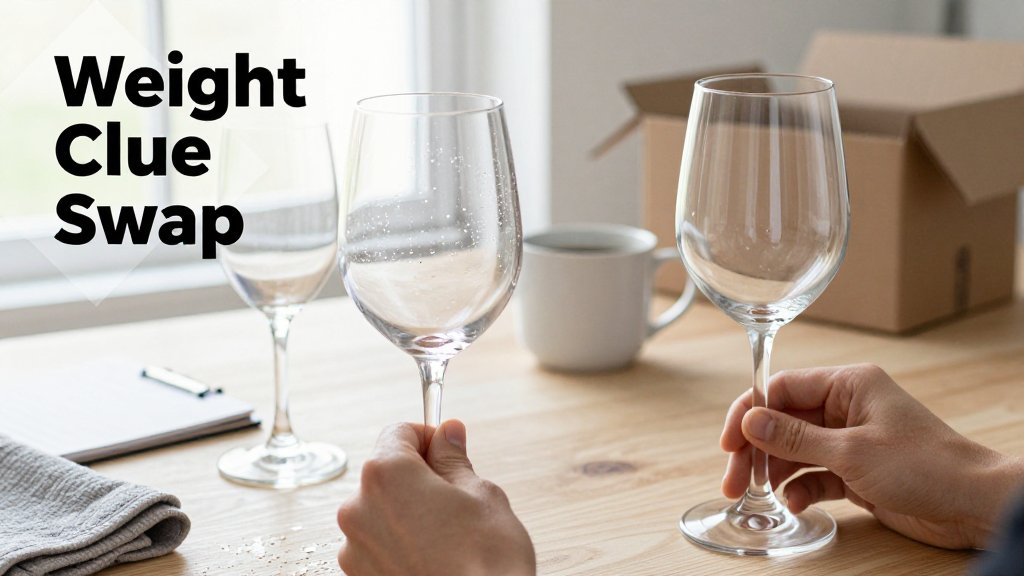
Found a set of stemware at a thrift shop or estate sale and wondering if it is true crystal or just regular glass? That distinction can affect value, durability, and even how you care for it. In this guide, you will learn simple weight-first clues that help you identify stemware fast, even before you look for patterns or maker marks. We will cover what crystal usually feels like in hand, common weight-related mistakes, and how to make a reliable call when you do not have a scale nearby.
Crystal vs glass weight test for stemware
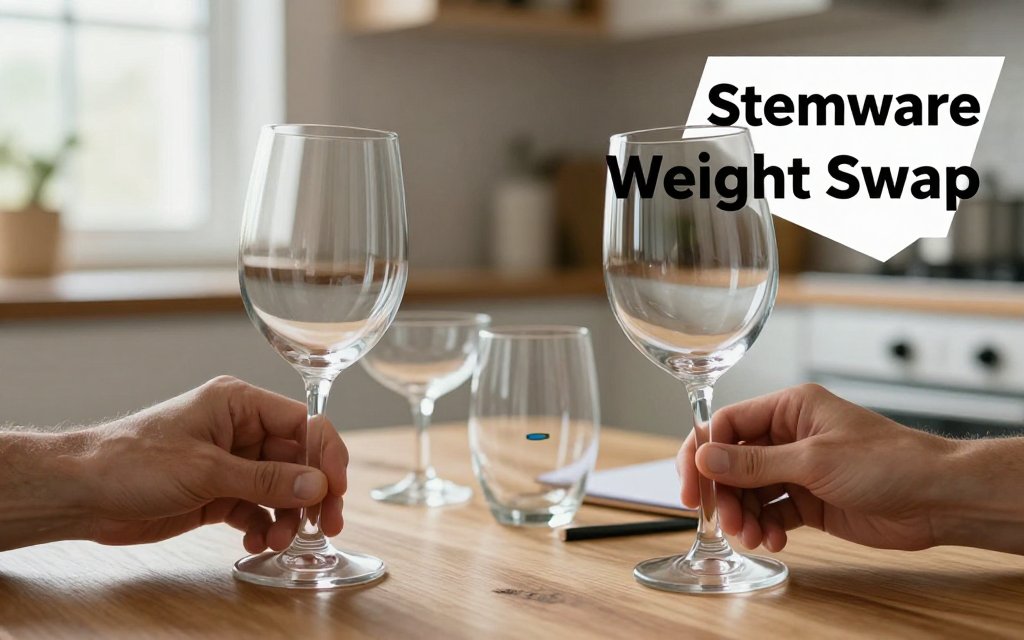
The fastest practical clue for thrift-store stemware is weight: crystal often feels heavier for its size, even when the walls look thin. The trap is that shape can trick you. A wide bowl, a thick rim, or an extra-heavy foot can make ordinary glass feel “fancy,” while some true crystal pieces are surprisingly delicate-looking. Think of weight as a short screening test, not a verdict. Your goal is to compare apples to apples, then decide whether the glass deserves a closer look (brand marks, pattern, ring test, light refraction, and condition). This approach is especially useful when you are sorting a mixed box of wine glasses, champagne flutes, and coupes and you just need a reliable first pass in under a minute.
Use a same-size comparison, not a gut check
The most reliable at-home method is a same-size comparison: pick one “suspect” stemware piece and compare it to a known regular glass that is close in height and bowl width. A common mistake is comparing a thick-rimmed bar glass (built to survive drops) to a thin, tall wine glass, then assuming “heavier must mean crystal.” That is not a fair match. Instead, use a baseline you trust, like a basic Libbey or IKEA wine glass, and find a second glass that looks nearly identical in silhouette. If both are about 9 inches tall with a similar bowl, a noticeable weight difference becomes meaningful. If one has a much thicker rim or a wider base, the comparison gets noisy fast.
Here is a simple script that removes the “maybe it is just my imagination” factor. Hold one glass in each hand at the same time, by the stem or just above the base so your grip is consistent. Pause for two seconds, then swap hands. Swap again. If the same glass feels heavier in all three holds, you have a real clue. If your results flip around, the pieces are probably close in weight, or the shapes are too different to compare confidently. If you want a quick reality check with a known heavy object, even kitchen gear helps. For example, people often remember how dense cookware feels; the cast iron skillet weight chart can recalibrate your sense of what “heavy for its size” actually means.
What weight clues can tell you in 10 seconds
Weight clues work because many crystal formulations are denser than everyday soda-lime glass, so the piece can feel more substantial without looking chunky. In practice, crystal stemware often has a “denser feel” in the bowl and a more substantial base for stability, while regular glass often feels lighter up top and only gains weight where it is thickened for strength. A usable rule of thumb is this: if two 9 inch wine glasses look the same size and one feels noticeably heavier, it is a crystal candidate, not a guarantee. As a concrete example, a basic 9 inch, 12 to 16 oz capacity wine glass might weigh roughly 140 to 180 g (about 5 to 6.5 oz), while a similar-size crystal look-alike might land closer to 200 to 260 g (about 7 to 9 oz). Those ranges overlap, so you are looking for “obvious,” not “barely.”
Use weight as a comparison tool, not a verdict. If two stemmed glasses match in size and one feels noticeably heavier at the bowl and base, flag it as a crystal candidate, then confirm with other checks.
What weight cannot tell you is just as important, especially for antiques and thrift finds. Heavier does not automatically mean “older,” “more valuable,” or “safe to serve acidic drinks from.” Thick pressed glass from the mid-1900s can be very heavy, and some modern “crystal” is lead-free, which can reduce the weight difference you expect. Repairs also distort the test: a replaced foot, a glued base, or even heavy mineral buildup from hard water can add grams in the exact places you feel first. Use weight to sort pieces into “check again” and “probably standard glass,” then look for supporting signs. Even museum conservation guidance notes that lead crystal is heavier than soda-lime glass, but that statement describes a tendency, not an authentication stamp.
Weight clues that fool people at thrift stores
You are at a thrift store with one minute left before checkout, holding two “crystal” wine glasses someone dropped on the endcap by the register. One feels satisfyingly hefty, like it should cost $12 each. The other feels almost too light, like it belongs in a starter set. A handwritten tag says “CRYSTAL, $8” with no brand, no box, and no clue if that label came from the original maker or a hopeful donor. This is exactly how people overpay: we equate heavy with high-end, and light with cheap. In reality, weight can be a design choice, not a material clue. If you only use the “heavier equals crystal” shortcut, a thick everyday goblet can beat a delicate flute on the scale and still be plain glass in disguise.
Thickness, base size, and cut patterns change everything
A fast way to get un-stuck is to stop judging the whole glass and start judging where the grams are hiding. Picture a thick-walled “restaurant” goblet with a stubby stem and a wide foot. It can easily feel heavier than a slim, elegant flute that was designed to look airy on a table. Even without a scale, you can do a rough comparison: a typical smartphone is about 170 to 220 g, so if the goblet feels like “phone weight plus a bit,” it is probably carrying most of its mass in the base and bowl walls, not in some magical crystal formula. Thick rims (especially rolled rims), short chunky stems, and oversized feet are weight boosters that can make ordinary glass feel premium in your hand.
Cut patterns are another thrift-store trap. Deep cuts and heavy faceting add real material, so a heavily cut bowl can feel “expensive” even if it is not leaded crystal. Run a fingertip along the cut: if you feel wide flats and deep valleys, that is extra glass. Then look at the base from the side. A base that is thick like a hockey puck will dominate the weight and shift the center of gravity downward, which reads as “quality” to your brain. In your one-minute decision window, focus on three visual tells that explain weight without guessing the composition: a thick foot, a thick stem, and a thick rim. If all three are chunky, weight alone is not a meaningful upgrade signal, it is just extra material.
Lead crystal vs glass differences, without scary chemistry
Crystal can be denser than everyday soda-lime glass, so yes, some crystal stemware really will feel heavier at the same shape and thickness. The catch is that labels are messy. “Crystal” on a sticker does not always mean “lead crystal,” and “lead crystal” is the only phrase that reliably implies a traditional leaded formulation. In the European Union, trade descriptions for crystal glass are tied to measurable thresholds (including lead oxide percentage and density) in the EU crystal categories rules, which is why some packaging is very specific about terms like “lead crystal” versus “crystalline.” (eur-lex.europa.eu)
Here is the non-scary takeaway: leaded crystal is often heavier because leaded formulations tend to have higher density than standard soda-lime glass, but density is not the same thing as “the glass feels heavy.” Many heavy glasses are heavy because they are thick, and many true crystal glasses are light because they are thin and well-made. Typical density figures cited for soda-lime glass cluster around roughly the mid 2 g/cm3 range, while lead crystal is often cited around 3 g/cm3 or higher, which is a big difference in the lab. (infinitalab.com) In a thrift store, though, a thick base can overwhelm that material difference. Practical rule: use weight as a filter, then confirm with at least one other low-risk check before you pay a “crystal” price.
Modern crystal alternatives add another twist, because a lot of “crystal glass” on today’s shelves is intentionally lead-free and still looks brilliant. For example, RIEDEL says it has produced its crystal glass without using lead oxide as a principal ingredient since 2015, and also notes that many of its glasses are dishwasher safe (with proper loading). (riedel.com) Brands like Zwiesel also market lead-free crystal lines that use other oxides (commonly described as titanium and zirconium based) to boost durability and clarity. (houseware.ie) In other words, you can pick up a “crystal” glass that feels great and rings nicely, but it might not be leaded, and its resale value may hinge more on brand and pattern than on heft.
To avoid overpaying when you only have a minute, treat the decision like a quick triage. First, ask, “Is the weight coming from thickness or from material?” If it is thickness, you should pay “nice glass” prices, not “rare crystal” prices. Second, do one extra check that is low-risk in a crowded aisle: look for a maker’s mark or laser etch on the base, look for a very thin, clean rim (often a sign of higher-end manufacturing), and look for mold seams running up the bowl (a common sign of mass-market production). If you can, tap the bowl lightly with a fingernail. A longer, clearer ring can be a helpful hint, but do not treat it as proof. Weight is a clue, not a verdict.
One more thrift-store move that saves money is setting a personal price ceiling before you fall in love. If a single unbranded stem is $8 to $15 and you cannot confirm brand, set size, or condition, you are taking a gamble, especially once you factor in chips and the cost of replacing only one glass later. If it is a matched set of four and they all pass a fast inspection (even rims, no cloudy film, no cracks at the stem), paying more can make sense. If you want a quick weight reality check without carrying a scale, a photo-based estimator like Scale for Grams can help you sanity-check whether two similar-looking glasses are actually far apart in mass, which is useful when your hand-feel is being fooled by a thick foot or heavy cutwork.
Quick at-home checks plus photo weight estimates
Want a faster, more confident call than weight alone? Combine weight with two quick checks: a gentle ring test (sound) and a close look at the build details (seams, rim, and cut sharpness). If a wine glass feels heavy for its size, rings clearly, and has crisp, sharp-looking cuts, it often points toward crystal. If it feels comparatively light, sounds dull, and shows a faint mold-seam line running up the bowl or along the stem, it often points toward regular glass. For a practical comparison, two similar 8 to 9 inch goblets can feel very different in hand: one around 220 g can feel “normal,” while another around 380 g can feel noticeably weighty before you even think about the brand.
Crystal ring test and weight, how to do it safely
Do the ring test gently, and treat it as a clue, not a verdict. Hold the stemware by the stem (not by the rim), keep it over a folded towel, and lightly tap the rim with your fingernail or the thin edge of a wooden utensil. Many crystals give a clearer, longer ring, while many glasses give a shorter clink or a duller thunk. The key word is “many.” Thick, heavy glass can ring more than you expect, and thin crystal can sound quieter in a noisy room. A good refresher on the sound difference is in this crystal stemware guide.
If two glasses are the same size and one is clearly heavier, rings longer, and has sharper cut patterns, call it likely crystal. If it feels light, thuds, and shows a mold seam, call it glass.
Pair the ring result with a quick weight comparison for a stronger call. First, compare “feel weight” in one hand: swap between the mystery piece and a known everyday glass of similar height. Then, if you do have a kitchen scale, note the grams and compare within the same shape category. A basic, plain wine glass might land around 140 to 220 g, while a cut-style goblet that’s closer to 320 to 500 g often signals a denser material or heavier construction. Watch for traps: a thick base can add 80 to 150 g without being crystal, and extra-long stems can add weight while the bowl is still regular glass. That is why the sound plus build details usually settle the tie.
Is crystal heavier than glass, always?
Crystal is often heavier than glass, but it is not always heavier. The material can be denser, yet design matters just as much. A thin-walled crystal flute can feel surprisingly light, and a thick, heavy-base bar glass can feel heavy while still being regular glass. Use weight as a comparison tool: pick two similar shapes and sizes, then look for a noticeable jump, like 180 g versus 320 g. If weight is close, lean on the ring test and rim details instead. Also remember that “crystal” can mean lead crystal or lead-free crystal, and recipes vary.
How can I identify crystal stemware at home without tools?
You can get a strong at-home answer by using your eyes, your hands, and a careful tap. Start with the rim: many crystals have a thinner, more refined rim than everyday pressed glass. Next, inspect for a mold seam, especially running vertically up the bowl or around the foot, which is common on mass-produced glass. Then do a gentle ring test and compare “feel weight” against a known glass of similar height. Finally, check cut patterns: sharp, crisp-looking cuts that catch light cleanly often point toward crystal, while softer molded patterns can read more like glass.
How do I estimate the weight of glassware without a scale?
A photo-based estimate is your best fallback when you cannot put the stemware on a scale. With Scale for Grams (iOS), you can take a clear photo and get an estimated weight in grams, ounces, or kilograms, which is handy for antique listings, insurance notes, and shipping estimates. For better results, photograph the glass on a plain surface in bright, even light, and include a common size reference in the frame, like a US quarter (5.67 g) or a nickel (5.00 g). If you are shipping, do a second photo with packing materials visible, since bubble wrap and a small box can add 150 to 400 g fast.
Need to weigh something fast, even when you do not have a scale? Download Scale for Grams to get an AI-powered weight estimate from a photo in seconds, which is perfect for quick thrift finds and estate sale decisions. Try it now on iOS and start estimating weight on the spot, then use those numbers to compare crystal versus glass with more confidence.
Scale for Grams
Need to Weigh Something?
Download Scale for Grams and get an AI weight estimate from a photo in seconds.