No-Scale Pasta Portions: Spaghetti, Penne, Fusilli in Grams
No kitchen scale? You can still portion spaghetti, penne, and fusilli accurately enough for meal prep and tracking. This guide gives practical “hand and cup” methods, dry-to-cooked weight expectations, and a simple photo-based way to estimate grams fast.
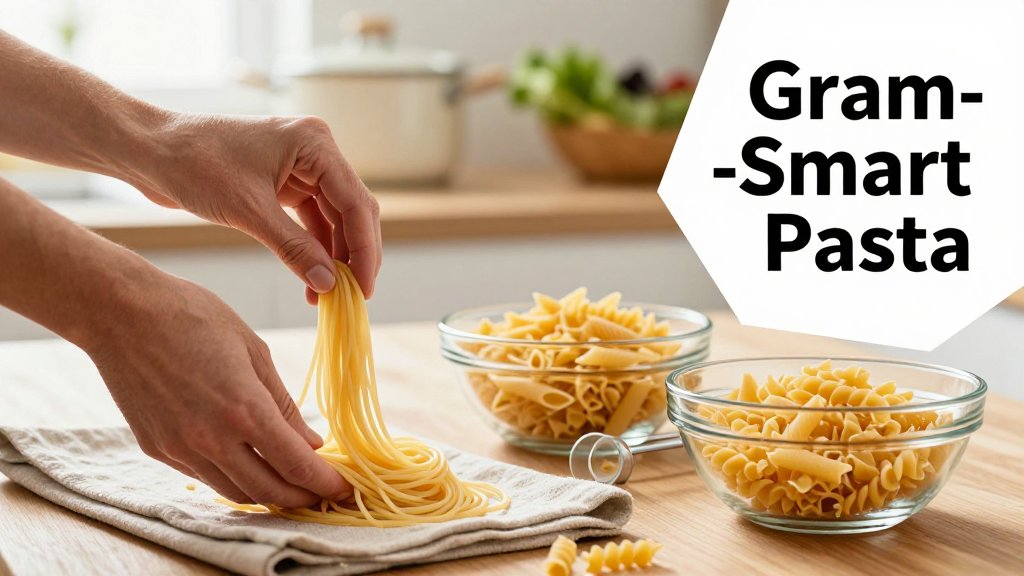
No kitchen scale should not mean mystery portions or a pot full of leftovers. Pasta is easy to overdo, and the difference between a light bowl and an overly large serving can be surprisingly small. In this guide, you will learn repeatable, no-scale ways to portion spaghetti, penne, and fusilli in grams and ounces. We will cover simple hand and cup methods for dry pasta, quick checks for cooked pasta, and practical targets for single servings, meal prep, and family batches.
Fast pasta portion sizes in grams, no scale
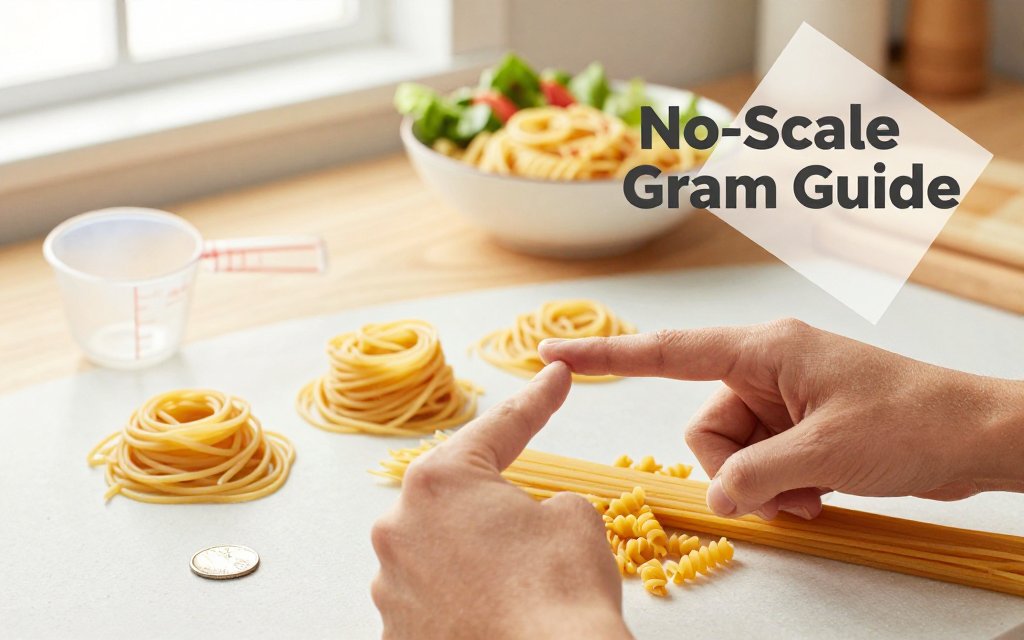
If you want the quick numbers first, start here: a common dry pasta portion is 56 g (2 oz) per adult. That is the serving size you will see on many US pasta boxes, and even Barilla calls 2 ounces (56 g) rule a solid rule of thumb. From there, adjust by appetite and context. For a lighter meal (big salad, lots of veggies, or you are tracking calories closely), 40 to 45 g dry is often enough. For a hungry crowd, athletes, or “this is the main event” pasta night, 75 to 85 g dry per person is a more realistic target.
The easy mistake is assuming “a bowl” or “a cup” means the same weight across shapes. Long pasta like spaghetti leaves a lot of air gaps, so it looks like less than it is. Short shapes like penne and fusilli settle into dense little stacks, so the same volume can weigh dramatically more, especially if you shake the measuring cup. Another common misjudge is dry versus cooked weight. Dry pasta nearly always gets measured for portions and nutrition labels, but cooked pasta is heavier because it absorbs water. If you are estimating portions from a photo (or a quick glance in the pot), start by getting consistent with dry grams first, then learn what that looks like cooked in your usual bowl.
Spaghetti: the hand-circle trick for grams
For spaghetti, skip the measuring cup and use the hand-circle trick. Make a circle with your thumb and index finger, then slide dry spaghetti through that ring until it fills the opening snugly. A handy household shortcut is using a US quarter as your reference: aim for a bundle that is about quarter-size across. As a practical estimate, that “quarter-size bundle” is a good match for about 56 g (2 oz) dry, which is why so many spaghetti portion tools use a similar opening size. Do not overthink the exact noodle count, focus on repeating the same circle size and how tightly you pack it.
Once you have that baseline bundle, scaling up and down is easy. For a lighter portion, make your finger circle slightly smaller (or fill it less densely) to land around 40 to 45 g dry. For bigger appetites, widen the circle a bit or add a second “half bundle” to reach 75 to 85 g. Example: cooking for two adults with different needs, you might portion one quarter-size bundle (about 56 g) plus a smaller bundle (about 45 g) in the same pot, then separate with tongs after cooking. If you are pairing with a heavy meat sauce, 56 g often feels plenty. If the sauce is olive oil and garlic, many people prefer the higher end.
Dry pasta is easiest to portion before it hits the pot. Pick a gram target, then match it with a repeatable shape cue (quarter-size spaghetti bundle, level cup of penne). Consistency beats guessing.
Penne and fusilli: why volume misleads you
Short pasta shapes (penne, fusilli, rotini) trick people because they pack like little bricks. A solid baseline is around 55 to 60 g dry per adult serving, which lines up closely with the classic 56 g (2 oz) target. The problem is that “one cup” is not a stable measurement. If you pour penne into a measuring cup and tap the cup on the counter, you can fit a lot more pasta into the same line. If you scoop and level gently, you trap more air. Between brands, shapes, and how dusty or rough the pasta is, that same cup can swing from looking modest to being an accidental double portion.
A more repeatable no-scale method for short pasta is the “level scoop” approach. Pick one container you already own, like a small mug or a 1 cup dry measuring cup, and always fill it the same way: pour in, do not shake, then level with the back of a knife. Do one calibration once by checking a pasta label or weighing with any scale you can borrow, then stick with that container as your personal reference. Also remember the quick conversion: 28 g = 1 oz, and 56 g = 2 oz. If a recipe calls for “4 oz penne,” that is about 112 g dry, which can look like a surprisingly large amount in a bowl before cooking.
Quick conversion reminder and the most common portion mix-ups
Two mix-ups cause most pasta portion confusion. First, people compare different shapes by volume instead of grams. A tall “cup” of fusilli can weigh more than you expect because it settles into tight spirals, while spaghetti needs a bundle measurement because it will not behave like a cup. Second, people eyeball cooked pasta, which is heavier because of absorbed water. If you want consistent portions for meal prep, fitness tracking, or food cost control, always start with dry grams: 40 to 45 g light, 56 g baseline, 75 to 85 g hearty. If you are estimating with a photo, focus on consistent lighting and a clear reference object, and avoid the accuracy traps covered in phone scale accuracy myths.
Dry pasta to cooked pasta weight: what to expect
A classic pasta-tracking mistake looks like this: you cook “one serving” of spaghetti, pile the cooked noodles into a bowl, see a big number in your food log, and assume bigger cooked weight means you ate more pasta. The opposite is usually true. After boiling, pasta is heavier mostly because it soaked up water. That water adds grams on the plate, but it does not add more dry pasta, flour, or calories. This dry-to-cooked jump is exactly why two people can start with the same 56 g (2 oz) of dry pasta, then end up with cooked portions that look wildly different depending on how long they boiled it and how well they drained it.
The reliable rule: cooked pasta is heavier, not more pasta
Here is the quotable rule you can rely on: cooked weight is a water story, not a pasta story. Most plain pasta ends up roughly 2 to 2.5 times the dry weight after cooking and draining, depending on shape and how soft you cook it. A simple example you can memorize is 56 g dry pasta (about 2 oz) turning into roughly 120 to 150 g cooked pasta. If you want a sanity check for spaghetti portions, many nutrition references treat 1 cup cooked spaghetti as about 140 g, and they also describe that cup as coming from about 2 oz dry spaghetti, which you can see in this USDA 1-cup reference.
If you only remember one thing, make it this: you cannot compare cooked pasta grams to dry pasta grams as equals. Boiling adds water weight, so the cooked number looks bigger even though you did not add more pasta.
Want realistic ranges by shape? Use dry weight first, then expect a cooked range. For spaghetti, 56 g dry often lands around 125 to 150 g cooked (long strands drain fairly well, but still hold plenty of water). For penne, 56 g dry commonly ends up around 130 to 155 g cooked because tubes trap water inside and between pieces. For fusilli, 56 g dry often finishes around 135 to 160 g cooked since the spirals cling to a thin film of water even after draining. Flip it around for leftovers: if your container has 150 g cooked penne, that usually represents roughly 60 to 75 g dry pasta, depending on how soft it was cooked.
That narrative mistake shows up a lot with fitness tracking. Someone cooks 56 g dry spaghetti, drains it, and the bowl of noodles weighs 140 g cooked. They mistakenly log 140 g dry spaghetti, which can more than double the calories they think they ate. The fix is a simple rule of thumb: log dry grams when you can, and if you only know cooked weight, divide by about 2.25 to estimate the original dry grams. Example: 180 g cooked fusilli divided by 2.25 is about 80 g dry, which is a much more realistic “what you actually started with” number for portion tracking.
Your exact multiplier changes with technique. Cooking 2 minutes longer (soft pasta) usually pushes you toward the higher end because the starch network relaxes and takes on more water. Draining time matters too: pasta weighed immediately after dumping the colander can be noticeably heavier than pasta weighed after 2 minutes of steam-drying. Rinsing is another swing point because water clings between pieces, especially with short shapes. If you are trying to be consistent from meal to meal, pick one routine (same doneness, same drain time) so your “2.25 times” rule stays close instead of bouncing between 2.0 and 2.6.
Cup estimates for cooked penne and fusilli
For leftovers, cups are a practical shortcut, but treat them as a broad range, not a single magic gram number. For cooked short pasta like penne and fusilli, 1 level cup typically lands somewhere around 130 to 170 g cooked. A lighter, more loosely scooped cup might be closer to 130 g. A denser cup of smaller penne, or fusilli that got pressed down in the container, can creep toward 170 g. Sauce changes the number fast: adding just 2 tablespoons of thick meat sauce can add 30 to 50 g on its own, and creamy sauces can add even more weight while also making the cup look “fuller.”
The most common cup mistake is assuming heaping, level, and packed cups all mean the same grams. They do not. A heaping cup of fusilli can hide an extra 30 to 60 g cooked pasta compared with a level cup because the spirals stack high. A packed cup (where you press it down) can add another 20 to 40 g, especially with penne because the tubes settle into gaps when you compress them. If you are portioning a big batch for lunches, a simple habit helps: fluff the pasta with a fork, spoon it into the cup without pressing, then level the top with a knife or straight edge.
If you want a quick, no-scale way to portion cooked penne or fusilli consistently, decide on a “default cup” for your meals and stick to it. For example, call 1 cup cooked short pasta about 150 g cooked on average. Then reverse-estimate dry pasta when planning: 150 g cooked divided by 2.25 is about 67 g dry. That is a solid single-serving target for many adults, and it scales easily for meal prep. If you need more confidence without pulling out a physical scale, a photo-based tool like Scale for Grams can help you sanity-check whether your container looks closer to 1 cup, 1.5 cups, or 2 cups before you log it.
Measure pasta without a scale using your phone
If you already cook and bake by grams, guessing pasta can feel like taking a step backward. A phone photo can get you back to a numbers-first workflow, as long as you treat it like a mini photo shoot instead of a quick snap. The goal is consistency: same lighting, same angle, and a reliable size reference in the frame. In Scale for Grams, that consistency helps computer vision separate pasta from the background and estimate volume more predictably. It is also the same habit that helps small shippers and jewelry makers estimate weight from photos, so you can build one routine and use it everywhere.
A simple photo setup that improves accuracy
Start with a plain plate or shallow bowl, ideally white or a single solid color. Pour your dry pasta onto the center and keep it away from busy countertops, striped cutting boards, and speckled granite, since patterns can confuse the edges. Use bright indirect light from a window or a ceiling light bounced off the room, and avoid harsh flash that creates shiny hotspots on smooth pasta. Hold your phone directly overhead, not at an angle, and turn on the grid so the plate looks centered and square in the frame. If your phone auto switches to ultra wide, switch back to the main camera for less distortion.
Add one consistent reference object every time, then stick with it. A US quarter is handy because it is durable and always the same size; a standard credit card or ID card is even better because it gives the camera a larger rectangle to lock onto. Place the coin or card flat on the plate, close to the pasta but not touching it, so the outline stays clean. Also, estimate shapes as separate categories: spaghetti, penne, and fusilli behave differently in a photo. Long strands create air gaps and overlap, while short tubes and spirals pack into thicker piles, so you will get better results when you do not lump everything into “pasta.”
Before you shoot, do one quick “arrange for the camera” pass. For penne and fusilli, spread the pieces into a single layer when you can, or at least keep the mound low and even, like a pancake, not a steep hill. For spaghetti, aim for a loose coil or a flat bundle, and avoid a tall nest that hides strands underneath. Take two photos: one with the pasta spread slightly wider, and one a bit tighter, then compare the estimates and pick the one that matches what you see. If the app shows a messy cutout edge, fix the lighting or move to a plainer plate, then reshoot.
How many grams is 2 oz of dry pasta?
Two ounces of dry pasta is about 57 g (more precisely, 56.7 g). You get that by multiplying 2 by 28.3495 g per ounce, which is the standard conversion used in weights and measures tables like the NIST ounce conversion. On many pasta boxes, that 2 oz dry amount is listed as a single serving, but your real portion might be 40 g for a lighter meal or 80 g to 100 g if you are cooking a main dish and training hard. The phone estimate helps you land close without a scale.
How much does dry pasta weigh after cooking?
Cooked pasta weighs more because it absorbs water, and the jump can be big. As a practical range, dry pasta often ends up around 2 to 2.5 times its dry weight after boiling and draining, depending on shape, cook time, and how well it drains. For example, 56 g dry (about 2 oz) frequently lands somewhere around 120 g to 170 g cooked. Spaghetti that is cooked softer, then not drained aggressively, can creep higher. Short shapes like penne can hold water in the tubes unless you shake the colander well, so two bowls that look identical can weigh differently.
Why does spaghetti portioning feel harder than penne?
Spaghetti is tricky because it is long, springy, and full of invisible air space. A small change in how tightly you coil it can make the pile look twice as big without doubling the grams. It also overlaps in layers, which hides strands in photos and makes “counting pieces” impossible. Penne and fusilli are easier because they behave like small objects that spread into a more consistent layer. If spaghetti always throws you off, portion it the same way every time: make a loose coil on a plain plate, add the same coin or card reference, shoot straight overhead, and estimate spaghetti as its own category instead of a generic pasta photo.
Need to weigh something fast when you are cooking and your scale is missing? Download Scale for Grams and get an AI-powered weight estimate from a photo in seconds. It is a handy shortcut for quick portion checks, pantry items, and last-minute recipe adjustments. Grab the app here: iOS, then snap a photo and get a grams estimate right away.
Scale for Grams
Need to Weigh Something?
Download Scale for Grams and get an AI weight estimate from a photo in seconds.