How many ounces in a pound is 16, but a pint of honey weighs more
There are 16 ounces in a pound, always, but a pint of honey weighs about 1.5 pounds and a pint of water slightly over one. Here's the ounce, gram and kilogram math, plus how to read decimal deli labels without overpaying.
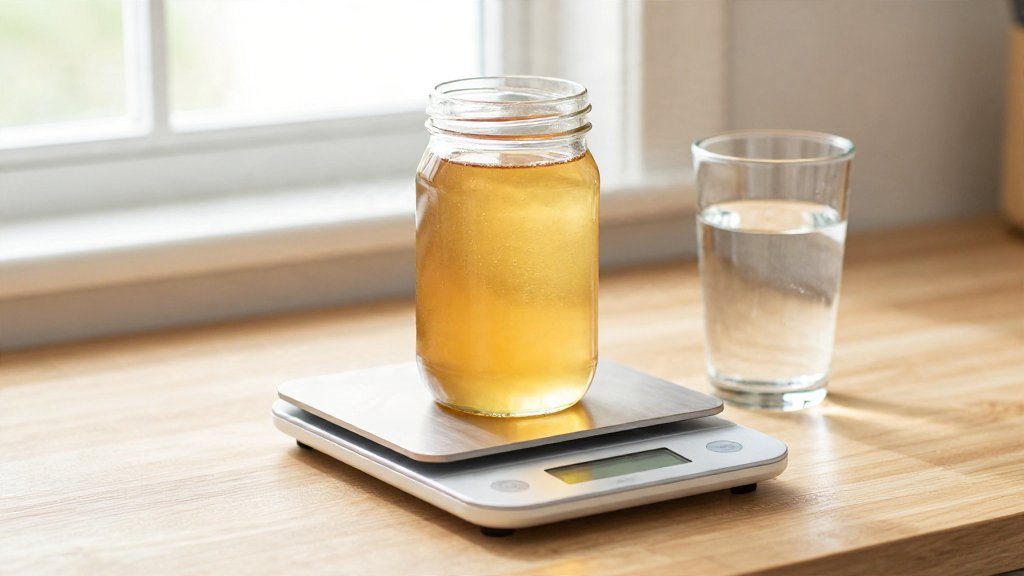
Sixteen. That's how many ounces in a pound, every time, whether you're weighing flour, steak or a package for the post office. The number never changes, because the pound has been pinned to exactly 0.45359237 kilograms since 1959.
What does change is the ounce printed on a measuring jug. Pour a pint of honey into a jar and it tips the scale at roughly a pound and a half, while a pint of water barely clears one pound. Once you see why, recipes, deli labels and unit prices all get easier to read.
How many ounces in a pound, and where the 16 comes from
The pound you use in the kitchen is the avoirdupois pound. It splits into 16 ounces, or 7,000 grains if you're a reloader or a pharmacist, and each of those ounces is 28.35 grams. The 1959 international yard and pound agreement fixed the value, and the UK wrote the same figure into law in 1963.
One pound is 16 ounces, and one ounce is 28.35 grams. Memorize those two numbers and every other weight conversion in your kitchen falls out of them.
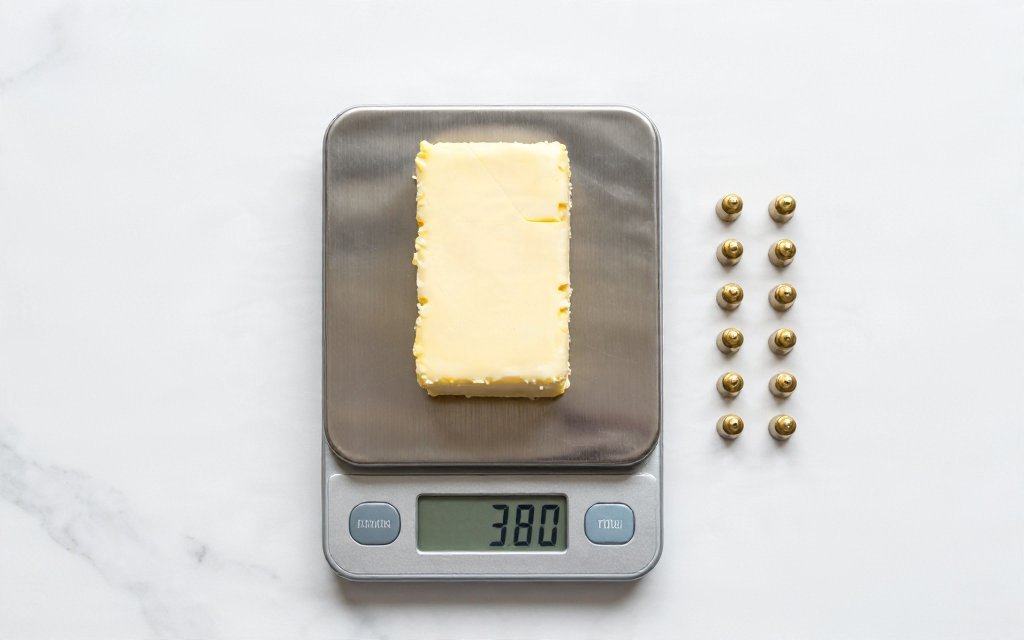
How many grams in a pound?
There are 453.59 grams in a pound, which most cooks round to 454. If you'd rather skip the arithmetic, our pounds to grams converter handles any amount, down to fractions of a gram.
Half a pound in grams, plus other common fractions
Recipes and butcher counters love fractions of a pound. These are the ones you'll run into most often.
| Pounds | Ounces | Grams |
|---|---|---|
| 0.25 lb | 4 oz | 113.4 g |
| 0.5 lb | 8 oz | 226.8 g |
| 1 lb | 16 oz | 453.6 g |
| 1.5 lb | 24 oz | 680.4 g |
| 2 lb | 32 oz | 907.2 g |
| 5 lb | 80 oz | 2,268 g |
| 10 lb | 160 oz | 4,536 g |
Why a pint of honey weighs more than a pound
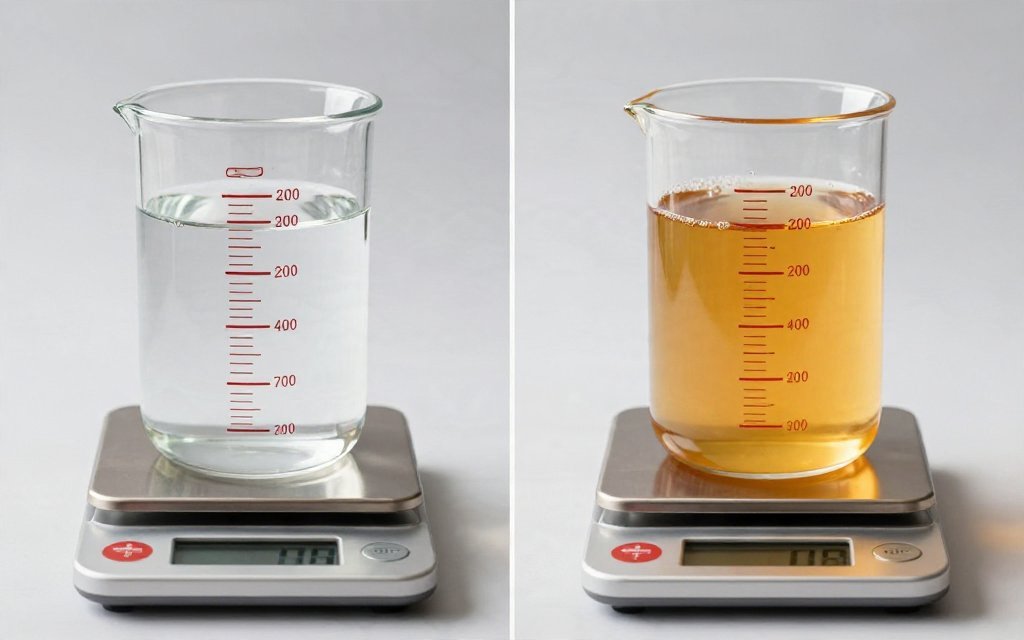
An old rhyme says a pint's a pound the world around. For water in a US pint it's close: 16 fluid ounces of water weigh 1.043 pounds, or 16.69 ounces. A British imperial pint holds 20 fluid ounces, so the same water weighs about 1.25 pounds there.
Honey is far denser. The UN's Food and Agriculture Organization puts a cup of honey at about 335 grams, close to 12 ounces of weight for 8 fluid ounces of volume. Double that and a pint of honey lands near 1.5 pounds, or 24 ounces on your scale.
Fluid ounces measure space, not weight
A fluid ounce is a slice of volume, about 29.6 milliliters in the US system. A weight ounce is 28.35 grams of anything. They only line up for liquids that behave like water, which is why a cup of oil, syrup or flour never weighs a neat 8 ounces.
Decimal pounds on a deli label are not ounces
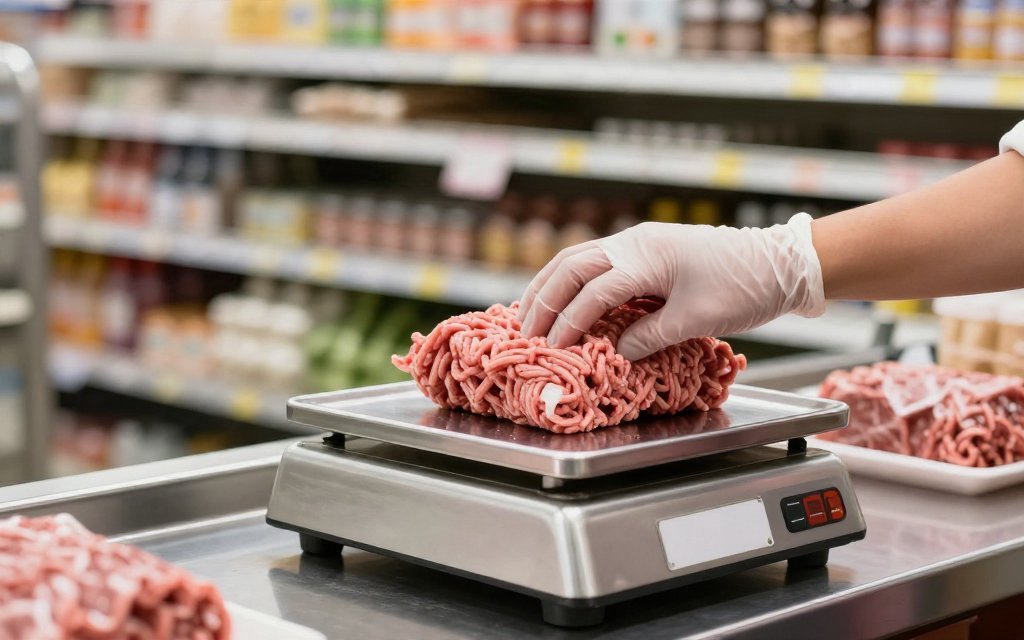
Here's the mix-up that catches people at the meat counter. A sticker reading 1.3 lb doesn't mean 1 pound 3 ounces. The digits after the point are tenths of a pound, so you multiply them by 16 to get ounces.
A quick way to read the sticker
Tenths are easy once you know that 0.1 lb is 1.6 ounces. So 0.5 is 8 ounces, 0.25 is 4, and anything ending in .3 carries almost 5 extra ounces, not 3.
What the ounce math means at the checkout
Ground beef averaged $6.89 per pound in July 2026. Divide by 16 and you're paying about 43 cents an ounce, or roughly $1.52 per 100 grams. That same price works out to $15.19 a kilo, handy when a recipe from abroad lists meat in metric.
Say a recipe calls for 500 grams of mince. That's 1.1 pounds, so grabbing a 1 lb pack leaves you 46 grams short, and buying the right amount costs about $7.60 at that average price. Misreading a 1.3 lb label as 1 lb 3 oz is smaller but real: you're carrying home an extra 1.8 ounces, roughly 78 cents more than you planned.
At $6.89 a pound, every ounce costs about 43 cents. Small misreads on decimal labels add up over a month of grocery runs.
Converting pounds to grams and kilograms in your head
Most metric recipes only need a ballpark, and these shortcuts get you within about 1 percent. For anything that has to be exact, like bread dough or coffee doses, put it on the scale or use a converter.
There are 1,000 grams in a kilogram, which makes a kilo about 2.2 pounds. That also answers how many ounces in a kilogram: roughly 35.27. Our grams to ounces converter and grams to pounds tool cover the in-between amounts.
Common questions about ounces per pound
How many ounces per pound in a troy pound?
Only 12. Gold and silver use the troy system, where a pound is 373.24 grams and each troy ounce is about 31.1 grams. We broke that down in our guide on how gold changes the grams in an ounce.
How many oz in a pound of flour?
Still 16, because weight is weight. In volume terms that's about 3.8 cups, since a cup of all-purpose flour weighs around 120 grams. Our post on cups of flour in grams has the full chart.
How many grams in a kilogram?
Exactly 1,000. That's the whole point of metric, and it's why a kilogram converts to 2.2 pounds with no awkward leftovers in the gram column.
Is a pint always a pound?
No. A US pint of water comes close at 1.043 pounds, but honey runs about 1.5 pounds per pint. Thin oils weigh less than water, so the same pint jar can read anywhere from under a pound to well over.
Volume tells you how much space something fills. Weight tells you how much is actually there. Only a scale settles the second question.
Need to know what that jar of honey or bag of mince really weighs? Download Scale for Grams and get an AI-powered weight estimate in grams, ounces or pounds from a photo in seconds. Get the app here: iOS.
Scale for Grams
무게를 재야 할 물건이 있나요?
Scale for Grams를 다운로드하고 사진 한 장으로 몇 초 안에 AI 무게 추정값을 확인하세요.