Coffee Dose by Weight: Brew Ratios in Grams for Every Method
Most coffee recipes list tablespoons, but grams are what actually control flavor. Here are the exact gram doses for espresso, pour-over, French press, AeroPress, and cold brew.
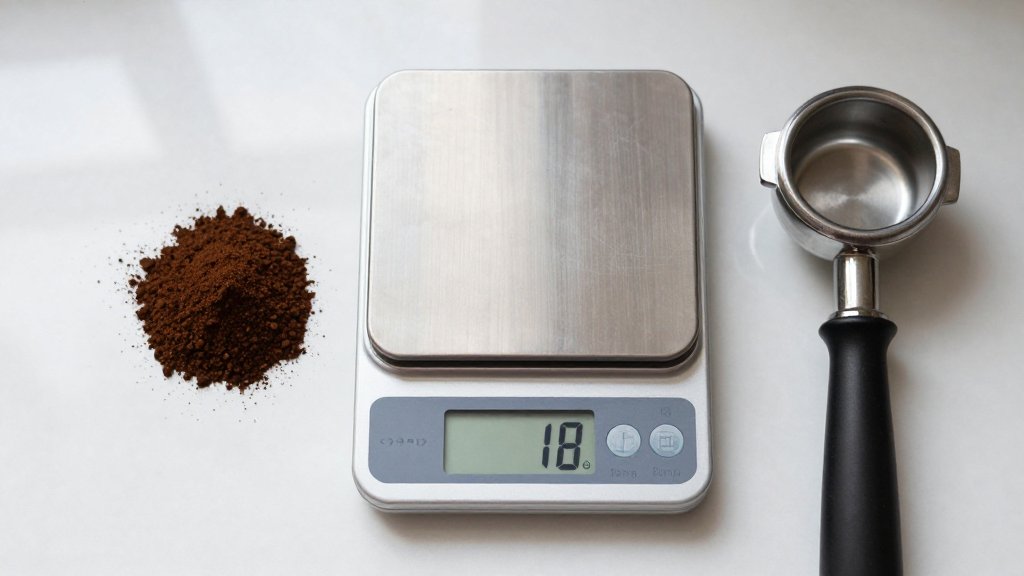
Most home brewers measure coffee by the scoop or tablespoon, but volume is unreliable. A tablespoon of light-roast whole beans can weigh 4 grams, while the same tablespoon of finely ground dark roast can weigh 7 grams. Weighing in grams removes that variable entirely.
Professional baristas and specialty coffee labs universally measure by weight. CoffeeGeek's brewing ratio guide recommends 7 grams per 100ml of water as a solid baseline for most methods. Once you know the gram ratios, every brew becomes repeatable regardless of grind or bag.
Why Grams Beat Tablespoons for Coffee
The SCA Golden Cup standard defines quality brewed coffee by dissolved solids: 11.5 to 13.5 grams per liter of water, achieved with a solubles extraction yield of 18 to 22 percent. Reaching that target requires a consistent gram dose, not a scooped estimate.
Espresso: The Most Dose-Sensitive Method
Double Shot as the Standard Unit
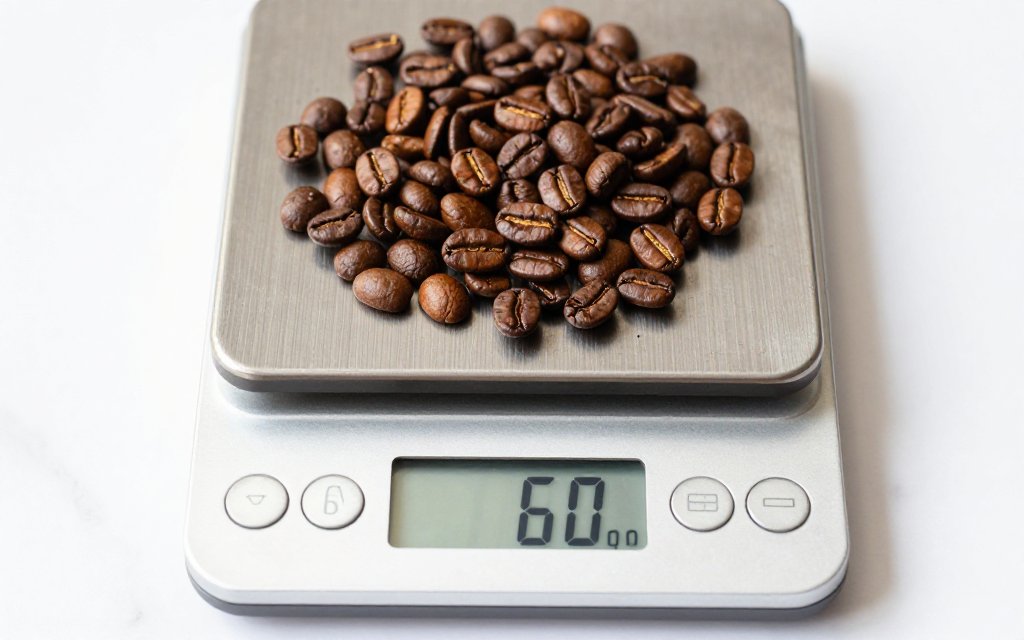
Espresso is the method where gram precision matters most. The SCA average double shot starts with 18 to 20 grams of ground coffee and produces 36.5 grams of liquid espresso, extracted in 25 to 30 seconds at 9 bars of pressure. That output-to-input ratio of roughly 1:2 is the baseline every barista adjusts from.
A single shot uses 7 to 9 grams and yields 14 to 18 grams. Ristretto uses the same 18 to 21 gram dose but pulls only 18 to 21 grams of liquid, a 1:1 ratio. Lungo uses the same dose but yields 54 to 63 grams at 1:3.
The SCA average espresso uses an 18 to 20 gram dose and produces 36.5 grams of espresso, extracted in 25 to 30 seconds at 9 bars of pressure.
Pour-Over and Drip: The Golden Ratio in Practice
Hario V60 and Chemex Doses
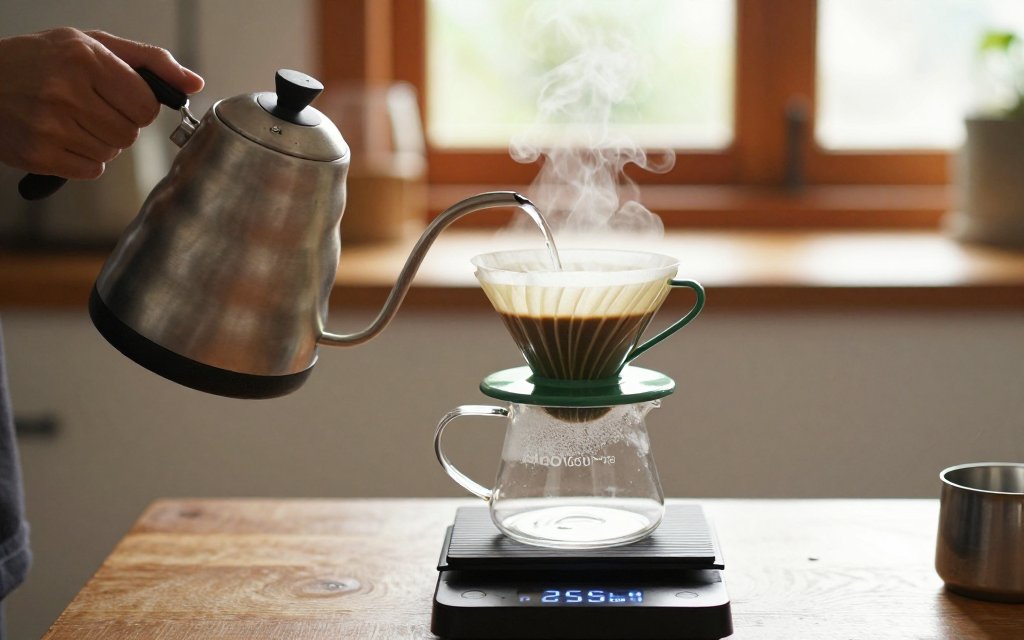
Pour-over methods like the Hario V60 work best at a 1:16 ratio (coffee to water by weight). For a 250ml cup, that is 15.6 grams of coffee. For a 500ml server, use 31 grams. Most specialty cafes target 15 to 17 grams for a standard 8-ounce pour-over.
Chemex uses a thicker paper filter that absorbs more oils, so many users favor a slightly higher dose. A 30-gram dose for 450ml of water (1:15 ratio) compensates for the body the filter removes. Both methods benefit from a 45-second bloom pour of about 2 to 3 times the coffee weight in water.
Auto-Drip Coffee Machines
Auto-drip machines follow the same 1:15 to 1:17 range as pour-over. For a standard 12-cup pot (1,800ml of water), that is 106 to 120 grams of coffee. Most machine scoops mark approximately 7 to 10 grams per serving, but weighing directly into the filter basket is far more consistent across different coffee brands.
French Press, AeroPress, and Cold Brew Doses
French Press Gram Ratio
French press uses a coarser grind and a longer steep, which works well at a 1:15 ratio. Use 20 grams of coffee for 300ml of water, or 30 grams for 450ml. The metal mesh filter lets more oils through than paper, so the brew is naturally richer even at the same dose as pour-over.
AeroPress Dose Guide
AeroPress is flexible, but the baseline recipe is 15 to 18 grams of coffee for 200 to 250ml of water (1:13 to 1:15 ratio). For concentrate, use 20 grams per 100ml and then dilute. Staying at 1:13 to 1:15 gives drinking-strength coffee without the extra dilution step.
Cold Brew Concentrate Ratio
Cold brew requires a much higher dose because cold water extracts less efficiently than hot water. A 1:4 ratio is standard for concentrate: 100 grams of coarsely ground coffee per 400ml of cold water, steeped 12 to 24 hours. Dilute 1:1 with water or milk before drinking to reach a standard drinking strength.
Cold brew uses roughly 4 times more coffee per milliliter of water than a hot pour-over. The cold steep requires a 1:4 ratio to reach the same extraction strength as a 1:16 hot brew.
Brew Ratio Reference Chart
| Method | Dose Grams | Ratio |
|---|---|---|
| Espresso double shot | 18-21 g | 1:2 |
| Hario V60, 1 cup | 15-16 g | 1:16 |
| Chemex, 1 cup | 18-20 g | 1:15 |
| Auto-drip, full pot | 106-120 g | 1:15 to 1:17 |
| French press, 2 cups | 20 g | 1:15 |
| AeroPress standard | 15-18 g | 1:13 to 1:15 |
| Cold brew concentrate | 100 g | 1:4 |
Lighter roasts are denser and extract more slowly, so add 1 to 2 grams to your dose when switching from dark to light. For portion-sensitive cooking like pasta, the same gram-first approach removes the guesswork from every recipe.
Small Dose Adjustments That Actually Change the Cup
Light vs Dark Roast Tweaks
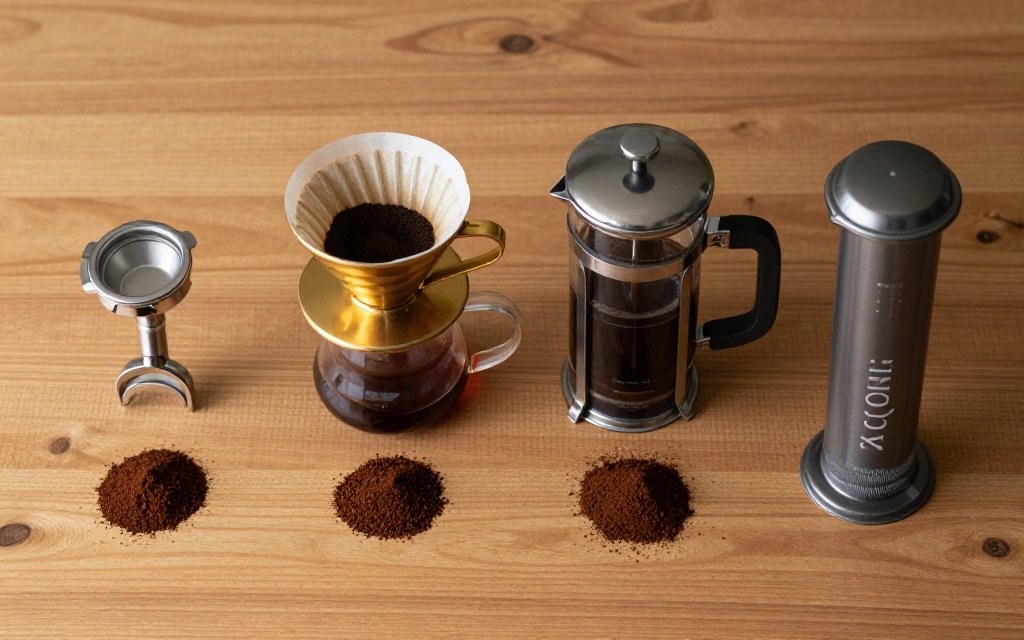
Light roasts are denser and lose less mass during roasting, so 15 grams of light roast contains slightly more coffee by bean count than 15 grams of dark roast. When switching from dark to light, add 1 to 2 grams to your dose to maintain the same perceived strength.
Dark roasts have already driven off moisture and CO2 during roasting. They extract faster and can taste bitter at the same dose that works for medium or light. Try reducing your dark roast espresso dose by 0.5 grams if the cup tastes harsh.
A 1-gram change in dose shifts flavor noticeably in espresso and pour-over. Start with the ratio from the chart, taste once, and adjust 0.5 grams at a time rather than guessing with a tablespoon.
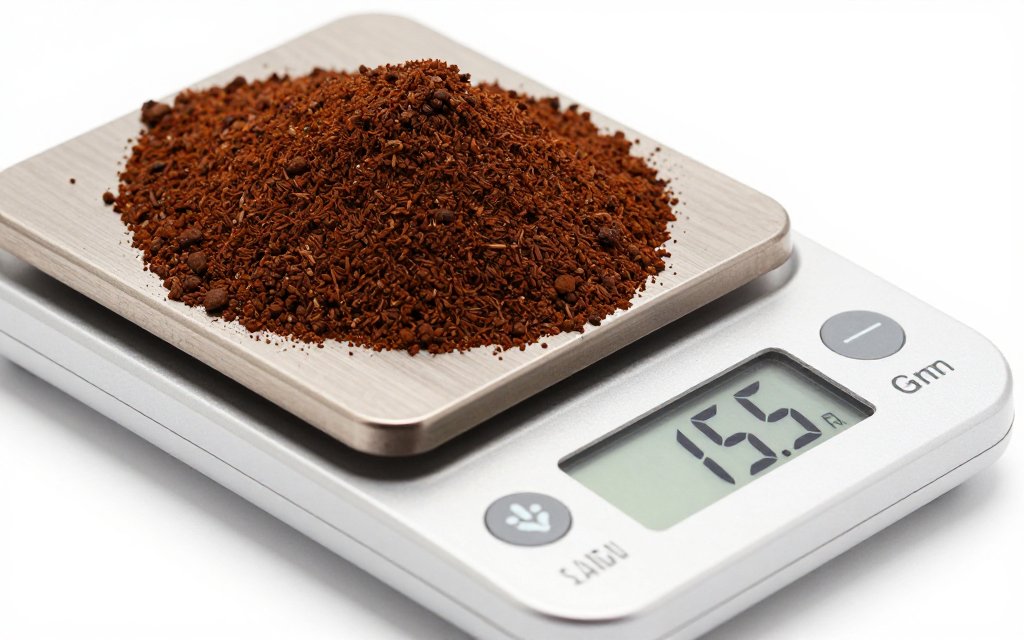
Measuring Coffee Grams Without a Kitchen Scale
If you don't own a kitchen scale, tablespoon measuring works as a rough approximation. One level tablespoon of medium-grind coffee weighs about 5 to 6 grams. For a double espresso shot, that is approximately 3 to 4 level tablespoons. But density shifts between grind sizes make this imprecise by 20 to 30 percent.
A photo estimation app closes that gap when no scale is nearby. Scale for Grams uses computer vision to estimate the weight of any object from a phone photo. Point your camera at a portafilter basket or a pile of coffee grounds and get a gram estimate in seconds, without any physical equipment.
For a broader look at kitchen portion weights, the grocery weight reference guide covers common items by piece and cup, using the same gram-first approach as the brewing ratios above.
Even a rough gram estimate beats eyeballing a scoop. Knowing your target weight by brewing method means you can measure deliberately instead of guessing and tasting until it works.
Need to weigh something fast? Download Scale for Grams and get an AI-powered weight estimate from a photo in seconds.
Scale for Grams
Need to Weigh Something?
Download Scale for Grams and get an AI weight estimate from a photo in seconds.