Estate Sale Silverware: Value It by Weight
Learn how to tell sterling from silver plate using common hallmarks like 925 and EPNS, then estimate real-world value at an estate sale with quick weight math, troy-ounce conversions, and a simple melt-value formula you can do on your phone.
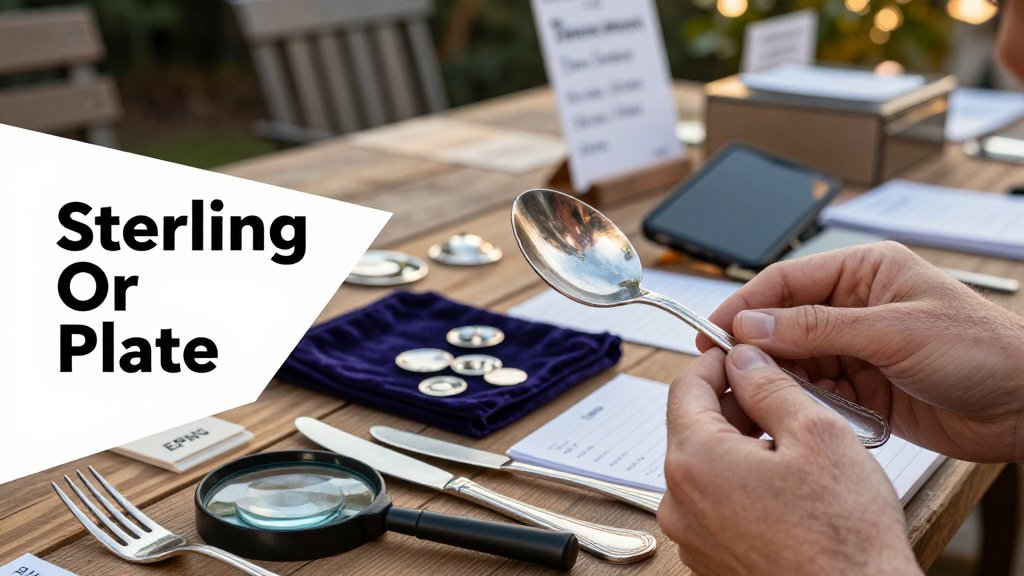
Spotting “silver” flatware at an estate sale can feel like a jackpot, or a fast way to overpay if it is only plated. In a few minutes, you can learn to separate sterling from look-alikes, read the key hallmarks, and do a quick reality check on value using weight-based melt math. This guide walks you through simple visual tests, fast conversions, and back-of-the-napkin calculations, including options when you do not have a scale on hand.
Sterling vs silver plate: spot it fast
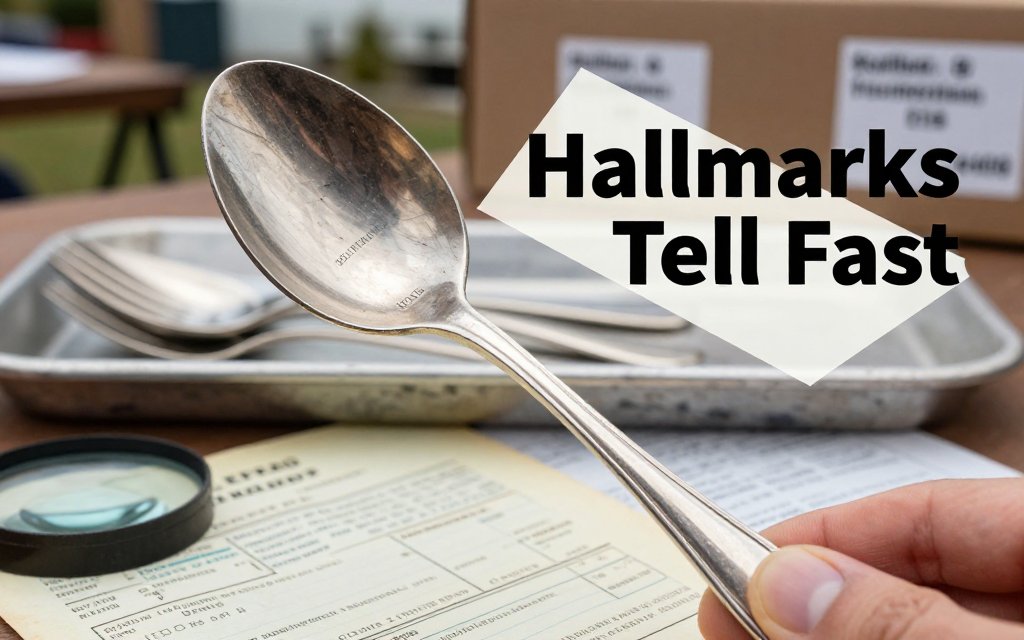
Most estate sale “silverware steals” are only steals if the pieces are actually sterling. If they are silver plate, you are mostly buying base metal with a whisper-thin layer of silver, which means the resale and melt value usually will not track the weight in any meaningful way. That one detail (sterling vs plated) decides whether a 2 lb pile of forks is a legit score or just a shiny kitchen upgrade. The good news is that you can spot the difference fast with stamps and a couple of on-the-spot checks, even if you do not have a scale in your bag.
Silverware hallmarks 925, Sterling, EPNS: what they actually mean
Start with the stamps because they are the quickest truth-tellers. “925” and “STERLING” usually mean the piece is sterling silver, which is 92.5% silver alloyed with other metals for strength. If you see a British-style lion passant, treat it as a strong sterling signal, especially when it appears alongside a clear maker mark and an assay office symbol (you can see how that lion became part of the UK system in this Goldsmiths' Hall hallmark history). On flatware, the stamp is often not on the showy front. Flip the piece and hunt where wear is lowest and stamping is easiest.
Now the red-flag stamps: “EPNS” (electroplated nickel silver), “A1,” “Silverplate,” and “Nickel Silver” point to plating, not solid silver. Also watch for partial sterling. Some knives are “sterling handle” only, meaning the handle is a thin sterling shell and the blade is stainless steel. Some serving pieces are plated over a base metal core. For estate sale hunting, check the back of the handle and also the neck area near the bowl of a spoon or the base of fork tines, since mixed sets are common and one sterling piece can get tossed into a plated pile. This is the same mindset as verifying portion tools in the kitchen, like this protein scoop 30 gram test, because assumptions get expensive fast.
Quick field checks that stop bad buys
If the stamp is missing or too worn to trust, use “high-wear truth spots.” On plated forks, the tips of the tines and the outer curves of the fork shoulders often show base metal peeking through, sometimes as a warmer yellow (brass) or dull gray. On plated spoons, look in the bowl where it rubs against a plate. Sterling tarnishes darker and more uniformly, while plate often shows patchy wear patterns with a clear color shift at the edges. Also check seams: many plated handles have a telltale join line where the outer layer meets a base-metal core. Bring your phone flashlight and angle it low across the surface, the wear lines pop immediately.
The magnet test helps, but it is easy to misuse. A magnet sticking hard is a strong warning sign because sterling itself is not magnetic, but plenty of plated base metals are also non-magnetic, so “no stick” does not prove sterling. Instead, combine clues: stamp plus wear spots plus construction feel. Knives are the biggest trap because they can feel “valuable” in the hand. Many have hollow handles filled with a cement-like or resin filler, sometimes labeled “weighted.” That weight is not silver weight, and it does not translate to melt value. If the handle feels bulky, slightly warm, and dull when tapped, treat it as a likely hollow shell until proven otherwise.
If a piece is not clearly marked 925, STERLING, or a real lion passant with an assay mark, price it as plated. One misread stamp can turn a bargain set into an expensive mistake.
Real-world example to keep you safe: the classic “sterling handle” butter knife. It might weigh about 45 g total, so it looks like a chunky sterling piece. In reality, the stainless blade could be 25 g, and the handle might be a thin sterling shell over filler that contains only about 6 g of sterling. That is 6 g x 0.925 = about 5.6 g of pure silver content, not 45 g. If you are buying lots by weight for resale, that math is the difference between profit and overpaying. At the table, sort into three piles: clearly marked sterling, clearly plated, and “question marks” you price like plate unless the marks check out.
Price sterling flatware by weight in minutes
Here is the fastest way to put a real number on sterling flatware at an estate sale: Melt value = (weight in grams) x (purity) x (spot price per gram). That is it. If you can estimate weight (even roughly) and you know the piece is sterling, you can get to a “close enough” melt value in under two minutes on your phone. This is especially handy when you are juggling a box of forks, a shipping label, and a budget. Keep in mind that melt value is the metal-only baseline. It is not a promise of what a buyer will actually pay you today.
Scrap silver melt value formula (with simple conversions)
Start by naming your three inputs clearly, because most “bad math” happens when one of them is fuzzy. Weight in grams is the total weight of the sterling portion you are valuing (for flatware, that often means the whole fork or spoon, but not always the whole knife). Purity is the silver content as a decimal. Sterling is 92.5% silver, so use 0.925. Spot price per gram is the market price of pure silver per gram (fine silver), not sterling. Multiply those three together, and you have melt value. If you want a quick mental shortcut, multiply grams by 0.925 first, which gives you “fine-silver grams,” then price those fine-silver grams.
Spot silver is usually quoted in dollars per troy ounce, so the only conversion you really need is troy ounces to grams. One troy ounce is 31.1035 g (you will also see 31.103 g in rounded tables). For an authoritative reference, NIST lists the troy ounce at about 31.103 g in this NIST troy ounce table. Once you have that, converting is simple: spot per gram = spot per troy ounce ÷ 31.1035. Example: if spot is $30.00 per troy ounce, spot per gram is about $30.00 ÷ 31.1035 = $0.964 per gram.
Now plug those numbers into a concrete estate sale example. Say you have a mixed bundle of sterling spoons and forks that you estimate at 300 g total, and you are using that sample spot price of $30.00 per troy ounce (about $0.964 per gram). Melt value ≈ 300 g x 0.925 x $0.964/g. Step it out: 300 x 0.925 = 277.5 fine-silver grams. Then 277.5 x $0.964 ≈ $267.50 melt value. That $267.50 is the metal baseline before any dealer margin, refining fee, shipping, or the very real hassle factor of sorting, verifying hallmarks, and waiting to get paid.
Realistic weight ranges and pricing expectations
A quick sanity check on weight keeps you from overpaying for a light set or undervaluing a heavy one. Typical sterling weights (pattern and maker matter) often fall into these ranges: teaspoons around 20 to 30 g, tablespoons around 35 to 55 g, and dinner forks around 45 to 70 g. If a seller has 12 “sterling teaspoons” and the whole pile feels like 150 g, something is off. Knives are the trap: many “sterling” knives are sterling-handled with a stainless blade, plus internal filler. They can feel hefty, but that does not mean you are holding solid silver. For knives, assume you may need to price handles separately, or skip them in a quick scrap calculation.
Two mistakes cause the biggest dollar swings. Mistake one is using a regular kitchen ounce (avoirdupois) like it is a troy ounce. A regular ounce is 28.35 g, but a troy ounce is 31.10 g, so if you divide spot price by 28.35 instead of 31.10, you inflate the per-gram price by about 9.7%. Mistake two is forgetting purity. If you price sterling as if it were pure silver, you overstate value by about 8.1% (because 1.000 ÷ 0.925 ≈ 1.081). Stack both mistakes, and you can be off by nearly 18%, which is the difference between a smart buy and an expensive lesson.
Finally, match your melt number to how people actually price in the real world. Below melt is common for quick-cash buyers (pawn shops, some “we buy silver” counters), because they need margin and assume risk; offers like 60% to 90% of melt are typical depending on competition and how clean the lot is. At melt can happen in peer-to-peer deals if the pieces are easy to verify and the buyer wants metal exposure without premiums. Above melt is where complete sets, crisp condition, and desirable patterns live. A polished, matched service from a known maker (for example, Gorham or Reed & Barton) can sell for more than scrap because the buyer is paying for usability and design. Using the earlier $267.50 melt example, a 70% offer is about $187, an 85% offer is about $227, and a pattern-driven retail buyer might still pay $300 to $400 if it is complete and ready for the table.
Estimate silverware weight without a scale
If you cannot weigh a pile of flatware at an estate sale, estimate by piece count plus typical weights, then sanity check with what you see in your hand. A common sterling dinner fork often lands around 42 to 71 g, teaspoons are often 25 to 35 g, tablespoons 50 to 70 g, and solid sterling serving spoons can be 80 to 140 g depending on size and pattern. Do your math by category, not as one mixed heap. Example: 8 dinner forks at 55 g each is about 440 g. Add 8 teaspoons at 30 g each (240 g) and 2 serving spoons at 110 g each (220 g) and you are near 900 g of sterling before you even look at knives.
Scale for Grams photo weight estimation for silverware
Use Scale for Grams when you need a usable estimate on the spot. Photograph a few representative pieces on a flat surface: 1 fork, 1 spoon, 1 knife. Get an estimated weight for each type, then multiply by the count in the lot. For instance, if one photographed dinner fork estimates at 54 g and there are 10 forks, budget 540 g for that category. Accuracy improves with consistent lighting (bright, even light reduces shadow bulk), a clear top down photo, and a common reference object when possible (a US quarter, a standard credit card, or a sheet of letter paper). Treat knives separately because hollow handles, weighted handles, and stainless blades can skew results. A sterling handled dinner knife might weigh 90 g total, but only 20 to 35 g may be sterling in the handle.
Pattern value vs melt value: when not to scrap it
Weight based melt math is a great anchor, but it is not the whole story. Some sets sell for far more than melt because buyers pay for brand, pattern demand, and completeness. Complete place settings (like 8 or 12 settings with matching knives, forks, spoons), matching serving pieces (ladle, sugar spoon, berry spoon), and discontinued patterns in clean condition usually bring a premium. On the other hand, mismatched single forks, monogrammed odd pieces, and heavily worn items tend to be melt driven, especially if they are common maker marks. Decision rule: if your estimated resale premium over melt is small, use weight based math as your go no go. If the pattern looks collectible, buy it as a set and check sold comps later before scrapping anything.
Here is a quick buying checklist you can run in under a minute, even without a scale. The goal is to avoid paying sterling prices for plated pieces, and to avoid overcounting silver when knives or handles are filled or weighted. If you can only do one thing, separate knives into their own pile and estimate the sterling portion of handles only, then estimate forks and spoons as solid sterling unless markings suggest otherwise.
How do I tell sterling vs silver plate flatware fast at an estate sale?
Look for clear sterling marks first: “STERLING”, “925”, “.925”, or a lion passant in some British hallmark sets. Silver plate is commonly marked “EP”, “EPNS”, “A1”, “AA”, “Triple”, or sometimes just a maker name with no purity mark. Check more than one piece because mixed lots are common. If edges and high points show a brassy or coppery color under worn spots, that is a classic silver plate clue. A magnet test helps for base metal cores, but it cannot confirm sterling by itself.
What is the troy ounce to grams conversion for silver spot price math?
Silver spot price is quoted per troy ounce, not the everyday kitchen ounce. The exact conversion is 1 troy ounce = 31.1034768 grams, which is why precious metals math never lines up with 28.3495 g per ounce (avoirdupois). If you have an estimated weight in grams, divide by 31.1034768 to get troy ounces. Example: 500 g of sterling flatware is 500 ÷ 31.1034768 = 16.08 oz t (troy ounces). For the reference table, see the troy ounce conversion in NIST’s unit guidance.
How do I calculate scrap silver melt value from weight and spot price?
Do it in three steps: convert your estimated grams to troy ounces, multiply by spot, then apply purity. Sterling is 92.5% silver, so multiply by 0.925. Example: you estimate 900 g of solid sterling forks and spoons. Troy ounces = 900 ÷ 31.1034768 = 28.94 oz t. If spot is $28 per oz t, pure silver value would be 28.94 × $28 = $810.32. Sterling melt value estimate is $810.32 × 0.925 = $749.05. A dealer will usually pay less than melt to cover refining and margin, so treat this as a ceiling, not a guaranteed payout.
Need to weigh something fast while you shop? Download Scale for Grams and get an AI-powered weight estimate from a photo in seconds, so you can sanity-check silverware value on the spot. Try it now on iOS, and turn quick photos into practical estimates for smarter estate sale decisions.
Scale for Grams
Need to Weigh Something?
Download Scale for Grams and get an AI weight estimate from a photo in seconds.