Cut out sugar cookie recipe holds its shape with twice the flour
Equal weights of butter and sugar plus double that in flour (200 g, 200 g, 400 g) keeps cut-out shapes sharp. Here's the full recipe in grams, why scooped flour ruins batches, and royal icing by weight.
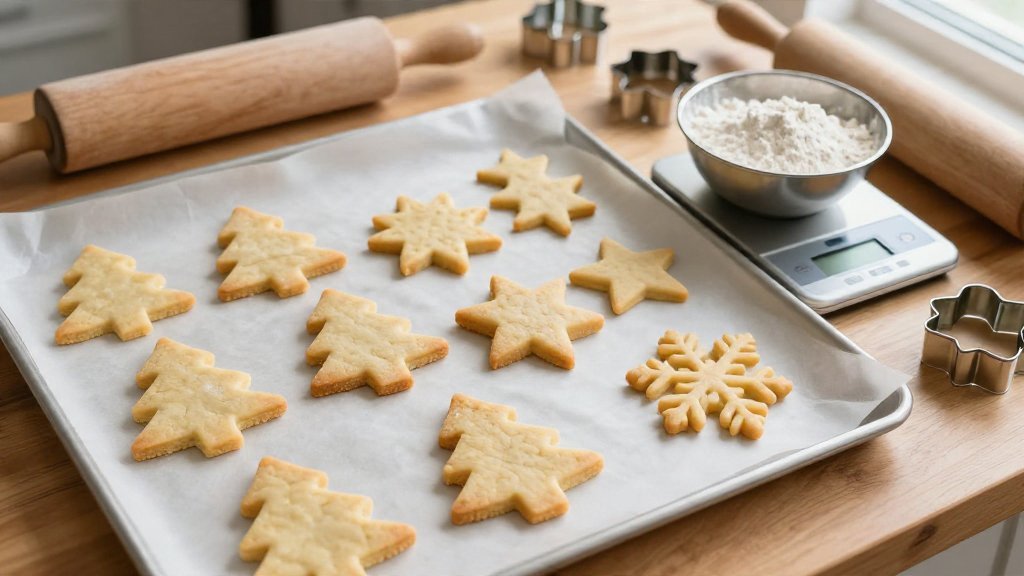
Equal weights of butter and sugar, plus double that weight in flour, is the ratio that keeps Christmas trees looking like trees once they come out of the oven. The Bake School's cut out sugar cookie recipe uses exactly that: 200 grams of butter, 200 grams of sugar and 400 grams of flour, with no baking powder or baking soda at all.
That ratio is why weighing matters so much here. Measure the flour with cups and a single cup can land anywhere from 120 to 155 grams, which is enough swing to turn a reliable sugar cookie recipe into dough that cracks or shapes that melt into blobs. A scale takes the guessing out of it.
The basic sugar cookie recipe in grams
Here's the full ingredient list by weight, with cup equivalents worked out from King Arthur's ingredient weight chart for anyone without a scale nearby. Add it all up and the dough comes to roughly 850 grams before rolling.
| Ingredient | Grams | Approx. cups |
|---|---|---|
| Unsalted butter, softened | 200 g | About 1 3/4 sticks |
| Granulated sugar | 200 g | About 1 cup (198 g) |
| Large egg | About 50 g | 1 egg |
| All-purpose flour | 400 g | About 3 1/3 cups, spooned |
| Vanilla extract | 5 ml | 1 teaspoon |
| Fine kosher salt | 2.5 ml | 1/2 teaspoon |
Bake School calls for bleached all-purpose flour and Diamond Crystal fine kosher salt, and says to use half as much if you only have table salt. The egg should be at room temperature and lightly beaten; a large one weighs about 50 grams out of the shell, as our guide to how much an egg weighs explains.
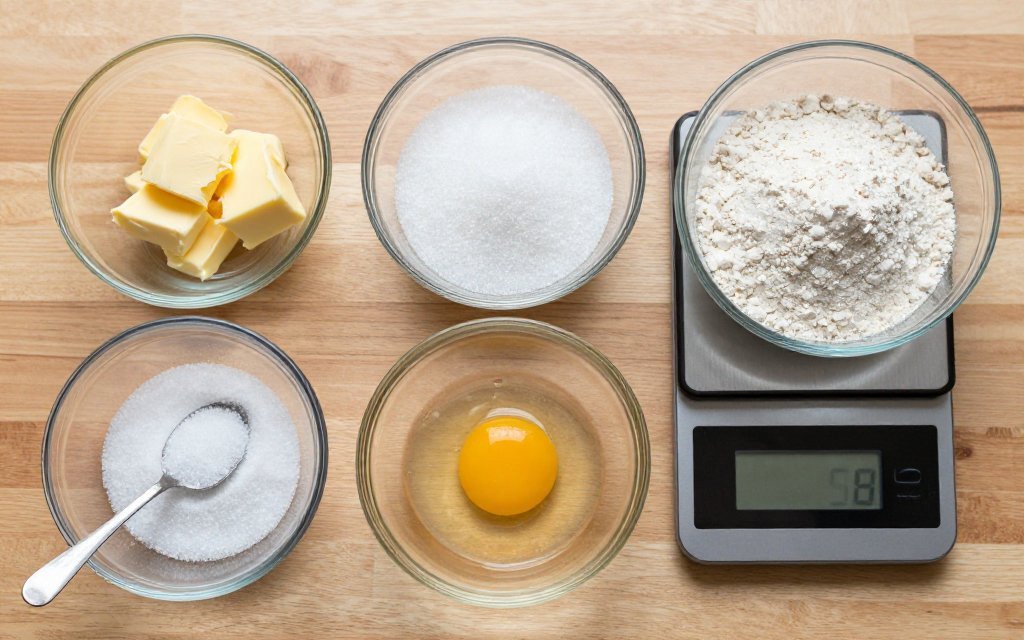
Why twice the flour keeps cut-out shapes sharp
No baking powder, no baking soda
Most drop cookies lean on chemical leaveners. This one leaves them out on purpose. Baking powder makes cookies puff and baking soda can make them spread, and either one softens the points on a star or a snowflake.
Too much fat or sugar melts the edges
When butter, sugar or egg outweighs the flour, the dough loosens as it warms and slides outward on the sheet. Too little flour causes the same problem from the other side. Holding flour at double the butter by weight gives the dough enough structure to keep a crisp outline.
Rule of thumb for cut-outs: whatever the butter weighs, the sugar weighs the same and the flour weighs twice as much. That's 200 g, 200 g and 400 g.
How to make sugar cookies that bake evenly
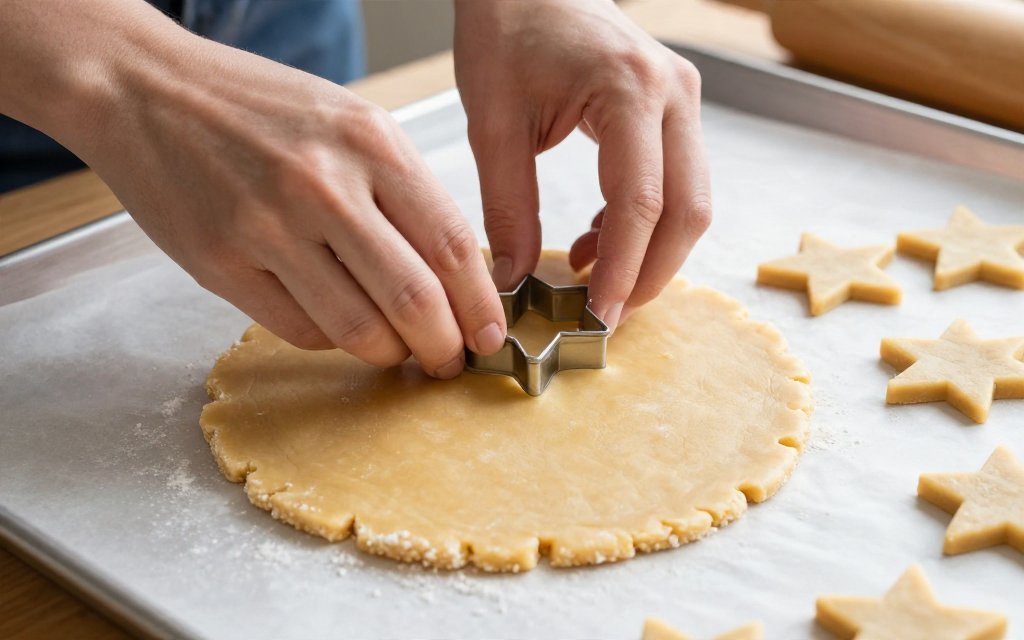
Making sugar cookies by weight follows the same order as any creamed dough, but the chill is the step people skip. Bake School has you chill the cut shapes on a parchment-lined sheet for at least 30 minutes, so the butter firms back up before it meets the heat.
Oven temperature and timing
Bake at 350°F (175°C) until the edges just begin to brown, which takes 10 to 15 minutes depending on size and thickness. On darker bakeware, Bake School suggests dropping to 325°F (165°C). Thinner cookies land at the short end of that window, so check them early.
What sloppy flour measuring costs you in wasted batches
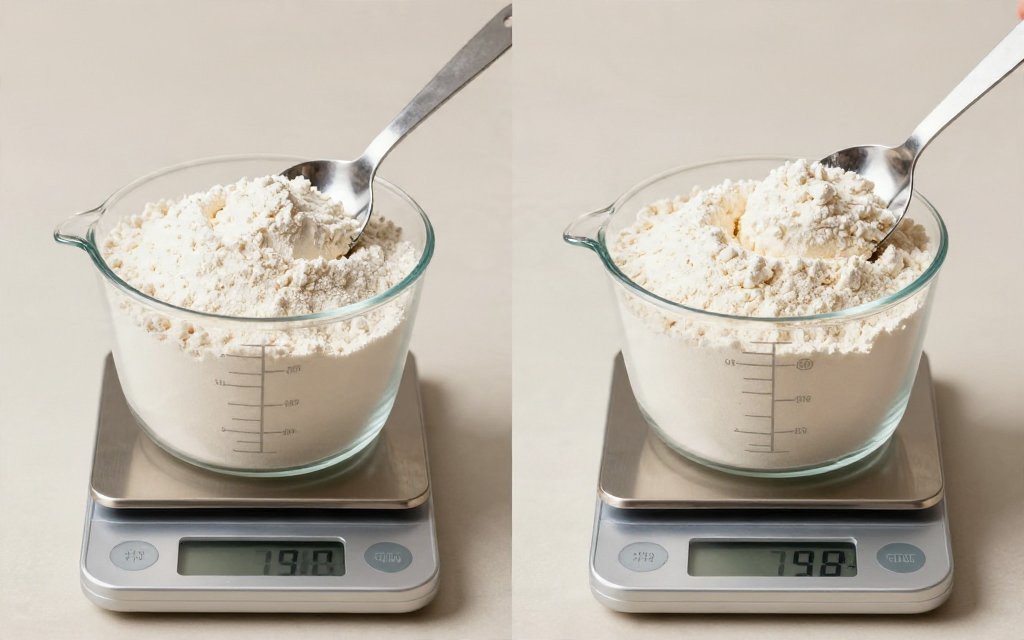
This is where the butter money and the afternoon go. Love and Lemons found a spooned and leveled cup of all-purpose flour weighs 120 to 125 grams, while a scooped and packed cup can hit 155 grams. Scoop the 3 1/3 cups this dough needs and you could add more than 110 grams of flour you never meant to.
That's close to 30 percent extra. The dough cracks at the edges when you roll it, the cookies bake up dry, and a batch of good butter and vanilla ends up in the bin. Weighing out 400 grams gets you the same easy sugar cookie recipe result every single time.
| Flour method | Grams per cup | 3 1/3 cups |
|---|---|---|
| Spooned and leveled | 120 to 125 g | 400 to 417 g |
| Scooped and packed | Up to 155 g | Up to 517 g |
| Weighed on a scale | No cups needed | Exactly 400 g |
A scooped cup of flour can weigh 155 grams instead of 120. Across a full batch of cut-outs, that's over 110 grams of extra flour and a dough that crumbles under the rolling pin.
Portioning the dough by weight
Bake School gets 80 cookies from this dough, which works out to about 10 grams each, so those are small shapes. Bigger cutters will give you far fewer. If you want to know how flour cups stack up beyond this recipe, our post on a cup of flour in grams goes deeper.
Sugar cookie icing that dries hard
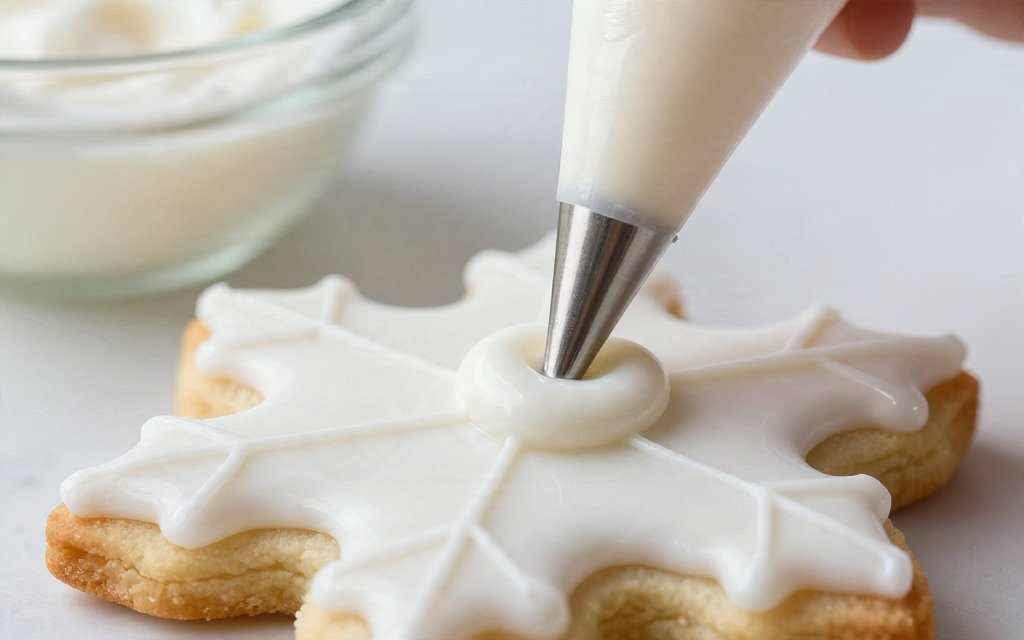
Royal icing is the classic sugar cookie icing because it dries hard, which helps if you're stacking or carrying decorated pieces. A simple royal icing recipe from Tasting Table uses 4 cups of confectioners' sugar, 3 tablespoons of meringue powder and 1/4 cup of water, enough for about 24 cookies. Icing and powdered sugar on a label mean the same thing here, so grab whichever bag your store stocks.
By weight, King Arthur puts unsifted confectioners' sugar at 113 grams per cup and meringue powder at 43 grams per 1/4 cup. That batch is roughly 452 grams of sugar and 32 grams of meringue powder. If you're buying sugar by the pound, our guide to cups in a pound of powdered sugar helps you shop.
Getting flood and outline consistency right
The test is simple. Lift the beater, and for general decorating the icing should settle smooth in the bowl within 5 seconds. Need it stiffer for borders? Add 1 tablespoon of powdered sugar at a time, or thin it for flooding with 1 teaspoon of water at a time.
Best sugar cookie recipe mistakes to avoid
Most failed batches come down to measuring, not the recipe. Even the best sugar cookie recipe can't fix flour scooped straight from the bag or a tray that went into the oven warm.
Bake School's formula has no leavener at all. If a cut-out recipe calls for baking powder, expect softer, puffier edges on your shapes.
Sugar cookie questions bakers ask
Are these easy to make sugar cookies for beginners?
Yes. It's six ingredients, no leaveners and one bowl, and the only skill that takes practice is rolling an even 1/4 inch sheet. Weighing the flour removes the most common reason a first easy sugar cookie recipe attempt fails.
How many cookies does one batch make?
Bake School's batch yields about 80 cookies. The dough weighs around 850 grams, so each cookie at that count is roughly 10 grams, and larger cutters will give you fewer.
What if my kitchen scale only reads ounces?
Convert the grams first. Our grams to ounces converter turns 400 grams of flour into about 14.1 ounces and 200 grams of butter into about 7.1 ounces.
How long should the cut shapes chill?
At least 30 minutes on the lined sheet. If the butter was warm when you mixed or your kitchen is hot, chill the dough before rolling as well.
Need to weigh 400 grams of flour and can't find your scale? Download Scale for Grams and get an AI-powered weight estimate from a photo in seconds. Get the app here: iOS.
Scale for Grams
¿Necesitas pesar algo?
Descarga Scale for Grams y obtén en segundos una estimación del peso con IA a partir de una foto.