A sturdy gingerbread house recipe starts with 750 grams of flour
Two test kitchens agree that flour makes up about 48% of a gingerbread house dough by weight. Here are both recipes in grams, the royal icing ratios, bake times, and how a homemade batch compares with a store kit.
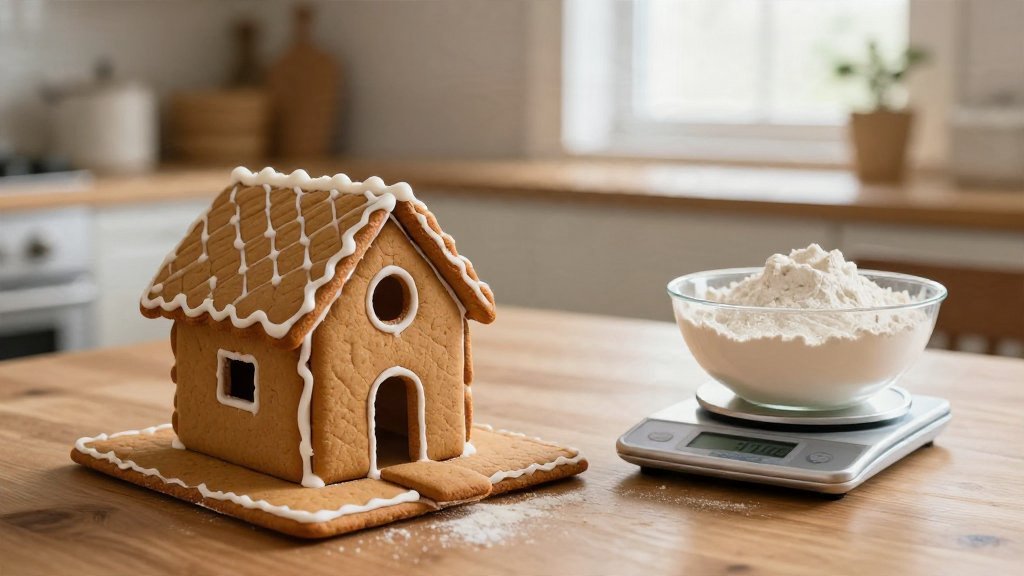
A gingerbread house recipe that has to stand until New Year's looks a lot less like a cookie recipe than you'd expect. Food Network's construction dough calls for 750 grams of flour against just 185 grams of shortening, and it leaves out baking soda entirely so the walls don't puff up and bow.
That's why the scale matters more here than almost anywhere else in holiday baking. Food Network lists that flour as 6 cups, which works out to 125 grams a cup, while our flour guide uses 120 grams a cup. So the same 6 cups of gingerbread house dough could mean 720 grams or 750. Weigh it and the argument's over.
What makes a gingerbread house recipe structural
Two choices do most of the work. Shortening has a higher melting point than butter, so edges stay crisp in a 350°F oven, and with no leavening there's nothing to make the slabs rise. Food Network also has you roll to a full 1/4 inch, with quarter-inch dowels on each side as guides, and adds a blunt warning: "Don't go too thin!"
Flour is about half the batch by weight
Add up Food Network's weighed ingredients and you get 1,570 grams before the egg and vinegar, and flour is 48% of it. King Arthur's construction gingerbread runs on butter and buttermilk instead and totals 1,252 grams before the egg. Its 600 grams of flour? Also 48%.
Rule of thumb from two test kitchens: in construction gingerbread, flour lands at about 48% of the dough's total weight, whether the fat is shortening or butter.
Why the sturdiest version skips baking soda
Food Network drops leavening completely. King Arthur keeps 1 teaspoon of baking soda but rolls thinner, to 1/8 inch, and bakes for only 10 to 12 minutes. Both work. Just pick one recipe and follow its thickness and timing together, because each bake time was set for its own thickness.
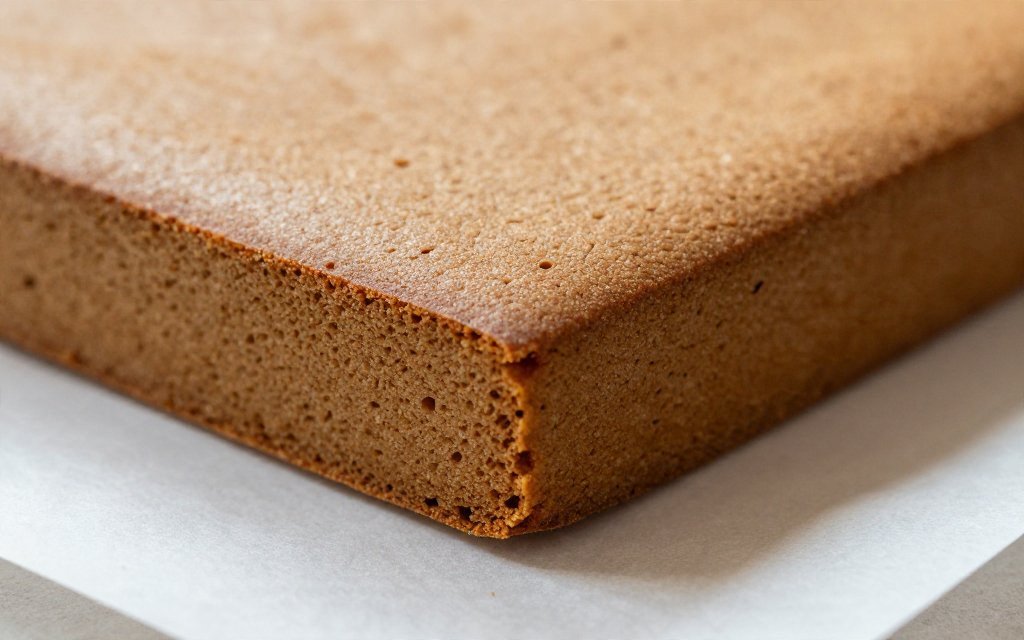
Gingerbread recipe for gingerbread houses, weighed out
Here are both doughs side by side in grams. If your recipe card is in ounces, run the numbers through the grams to ounces converter; 750 grams of flour comes to about 26.5 ounces.
| Ingredient | Food Network | King Arthur |
|---|---|---|
| Flour | 750 g | 600 g |
| Fat | 185 g shortening | 85 g butter |
| Sugar | 200 g granulated | 227 g brown |
| Molasses | 435 g | 170 g |
| Liquid | 1 tbsp vinegar | 170 g buttermilk |
| Ground ginger | 2 1/2 tsp | 1 tsp |
| House size | 8 x 8 inches | 10 x 7 inches |
Food Network's dough is darker and much heavier on molasses, 435 grams compared with 170. King Arthur's is lighter and quicker to bake, and its 227 grams of packed brown sugar is the one ingredient where volume measuring goes wrong most often, since packing pressure varies from hand to hand.
Gingerbread spice levels for a house you might nibble
King Arthur says plainly that its house dough isn't meant to be eaten, and suggests doubling the cinnamon and ginger and raising the salt to 1 1/4 teaspoons if you want more flavor. Food Network's gingerbread spice is louder from the start. For snacking, bake a proper gingerbread cookie recipe instead.
How to make a gingerbread house that doesn't sag
On bake time, Food Network is clear that a few extra minutes beats an underbaked wall: the pieces need to be strong. Smaller pieces take 20 to 25 minutes, and for an extra-large build you drop the oven to 300°F and add another 15 to 20 minutes.
Roll on parchment, then move the paper
King Arthur rolls only a quarter of the dough at a time and keeps the rest in the fridge. Cut pieces go onto the baking sheet parchment and all, so a raw wall never gets lifted with a spatula and stretched out of square.
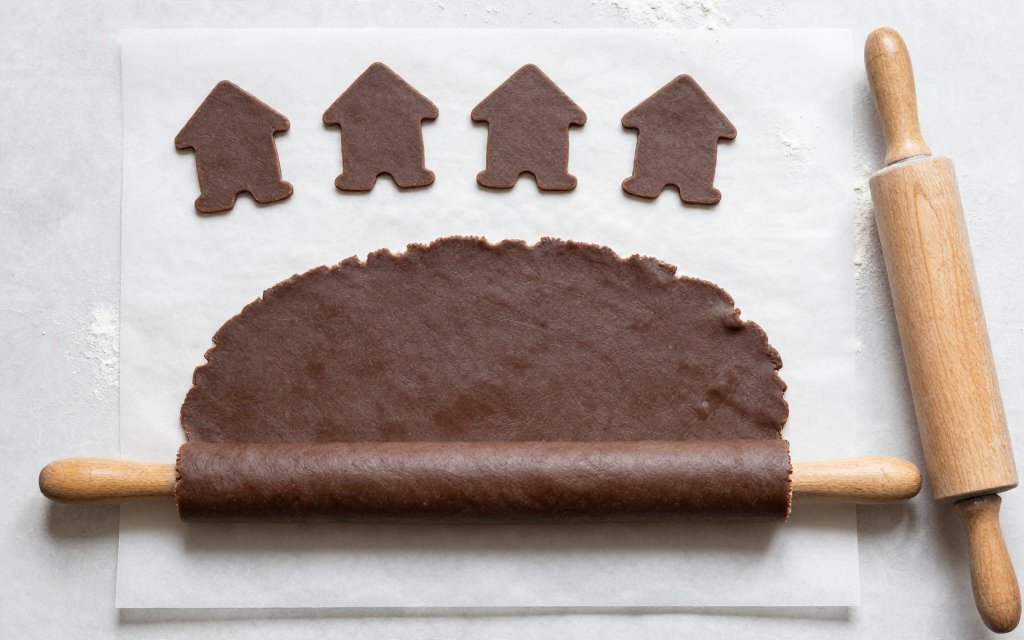
Cut windows and doors while the gingerbread is still warm from the oven, and trim ragged wall edges at the same moment. Straight edges are what let the corners meet flush.
Royal icing for gingerbread house walls, by weight
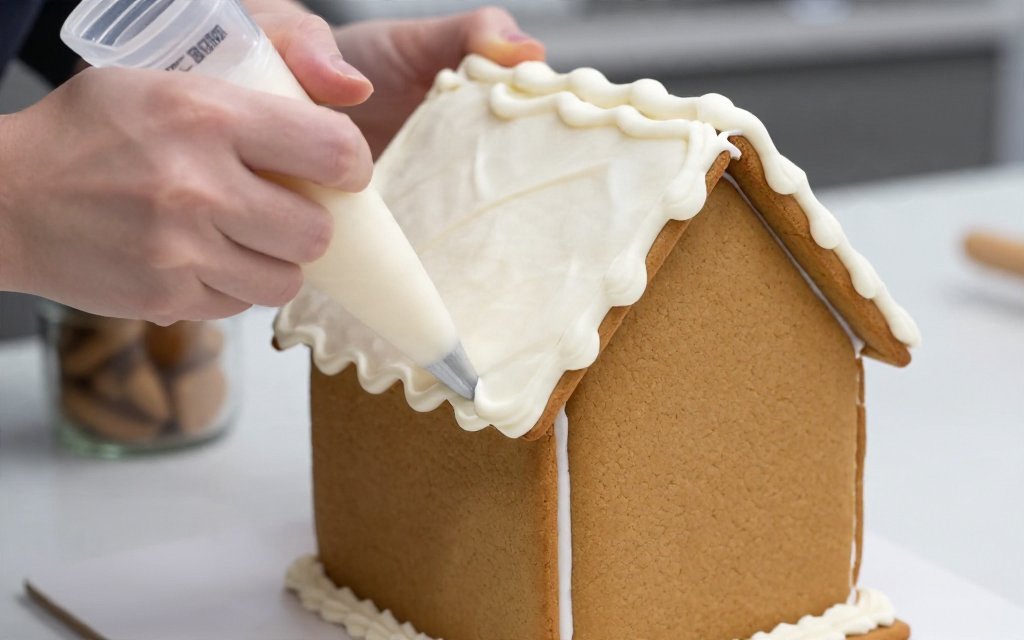
The glue matters as much as the walls. King Arthur's construction icing uses 43 grams of meringue powder whisked into 114 grams of cold water, then 454 grams of confectioners' sugar and 1/2 teaspoon of cream of tartar. Sally's Baking Addiction goes a little heavier at 480 grams of sifted sugar with 3 tablespoons of meringue powder and 9 to 10 tablespoons of water.
Stiff gingerbread house icing for building, thin for decorating
The longer you whip royal icing, the stiffer it gets and the faster it sets, according to King Arthur. Keep it covered or in a piping bag between uses. Short on sugar? Our guide to how many cups are in a pound of powdered sugar shows whether one bag covers both batches.
What a homemade build gets you compared with a kit
Kits are cheap. Hip2Save reported Trader Joe's gingerbread house kit back on shelves at $7.99, and Walmart's Freshness Guaranteed kit weighs 35.3 ounces, roughly 1,000 grams including the icing and candy. One batch of Food Network's dough is about 1,570 grams before the egg goes in, so you're working with more than half again as much gingerbread.
The bigger payoff is control. With your own dough you pick the 1/4 inch thickness that holds a roof up, you size the house to your table, and if a wall cracks you still have scraps to re-roll. A kit gives you one set of pieces and no spares.
A single batch of Food Network's construction dough weighs about 1.6 kg. Walmart's 35.3 oz kit weighs about 1 kg in total, and that figure includes the icing and the candy.
Easy gingerbread house shortcuts that still hold up
An easy gingerbread house doesn't have to mean a flimsy one. Food Network lets you wrap the dough and chill it for 2 hours or overnight before rolling, which splits a long project across two evenings. Wilton says royal icing keeps in an airtight container at room temperature for up to two weeks, so the icing can be made first, too.
Make the dough the day before
Mix and weigh on day one, then roll, cut and bake on day two while the dough is fully cold. If time is really tight, King Arthur's thinner 1/8 inch pieces finish in 10 to 12 minutes per sheet instead of 25 or more.
Gingerbread house recipe questions people ask
Can you eat a gingerbread house?
You can, but construction dough is built for strength first. King Arthur says its version isn't meant to be eaten as is. If eating matters, double the spices as it suggests, or bake a separate batch of cookies for the table.
How long should royal icing dry before decorating?
Sally's standard royal icing dries in about 1 to 2 hours. For an assembled house, Food Network recommends letting the icing dry completely overnight before you start loading the roof with candy.
How thick should gingerbread house dough be?
Food Network rolls to 1/4 inch and bakes 25 to 28 minutes. King Arthur rolls to 1/8 inch and bakes 10 to 12 minutes. Thicker is more forgiving for big walls and roofs.
Can I use a gingerbread man recipe for a house?
It's risky. King Arthur adds extra flour to its house dough specifically so it's sturdier than cookie dough, and a softer gingerbread man recipe is more likely to spread at the edges. Our cut out cookie guide explains why extra flour keeps shapes sharp.
Need to measure 750 grams of flour and can't find the kitchen scale? Download Scale for Grams and get an AI-powered weight estimate from a photo in seconds. Get the app here: iOS.
Scale for Grams
कुछ तौलना है?
Scale for Grams डाउनलोड करें और कुछ ही सेकंड में फ़ोटो से AI वज़न अनुमान पाएँ।