AWG or SWG? Stop Ordering Wrong Jewelry Wire
AWG and SWG are not interchangeable. If you order wire by the wrong gauge system, you can end up with the wrong diameter, the wrong weight per foot, and a pricing mistake that quietly eats your profit. This guide shows a practical workflow: confirm the gauge system, convert to mm, estimate weight per length, then price wire wrapped pieces by weight with confidence.
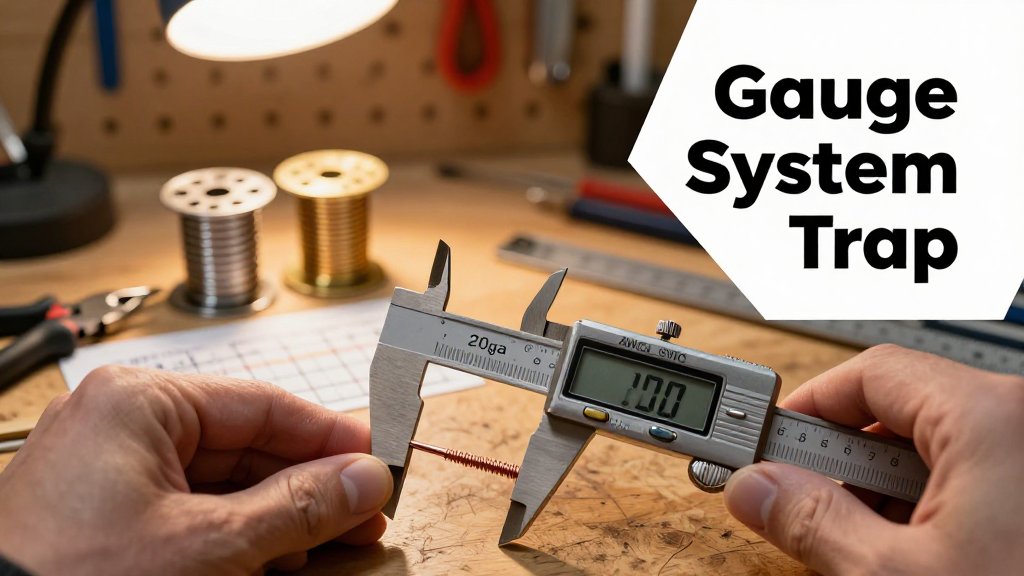
Ever ordered 20 gauge jewelry wire and opened the package thinking, "This is not what I expected"? It happens all the time because listings may use AWG or SWG, and the same gauge number can mean a different diameter. That one mix-up can throw off coil size, wrapping tension, finished ring fit, shipping weight, and even your per-piece pricing. In this article, you will learn how to spot which gauge system a seller used and follow a quick workflow to confirm diameter, weight, and cost before you buy.
AWG vs SWG: why your 20 gauge looks wrong
That "20ga" wire you just bought can be two different sizes, even when the label is honest. The mix-up is that AWG (American Wire Gauge) and SWG (Standard Wire Gauge) are two different systems, and the same gauge number does not mean the same diameter. For a real-world example, a 20 AWG solid wire is about 0.8128 mm in diameter, while 20 SWG is about 0.9144 mm, which you can verify in a gauge conversion table. That 0.10 mm difference sounds tiny, but in jewelry it shows up fast. You feel it in how tightly the wire hugs a mandrel, how cleanly it stacks in a coil, and whether a wrapped loop sits snug or keeps trying to spring open. Mental model to keep you sane: gauge is a nickname, millimeters are the actual measurement.
The common mistake sellers do not warn you about
You reorder your favorite wire, same color, same temper, same gauge. The spool arrives, you start a familiar project, and suddenly your wraps have little gaps that were not there last month. Your 6 mm mandrel coil looks a hair wider, your jump ring jig pegs do not line up cleanly, or your ear wire feels stiffer and fights your round-nose pliers. This is the classic "20ga" problem: many listings only say "20ga" with no system, and the photos rarely help. If the seller switched suppliers (or just uses a different country standard), you might receive 20 SWG when you expected 20 AWG, or the other way around. Your hands notice the change before your eyes do.
That diameter shift changes the physics of your work. A thicker wire (like 20 SWG at about 0.914 mm) is stiffer, so it takes more force to bend, it work-hardens faster, and it can leave your coils looking slightly more "open" if you do not adjust your tension. A thinner wire (like 20 AWG at about 0.813 mm) can feel easier to wrap, but it may not hold its shape as confidently in a structured piece. Stone-setting and prongs are where the difference can get expensive: if you planned petite prongs for a 6 mm cabochon and your wire is thicker than expected, your prongs can look chunky and may not seat as cleanly; if it is thinner, the prongs may not bite and can loosen with wear. Even a simple wrapped loop can twist if the wire stiffness is not what you designed around.
Weight changes, too, which matters for pricing, comfort, and shipping. Cross-sectional area follows diameter squared, so jumping from about 0.81 mm to 0.91 mm is not a small change, it is roughly a 26 percent increase in metal per inch. If you want a concrete feel for it, 10 cm of solid copper at 0.8128 mm is about 0.47 g, while 10 cm at 0.9144 mm is about 0.59 g (same length, noticeably heavier in your palm). Scale that up across a chain, a multi-wrap bangle, or a batch of 50 pairs of earrings and you can blow past your planned grams fast. If you are trying to estimate weights quickly for mailers, orders, or travel, the same habit helps outside jewelry too, like when you estimate luggage weight quickly and need a realistic number without digging out a scale.
The one number that never lies: diameter in mm
Here is the rule worth taping above your bench: “Gauge is a label, mm is the measurement.” Millimeters tell you what will actually fit. They are what you need for mandrels (a 4.0 mm mandrel is always 4.0 mm), bead holes (a 0.9 mm hole might accept 0.81 mm wire easily but fight 0.91 mm), jump ring sizing (inner diameter and aspect ratio depend on true wire thickness), and consistent weight estimates. Gauge numbers are still useful as shorthand, but only after the system is explicit, like “20 AWG” or “20 SWG.” If a listing only says “20ga” and gives no diameter, assume nothing. Two sellers can both be truthful, and you can still end up with wire that behaves like a different product.
Practical workflow: always hunt for the mm number in the listing specs, the manufacturer spec sheet, or the product Q and A, then write it down in your own project notes. If you have calipers, measure the bare wire and label your spool with a tiny piece of masking tape (for example, “0.81 mm dead-soft copper” or “0.91 mm half-hard brass”). That one habit prevents most reorder surprises. It also makes weight planning more predictable because you can estimate grams from length more reliably when the diameter is known. If you are using a photo-based estimator like Scale for Grams as a quick check, having the correct mm diameter lets you spot when a new spool is heavier than expected before you commit to cutting, wrapping, and assembling a whole batch.
Before you cut a whole coil, confirm the wire diameter in millimeters. A jump from 0.81 mm to 0.91 mm can make wraps gap, rings bind, and your finished piece weigh about 25% more per length.
How to confirm a listing uses AWG or SWG
Before you click “Buy,” run the same quick workflow every time. First, scan for a diameter in millimeters (mm). If the listing clearly says something like “20 gauge (0.81 mm)” or “18 gauge (1.0 mm),” you can stop worrying about the gauge system, because mm is the real measurement your pliers and mandrels will feel. Second, look for the seller’s location and the brand’s country of origin. US-based craft listings usually mean AWG by default, while UK-based suppliers and older jewelry references often mean SWG. Third, check the wording: “AWG,” “B&S,” or “Brown and Sharpe” points to AWG, while “SWG,” “British,” or “imperial” points to SWG. If any of those signals are missing, treat the listing as ambiguous and ask one simple question before purchasing.
Millimeters are your best tie-breaker because AWG and SWG use the same gauge numbers for different diameters. A common “this looks wrong” moment is 20 gauge wire: 20 AWG is about 0.81 mm, while 20 SWG is about 0.91 mm, which is roughly a 0.10 mm jump in thickness. That sounds tiny until you are making jump rings, ear wires, or wrapped loops, where 0.10 mm can turn a neat wrap into a chunky wrap, or make your mandrel size feel off. If you only remember one rule, make it this: if the listing shows a gauge number but does not show mm, you have not confirmed the size yet. Keep a conversion reference open (or saved) like this AWG vs SWG chart so you can sanity-check the mm number when it is provided.
Fast clues: where the wire is sold and how it is described
Start with geography because it is the fastest clue. US marketplaces and US craft suppliers tend to default to AWG even when they only write “20ga” or “18ga.” If you are buying from a US-focused site, or the brand reads like a US craft-wire brand, assume AWG unless mm contradicts it. Flip that assumption for UK suppliers and UK-written listings, where SWG is more likely, especially for metals sold for traditional jewelry making or workshop practice. One trap to watch for is global marketplaces where international sellers copy-paste “gauge” numbers across multiple storefronts. You will see the same product photo and the same “18ga” headline sold from different countries, and the gauge system is never stated. In that situation, you cannot safely infer AWG or SWG from the number alone, so you must look for mm or message the seller.
Next, read the description like a detective. “Ga” by itself is not enough, because both systems use “ga” and both can be called “standard” in casual listings. Look for explicit terms that tend to correlate with AWG: “AWG,” “B&S,” “Brown and Sharpe,” and sometimes “electrical wire” language like “hook-up wire” or “magnet wire,” where AWG is common in US contexts. Terms that often point to SWG include “SWG,” “British Standard,” “imperial gauge,” and older jewelry tutorial wording like “use 20 SWG for ear hooks.” If the listing includes both gauge and mm, do a quick plausibility check. Example: if a seller calls something “18ga” and lists it as about 1.2 mm, that leans SWG, because 18 AWG is closer to 1.0 mm while 18 SWG is thicker. If “18ga” is listed around 1.0 mm, that leans AWG.
Your 15-second seller message that prevents returns
If the listing is missing mm, send a message before buying. You do not need a long back-and-forth. Copy, paste, and fill in the gauge number you want: “Hi, quick check before I order: is your 20 gauge wire AWG or SWG, and what is the exact diameter in mm (for example 0.81 mm or 0.91 mm)?” This works because it forces a concrete answer even if the seller does not know the gauge system name. If they respond with only “standard gauge,” reply once more: “Thanks, can you confirm the diameter in mm?” You are not being picky, you are preventing the most common mistake that leads to reordering, scrapped coils, or findings that do not fit your jig.
For precious metals (sterling silver, fine silver, gold-filled, solid gold), add a second question that protects your budget: “If you have it, what is the grams per foot (or grams per meter) for this wire?” Diameter controls weight, and weight controls cost and pricing. A practical example: if a wire is 6.5 g per meter and you need 8 meters for a small batch of jump rings and ear wires, you are buying about 52 g of metal, plus waste from trimming and test pieces. If you ship finished jewelry, this also affects postage. A piece that ends up 12 g instead of 9 g can bump your packaging choices, especially if you sell multiple items in one order. Grams-per-length is the fastest way to compare listings that look similar but are not the same thickness.
Once you get the mm answer, save it somewhere you will reuse. Screenshot the seller reply, add the mm value to your notes, and label it “20 AWG equals 0.81 mm” or “20 SWG equals 0.91 mm” for that specific shop. That way, your next reorder is automatic and you do not get surprised when you switch vendors. If you already placed the order and the listing was vague, check the wire as soon as it arrives. A simple digital caliper can confirm 0.81 mm versus 0.91 mm in seconds, and even a low-cost plastic caliper is better than guessing by feel. If you are also tracking material usage by weight for pricing or shipping, weigh the coil and your cut lengths consistently in grams. Even without a physical scale on hand, a photo-based estimate from an app can be a quick reality check for “did I pack the right spool,” but diameter in mm is still the non-negotiable step for getting the right wire size.
From diameter to weight: estimate cost and price confidently
Gauge confusion is not just a “fit and finish” problem, it is a pricing problem. A small diameter change changes cross sectional area, which changes grams per foot, which changes your material cost. Example: “20 gauge” can mean 20 AWG (about 0.8128 mm) or 20 SWG (about 0.9144 mm). That looks minor, but weight rises fast because area grows with the square of diameter. If you are quoting a custom pendant and you guess wrong, you can undercharge on sterling, gold, and even gold-filled. A quick check with a wire gauge converter can save your margin before you even cut wire.
Practical pricing workflow: weight-first, then labor and margin
Price the metal like you price butter for baking or postage for shipping: start with grams, then build everything else on top. Keep one simple formula handy for round wire: grams per length equals density times area times length. Sterling silver density is about 10.36 g per cm3, so once you have diameter in mm, you can estimate weight per meter or per foot pretty closely. Here is a clean order of operations you can repeat for every listing and every design, even when a supplier only gives “ga” and a spool length.
Now put numbers on it. Sterling 20 AWG (0.8128 mm) works out to roughly 1.64 g per foot; sterling 20 SWG (0.9144 mm) is about 2.08 g per foot. On a wire-wrapped pendant frame that eats 6 ft of “20 gauge,” that is about 9.8 g vs 12.5 g, a 2.7 g swing. If your raw metal cost is $1.25 per gram, that is $3.38 of cost you might not have priced in. On a pair of 2.25 in hoop earrings (about 16 in of wire total, including tails), 20 AWG sterling is about 2.2 g just for the hoops. A stacked ring set (three size 7 bands) in 16 AWG can land near 2 to 3 g depending on diameter, which means a gauge mix-up can quietly erase profit on precious metals.
No scale yet, or your scale is not sensitive enough for small parts? Use a photo estimate, then sanity-check it against weight-per-length ranges. Lay the cut wire (or finished piece) flat next to a known reference object like a US quarter (5.670 g) or a standard credit card, take a bright top-down photo, and estimate weight with an iPhone tool like Scale for Grams. Then compare that estimate to what your math predicts. If your 3 ft length of sterling 20 AWG is coming in near 5 g, that is plausible (3 x 1.64 g is about 4.9 g). If a photo estimate says 9 g, you likely have a thicker gauge, a different metal, or a coil that is longer than you think.
If your “20 gauge” sterling should be about 1.6 to 2.1 g per foot, and your estimate is way outside that range, pause. Recheck AWG vs SWG, measure diameter, and confirm length before pricing.
FAQ
What is the difference between AWG and SWG for jewelry wire?
AWG and SWG are two different gauge systems that map the same gauge number to different diameters. That means “20 gauge” is not one universal thickness. In practice, SWG is usually thicker than AWG at the same gauge number, so it is heavier per foot and stiffer to bend. For jewelry, that changes everything: wrapping tension, hole fit (beads, findings), and especially cost on sterling or gold. Always translate the gauge to mm before you buy or quote a custom order.
How do I estimate grams per foot for sterling silver or gold filled wire?
Use a weight-per-length calculation: (1) convert diameter to cm, (2) find area with A = π × (d/2)², (3) multiply by length in cm to get volume, (4) multiply by density to get grams. Sterling is about 10.36 g/cm3. As a quick anchor, sterling 20 AWG is roughly 1.6 g per foot, and sterling 20 SWG is roughly 2.1 g per foot. Gold-filled varies by manufacturer, so treat your result as an estimate, then verify with a short measured sample when you can.
How can I estimate jewelry wire weight without a scale?
Do it in two passes: photo estimate, then math check. First, photograph the wire or finished piece next to a reference object (a US quarter is handy because it is a known size and weight), using even lighting and a straight top-down angle. Estimate grams using a photo-based tool like Scale for Grams on iOS. Second, sanity-check: estimate grams per foot for your metal and diameter, then multiply by the length you used. If the two numbers disagree a lot, recheck diameter in mm and the gauge system before you set your price.
Need to weigh something fast for pricing or shipping, even when you do not have a scale nearby? Download Scale for Grams and get an AI-powered weight estimate from a photo in seconds. It is a simple way to sanity-check materials and avoid costly surprises. Grab it now on iOS, then test it on your next wire order and keep your numbers consistent.
Scale for Grams
Need to Weigh Something?
Download Scale for Grams and get an AI weight estimate from a photo in seconds.