Cup of Sugar in Grams: Granulated, Brown, and Confectioners
A cup of sugar in grams is 198 g for granulated, 213 g for packed brown, and 113 g for confectioners. Exact weights for whole and fractional cups, plus why the same cup gives you three different numbers.
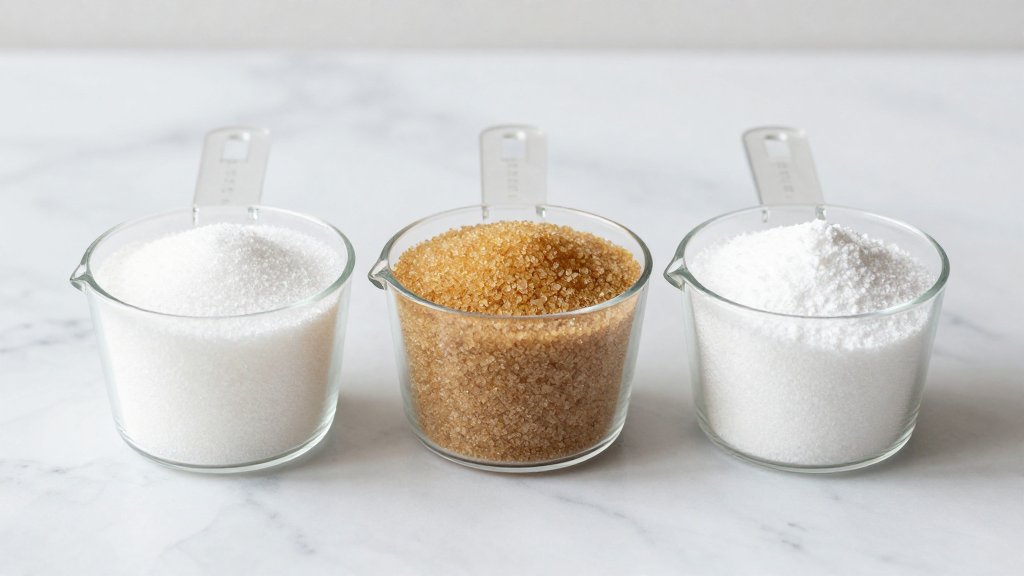
A cup of sugar in grams is not a single answer. Granulated sugar, brown sugar, and confectioners sugar each weigh differently when you fill the same cup. Getting this right can be the difference between a recipe that works and one that doesn't.
This guide covers the exact cup of sugar in grams for each type, plus conversions for the most common fractional measurements. All weights come from King Arthur Baking's tested ingredient chart and USDA FoodData Central data.
Cup of Sugar in Grams: Why the Answer Varies
A measuring cup is a volume tool, not a weight tool. The grams in 1 cup of sugar depend on how densely the crystals fill that volume. A cup of fine granulated sugar packs more tightly than the same cup of airy powdered sugar.
Three factors drive the variation: crystal size, moisture content, and how the sugar is measured. 1 cup sugar grams can range from about 113 grams for unsifted confectioners sugar to 213 grams for firmly packed brown sugar.
1 Cup Granulated Sugar in Grams
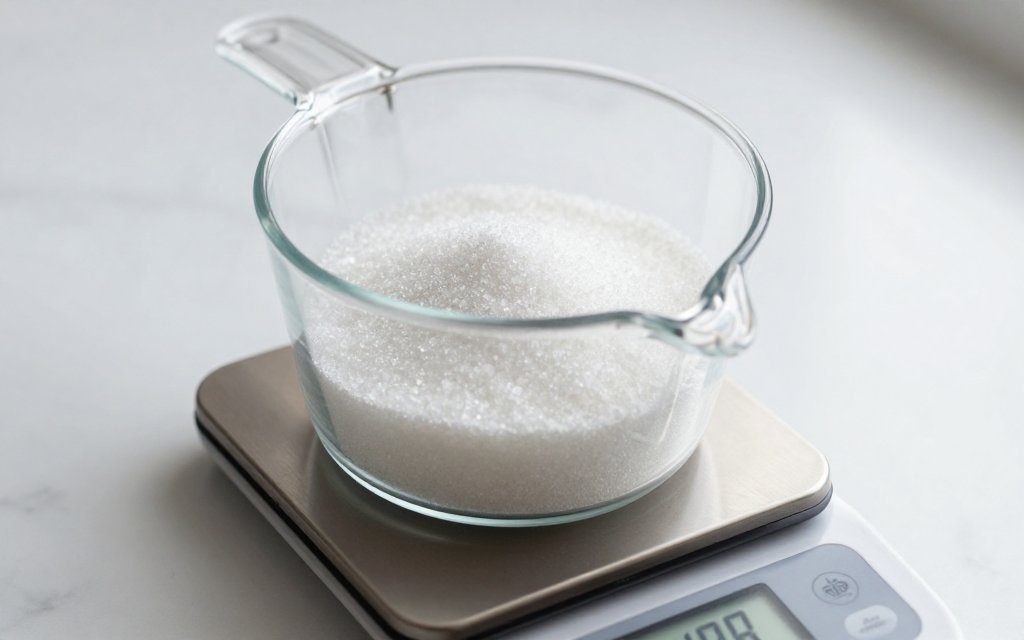
According to King Arthur Baking's ingredient weight chart, 1 cup granulated sugar in grams is 198 grams (7 ounces). USDA FoodData Central data aligns closely at approximately 200 grams per cup.
Granulated sugar has a predictable density because its uniform crystals settle without large air pockets. The 198-gram figure applies to standard white granulated sugar scooped from the bag and leveled off at the top of the cup.
Tablespoon and Teaspoon Weights
When a recipe calls for a smaller amount, 1 tablespoon of granulated sugar weighs about 12.5 grams. A teaspoon is roughly 4 grams. For tablespoon-level conversions, use the Scale for Grams tablespoon converter to get precise measurements.
1 Cup Brown Sugar Grams: Packed vs. Loose
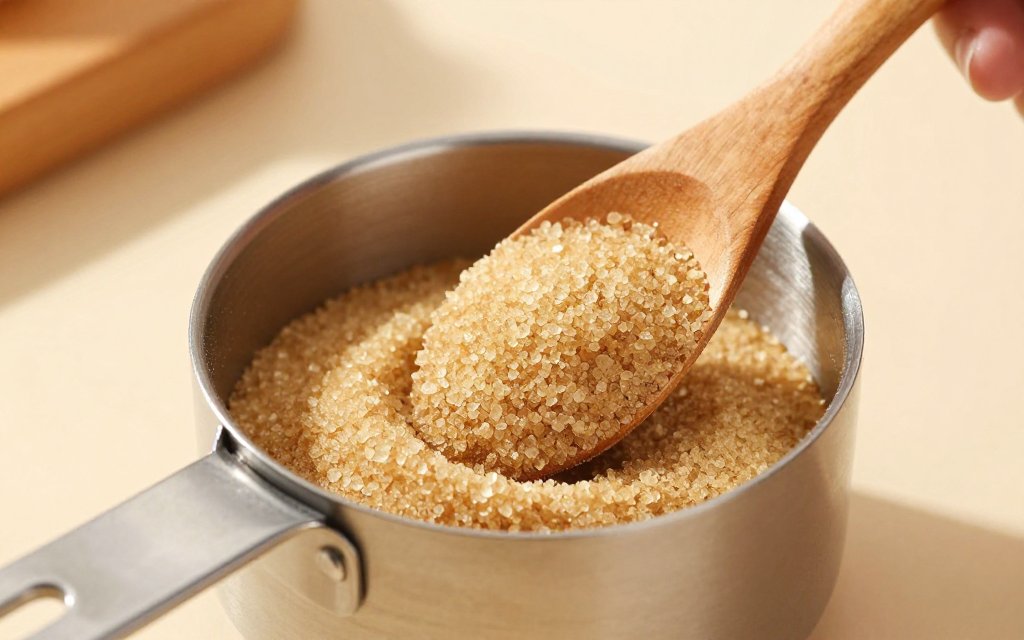
Brown sugar absorbs moisture from the air and clumps together, which is why recipes specify packing. The brown sugar cup in grams varies significantly depending on how firmly you press it down. Most American baking recipes mean packed brown sugar when they call for one cup.
King Arthur Baking measures 1 cup brown sugar grams at 213 grams (7.5 ounces) when packed. Testing by America's Test Kitchen showed loosely spooned brown sugar in the same cup weighs closer to 145 grams.
What Packed Means in Practice
To pack brown sugar, spoon it into a dry measuring cup and press it firmly with the back of a spoon until no air gaps remain. When you turn the cup over, the sugar should hold the cup's shape briefly before crumbling. Packing can add 50 to 70 grams compared to a loosely filled cup.
Recipes that call for brown sugar almost universally mean packed. If the recipe meant loose, it would say 'lightly packed' or 'loosely measured.' When in doubt, pack it.
1 Cup Confectioners Sugar in Grams
Confectioners sugar, also called powdered sugar or icing sugar, is the lightest of the three by volume. 1 cup confectioners sugar in grams is 113 grams (4 ounces) when unsifted, according to King Arthur Baking.
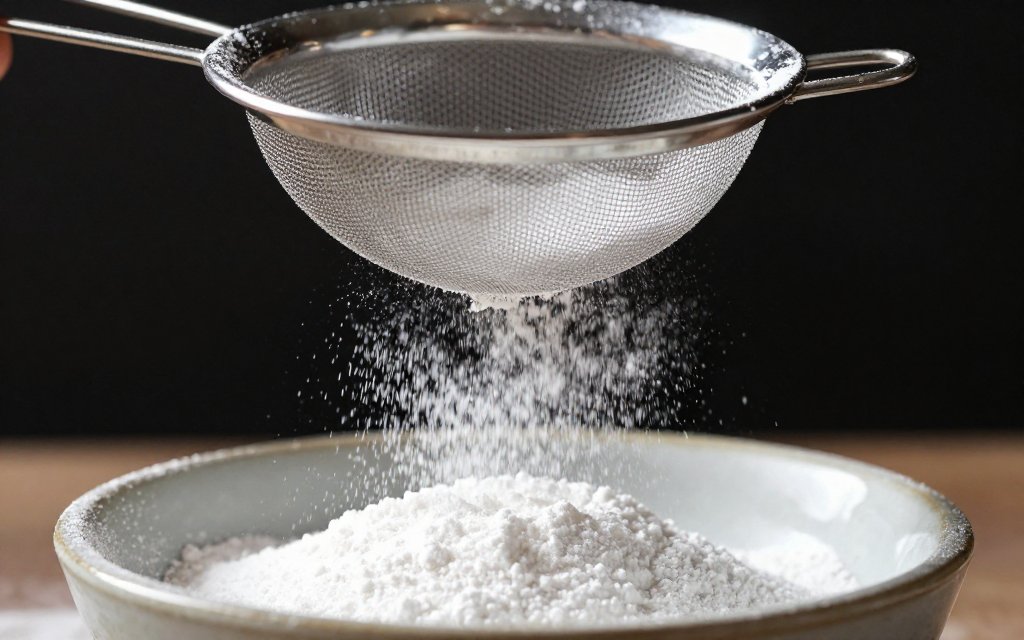
Because confectioners sugar is milled to a very fine powder and contains a small amount of cornstarch to prevent caking, it traps more air than granulated sugar. Settling in the bag also compresses it, so how you measure matters a great deal.
Sifted vs. Unsifted Difference
When a recipe says 'sifted confectioners sugar,' sifting happens before measuring. A cup of pre-sifted powdered sugar can weigh 85 to 90 grams because sifting adds air and loosens the powder. If you sift after measuring, you still get the full 113 grams. These two approaches give very different amounts, which is why weight-based recipes always specify which method they use.
If your frosting turns out too thick, check whether the recipe meant pre-sifted or not. One cup measured before sifting weighs about 113 grams. One cup measured after sifting weighs closer to 85 grams. That 28-gram difference shows up in the final texture.
3/4 Cup and 1/2 Cup Granulated Sugar in Grams
Fractional cup measurements appear in most baking recipes, especially for smaller batches. 3/4 cup granulated sugar in grams works out to 149 grams, since a full cup is 198 grams. For 1/2 cup granulated sugar in grams, the weight is 99 grams. The cups to grams converter can handle any fraction you need instantly.
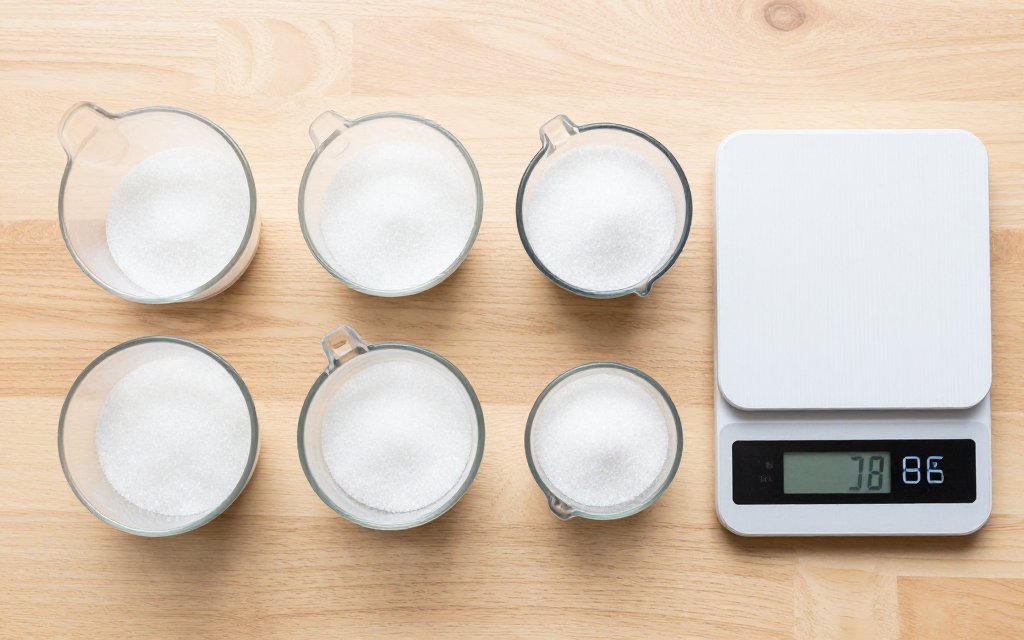
Quick Reference: Common Fractions
| Amount | Granulated | Packed Brown |
|---|---|---|
| 1/4 cup | 50 g | 53 g |
| 1/3 cup | 66 g | 71 g |
| 1/2 cup | 99 g | 107 g |
| 2/3 cup | 132 g | 142 g |
| 3/4 cup | 149 g | 160 g |
| 1 cup | 198 g | 213 g |
Why Sugar Type Changes How Much a Cup Weighs
A cup measures volume, but weight depends on how densely that volume fills with material. How much does a cup of sugar weigh is a question with three different answers because each sugar type has a different bulk density.
Crystal size, moisture content, and particle shape all affect how tightly the sugar packs into a measuring cup. Granulated sugar sits in the middle range. Brown sugar has added molasses that makes it sticky and prone to clumping, so recipes specify packing to standardize the measurement. Confectioners sugar is milled to a fine dust and traps more air than the other two types.
Volume measurements work well for liquids because water has a constant density. Dry ingredients vary, and none more than different types of sugar. Switching to grams removes this variable from every recipe you bake.
Baking Better: Use Grams for Sugar
Switching to grams for sugar removes the ambiguity around scooping, packing, and settling. A kitchen scale that reads in grams costs less than most bakeware and produces more consistent baking results from the first use.
For day-to-day baking, round numbers work fine: 200 grams for a cup of granulated, 215 grams for a cup of packed brown, 115 grams for a cup of confectioners sugar. For precision baking like macarons or custards, use the exact King Arthur figures: 198, 213, and 113 grams respectively.
Converting Between Cups and Grams
To go from grams to cups, divide your gram amount by the per-cup weight. For granulated sugar, divide by 198. For packed brown sugar, divide by 213. For confectioners sugar, divide by 113.
The Scale for Grams converter handles weight calculations automatically for granulated sugar. You can also use it to check gram equivalents for other ingredients when your recipe uses cup measurements.
Once you start baking by weight, the margin of error disappears. Sugar measured in grams comes out the same every time you make the recipe, regardless of how it was packed, sifted, or scooped.
Consistent results matter most in recipes where sugar plays a structural role. In meringues, the ratio of sugar to egg whites determines texture. In caramels, exact sugar weight affects the final temperature and consistency. For everyday cakes and cookies, measuring by gram weight takes about the same time as measuring by cup and produces a more predictable result.
If you bake from international recipes that already use metric weights, this is particularly relevant. Most European recipes give 200 grams for a cup of granulated sugar, which aligns closely with the King Arthur Baking figure of 198 grams. American recipes that convert to metric often round to 200 grams for simplicity.
Scale for Grams
Need to Weigh Something?
Download Scale for Grams and get an AI weight estimate from a photo in seconds.