Shipping Vinyl Records: What Does One LP Weigh?
One LP usually lands around 230 to 300 g for the record and jacket, but shipping weight depends on the mailer, padding, and how many records you stack. This outline breaks down real-world ranges and a fast way to estimate package weight without a physical scale.
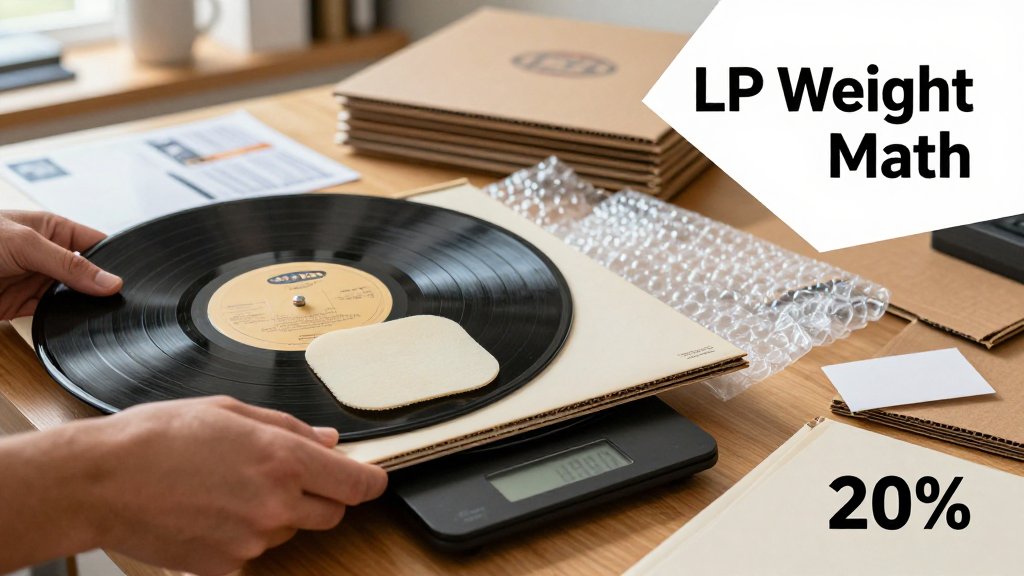
You are ready to ship a vinyl record, you open the shipping screen, and then you hit the same snag: you need the weight, but you do not have a scale. Guess wrong and you risk overpaying or having the package returned. In this guide, you will learn what one LP typically weighs, how jackets and inner sleeves change the total, and practical weight ranges for common mailer setups. You will also get a quick photo-based way to estimate shipment weight so you can buy the right label the first time.
How much does a vinyl record weigh in grams?
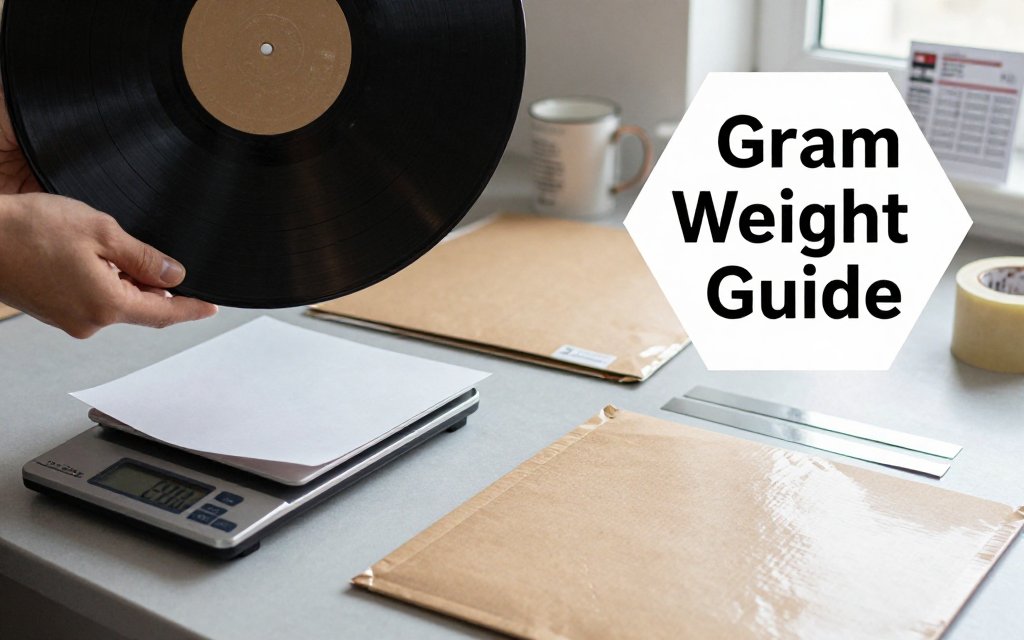
If you are trying to pick postage without dragging out a kitchen scale, a vinyl record is one of those items that feels “light” until you add everything that actually ships. The disc has a known gram rating (like 140 g or 180 g), but the paper inner sleeve, cardboard jacket, and any extras can push you into the next postal price tier fast. For quick planning, it helps to think in two steps: (1) the record plus jacket weight, then (2) the mailer and stiffeners you add for protection. In the US, 1 oz is about 28.35 g, so small differences of 30 to 60 g can change your ounce total.
Typical LP weights: record, sleeve, and jacket
Most single LP shipments start with about 230 to 300 g for record plus jacket, before you add the mailer. A realistic component breakdown looks like this: the vinyl disc is often 120 to 180 g (a common “standard” 12-inch record is around 140 g), the paper inner sleeve is roughly 10 to 25 g, and a standard single jacket usually lands around 90 to 140 g depending on thickness and finish. The key detail that trips people up is that 180 g is typically the disc weight, not the whole album package, as explained in this vinyl weight explainer. That is why a “180 g LP” can still ship closer to 300 g once the cardboard is included.
Paper and cardboard vary more than you would expect. A thin, uncoated vintage jacket can be on the lower end, while newer glossy jackets and thicker stock often feel noticeably heavier in-hand. Some releases also swap the basic paper inner sleeve for a poly-lined sleeve, which can add a few extra grams. And sometimes the inner sleeve is missing entirely (common with used records), which can drop 10 to 25 g from your estimate. If you are shipping a record you pulled from a shelf without its original inner, you can still protect it by using a fresh inner sleeve, just remember you are adding that weight back in.
What changes the weight the most (and surprises people)
The biggest surprise is usually the jacket style. A gatefold is essentially two panels of cardboard joined together, so it can add a meaningful chunk of weight compared to a single pocket jacket. Inserts also add up: a lyric booklet, photo prints, download card, or hype sticker sheet might sound minor, but together they can be another 20 to 80 g depending on paper quality. Another sneaky one is the “upgrade” outer sleeve. A heavyweight poly outer sleeve can add roughly 15 to 30 g, and sellers often pair it with extra cardboard stiffeners. Those stiffeners can weigh more than the record itself if you stack multiple pieces of thick chipboard.
Multiples change the math fast, and the packaging format matters. Two LPs in one jacket usually ship closer to a double LP range than two separate singles, because the jacket is shared but the vinyl weight doubles. As a rough planning example, two 140 g discs are already about 280 g before sleeves and jacket, so a 2xLP package often ends up around 450 to 650 g depending on whether it is a gatefold, includes booklets, or uses thicker cardboard. If you are shipping two separate single LPs, you might be closer to two times the 230 to 300 g baseline, plus the fact that you may need a larger mailer or more stiffeners to keep corners from crushing.
If you cannot weigh the package on a physical scale, you can still get a better estimate by treating it like portioning food by sight. Start by identifying the pressing weight (120 g, 140 g, or 180 g), then add your “known add-ons” like gatefold jacket, inserts, and outer sleeve. This same estimating mindset is useful beyond shipping, too, especially if you track ingredients or portions at home, which is why people like palm-to-grams macro tracking as a fast reference. For postage, your safest move is to round up to the next 25 to 50 g band, because tape, labels, and stiffeners are easy to underestimate.
For a single LP, estimate 230 to 300 g for the record plus jacket, then add weight for what protects it. Gatefolds, booklets, thick outer sleeves, and extra cardboard are what usually bump a package into a higher postage tier.
Shipping vinyl records: total package weight estimates
For shipping, the LP is only half the story. The label price is based on the total package weight: record(s) plus the mailer, stiffeners, padding, tape, and sometimes a poly bag or printed invoice. A single 12-inch LP with jacket often lands around 180 to 260 g, but your packaging can easily add another 200 to 350 g. That is why two sellers can ship the same album and land in totally different weight brackets. If you do not have a physical scale, your best goal is not perfection, it is getting safely above the cutoff so you do not get hit with a postage adjustment after the fact.
LP mailer weight, bubble mailer weight, and padding add-ons
Start with the container, because it is the biggest non-record weight. A dedicated cardboard LP mailer (the fold-over type made for 12-inch records) often adds about 120 to 200 g, depending on how thick and rigid it is. A large bubble mailer can be lighter, commonly about 40 to 90 g, but it is also easier to crush, so many sellers only use it for very low-value records or when combined with stiffeners. Speaking of stiffeners, two extra pieces of corrugated cardboard can add 60 to 150 g total, and that number climbs fast if you double-layer for protection.
Then add the “small stuff” that quietly pushes you over a threshold. Extra bubble wrap, corner protectors, and tape are usually another 10 to 40 g, and it is easy to forget them because they feel weightless in your hands. Most underpaid labels come from forgetting stiffeners and tape, not from mis-guessing the record. If you are choosing between safety and shaving 30 g, prioritize safety. A split seam or corner ding costs more than a few grams of cardboard, especially if you have to refund or accept a return.
One simple checklist for 1 to 3 LP shipping weights
Use this quick build-up method and you can estimate almost any small order in under a minute. It also makes repeat shipping more consistent, which matters if you sell on Etsy, Discogs, eBay, or Shopify and you want fewer “why was shipping so high?” messages. After you total everything, round up. In the US, carriers and postage tools commonly step through ounce or pound tiers, and USPS specifically explains that postage can be calculated per ounce or fraction thereof, meaning fractions are treated as the next full ounce in many cases (see their definition of rounded up to a whole ounce). If you work in grams, a practical habit is rounding to the next 50 g band (or more) once you are near a cutoff.
Here are realistic totals you can keep on a sticky note. For 1 LP in an LP mailer with two stiffeners and normal tape, you often land around 400 to 550 g. Example: 220 g record+jacket + 160 g mailer + 90 g stiffeners + 20 g tape and padding = 490 g. If you were tempted to call it 490 g and print postage exactly, do yourself a favor and label it as 500 to 550 g. That tiny buffer covers variations like a heavier gatefold jacket, a printed inner sleeve, or an extra strip of tape when you reinforce seams.
For multi-LP orders, packaging gets more variable, so the range widens. Two LPs commonly come in around 650 to 900 g, especially if you add larger stiffeners or use a multi-depth mailer. Example: 2 records at 230 g each (460 g) + 190 g mailer + 140 g stiffeners + 25 g padding = 815 g, which is just under 2 lb (908 g), but close enough that rounding up is smart. Three LPs tend to sit around 900 to 1,250 g depending on inserts and how “overbuilt” your stiffening is. Example: 3 records at 240 g each (720 g) + 200 g mailer + 170 g stiffeners + 30 g padding = 1,120 g. That clears 2 lb, so price it as 1.15 to 1.25 kg and move on.
How to weigh record shipments without a scale
If you ship records even occasionally, you already know the stressful moment, the label is ready, the mail carrier is coming, and you are guessing whether your package is 15.9 oz or 1 lb 1 oz. Without a physical scale, the goal is not perfection, it is picking the right postage tier so you do not get a postage due surprise later. The most reliable no-scale approach is to use two checks that agree with each other: (1) a photo-based estimate from your phone and (2) a quick reality-check math method that totals the parts inside your mailer. When both land near the same number, you can confidently round up and print.
Photo-based weight estimates: when they work best
Photo estimates work best when you need a fast decision before you buy postage or schedule a pickup, especially for small batches like 1 to 4 records. Pack the record first (do not estimate an unboxed LP), then place the sealed mailer on a plain background like a countertop, poster board, or a clean sheet of paper. Take the photo straight down, and include a familiar reference object when you can, such as a credit card, a US quarter, or a standard sheet of letter paper. In a photo-based app like Scale for Grams, you will get an estimated weight in grams and ounces, which is ideal for catching “this is clearly over 1 lb” mistakes early.
Make the photo estimate more accurate by confirming what is actually inside, because vinyl packaging changes weight more than people expect. Note whether it is 1 LP or 2 LPs, a gatefold jacket, a thick tip-on style jacket, or extra inserts like a booklet, poster, or download card. For example, a single LP in a standard jacket might land around 300 to 400 g (about 10.6 to 14.1 oz) before you add the mailer. A sturdy cruciform LP mailer can add roughly 150 to 250 g (5.3 to 8.8 oz) depending on brand and thickness. Those details help you interpret the number your phone gives you, and decide when to round up.
Use a reality-check method right after your photo estimate, because it reduces the odds of underpaying when the photo is slightly off. Build a simple “parts list” total: record and inner sleeve, jacket, mailer, plus any padding. Example: 1 LP in jacket at 360 g (12.7 oz) + one rigid mailer at 200 g (7.1 oz) + two cardboard stiffeners at 180 g (6.3 oz) + bubble wrap at 60 g (2.1 oz) totals about 800 g (28.2 oz). That is 1 lb 12.2 oz, so buying a 2 lb label is a smart hedge. If the photo estimate says 1 lb 6 oz but your parts list says 1 lb 12 oz, trust the higher number.
Reality check rule: if your estimate lands within 2 oz of the next tier, round up. Postage is usually cheaper than a returned package. Heavy mailers, gatefold jackets, and extra inserts add weight fast.
Round up even more aggressively when the package shape is irregular or extra rigid. Thick cardboard, corner protection, oversized poly bags, and bulky padding can throw off both photo estimates and “typical weight” assumptions. Gatefolds and deluxe reissues are the classic trap, because the jacket can be heavier than the disc. Another trap is adding freebies (stickers, zines, a handwritten note on thick cardstock) that seem weightless until you cross a 4 oz step. If you are shipping multiples, also consider splitting into two parcels instead of forcing one heavy box, since dense record stacks can stress seams and increase damage claims. Conservative postage plus good packing usually costs less than a replacement refund.
FAQ: common vinyl shipping weight questions
These are the questions that come up most when you are trying to ship without a scale, especially if you sell a few records a week and print labels at home. The theme is simple: know the hard limits (like maximum weight), treat phone estimates as estimates, and build in a small buffer when you are close to a pricing step. The best habit is to write down your own “typical totals” for your supplies. After 5 to 10 shipments, you will know that your favorite LP mailer plus one standard single-LP album usually lands around a certain ounce range, and you will stop guessing every time.
What is the Media Mail weight limit for records, and how many LPs fit under it?
USPS Media Mail has a maximum package weight of 70 lb, which is 1,120 oz, according to USPS weight standards. How many LPs fit under that depends on jackets and packing, but a practical planning number is about 1 lb per 2 to 3 single-LP albums once you include mailers or boxing material. Tip: if you are shipping a lot, limit boxes to 35 to 45 lb for safer handling, fewer split seams, and fewer corner dings during transit.
How accurate is a phone scale app for estimating package weight from photos?
A phone scale app can be surprisingly useful for quick sorting, like deciding whether a shipment is closer to 12 oz, 1 lb 8 oz, or 3 lb, but it is not a lab instrument. Accuracy depends on lighting, camera angle, background contrast, and whether the app can infer size from a reference object (credit card, coin, or paper). It also depends on packaging, since stiff cardboard and bubble wrap change thickness and apparent volume. Practical tip: treat the app as your first pass, then round up at least 2 oz when you are near a pricing break.
How do I avoid underpaying postage when shipping vinyl records?
Avoiding postage due is mostly about building a buffer and using one simple double-check. First, do a photo estimate of the sealed package, then do the parts list total (record(s) + jacket(s) + mailer + padding). If those two numbers disagree, buy postage using the higher estimate. Second, round up to the next ounce or the next whole pound when you are within 2 oz of a tier, especially around the 15.9 oz to 1 lb change. Tip: if you can, print one “test label” estimate and compare it to your saved typical weights for similar orders.
Need to weigh something fast without digging up a kitchen scale? Download Scale for Grams and get an AI-powered weight estimate from a photo in seconds. It is a simple way to sanity check an LP shipment before you buy postage, especially when you are packing multiple records or extra inserts. Get it now on iOS, then snap a photo and pick your label with more confidence.
Scale for Grams
Need to Weigh Something?
Download Scale for Grams and get an AI weight estimate from a photo in seconds.