Spice Weights: How Many Grams in a Teaspoon?
A teaspoon of garlic powder weighs 3.5 g; dried oregano weighs just 0.9 g. This guide gives exact gram weights per teaspoon and tablespoon for common spices, salt types, and leaveners, plus quick answers to the measurement questions cooks search most.
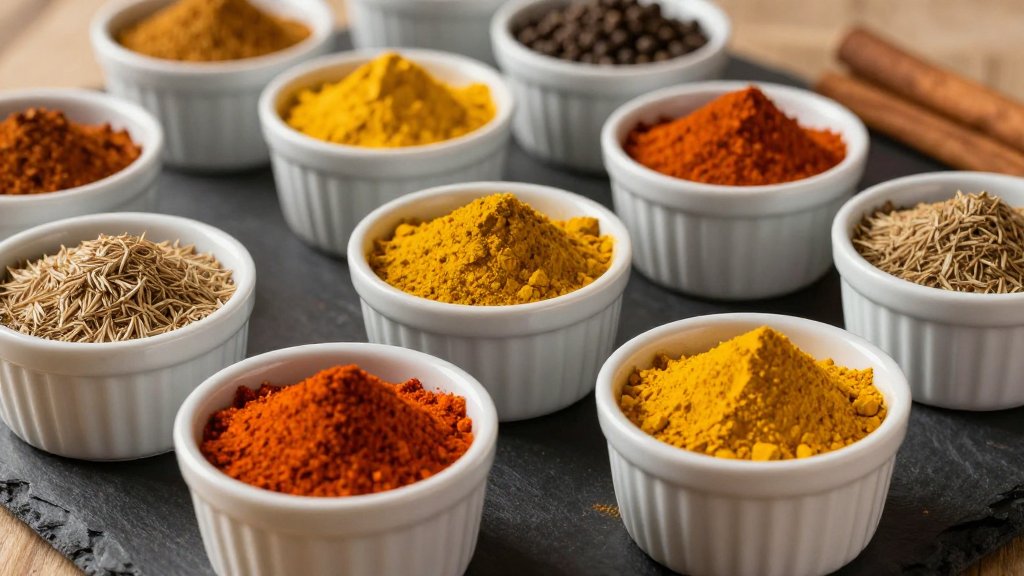
Salt is salt until you weigh it. A packed teaspoon and a loosely scooped teaspoon of the same spice can differ by 30 percent, which is enough to throw off a dry rub, a curry paste, or a baked good. Knowing the actual gram weight behind each spice makes scaling and seasoning reliable.
How many grams in a teaspoon of a given spice depends almost entirely on how dense that spice is. Ground garlic powder weighs 3.5 g per teaspoon while dried oregano barely reaches 0.9 g. That 4x range is why professional cooks and serious bakers weigh their spices rather than scooping by volume.
How Many Grams in a Teaspoon of Common Spices
The reference chart below covers eight of the most-used spices, measured from a leveled teaspoon. All figures come from Poor Man Protein's ingredient weight database, one of the most thorough free references available. Figures can vary by roughly 10 to 15 percent depending on grind size and settling, so use a kitchen scale whenever a recipe is sensitive.
Spice weights range from 0.9 g for dried oregano to 5.8 g for table salt per teaspoon. That 6x spread is why volume and weight measurements are not interchangeable when a recipe needs to be precise.
| Spice | Per Tsp | Per Tbsp |
|---|---|---|
| Black pepper, ground | 2.5 g | 7.5 g |
| Chili powder | 2.7 g | 8.1 g |
| Cinnamon, ground | 2.3 g | 6.9 g |
| Cumin, ground | 2.8 g | 8.4 g |
| Garlic powder | 3.5 g | 10.5 g |
| Onion powder | 3.3 g | 9.9 g |
| Oregano, dried | 0.9 g | 2.7 g |
| Paprika | 2.7 g | 8.1 g |
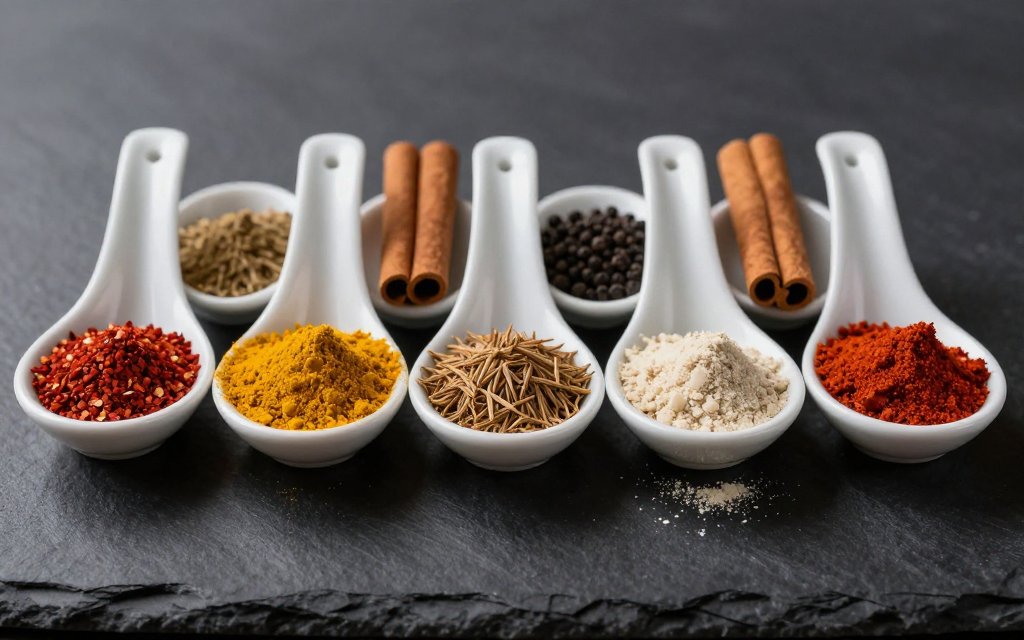
Notice that garlic powder (3.5 g) weighs nearly four times as much as dried oregano (0.9 g) despite filling a teaspoon by the same volume. If you are building a spice blend from a recipe written by weight and need to switch units, the grams to ounces converter handles the switch in one step.
How Many Grams in a Teaspoon of Salt
Table Salt vs Kosher Salt vs Sea Salt
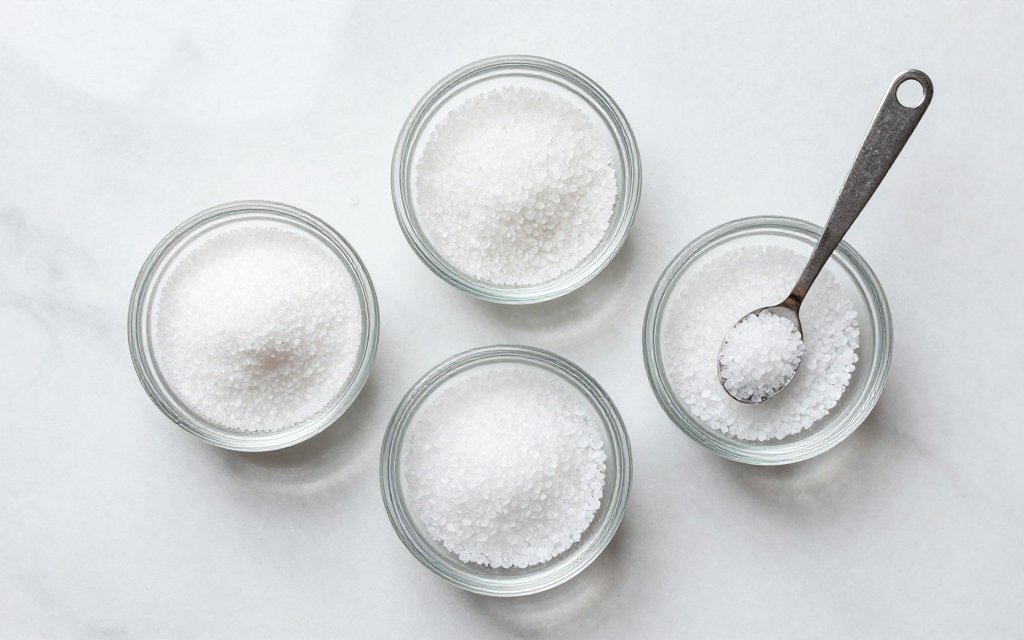
Salt is the most weight-sensitive seasoning in any kitchen. A recipe that calls for one teaspoon of salt gets a very different result depending on which type you use, because grain size determines how tightly the crystals pack into that teaspoon.
| Salt Type | Per Tsp | Notes |
|---|---|---|
| Table salt (Morton) | 5.8 g | Fine grain, densest type |
| Morton kosher salt | 5.3 g | Medium grain, slightly lighter |
| Diamond Crystal kosher | 3.3 g | Coarse flakes, lightest option |
Swapping table salt for Diamond Crystal kosher salt without adjusting the amount gives you 43 percent less sodium by weight. A teaspoon of table salt is 5.8 g; the same volume of Diamond Crystal is only 3.3 g.
This is the most common source of oversalting in recipe testing. Many US cookbook authors develop recipes with Diamond Crystal kosher salt, which weighs only 3.3 g per teaspoon. A cook reaching for table salt instead adds 5.8 g per teaspoon, roughly 75 percent more sodium without changing the volume measurement.
Light Dried Herbs vs Dense Ground Spices
The Densest Ground Spices
Dense ground spices pack a lot of mass into a small volume because their fine particles leave little air between them. Garlic powder and onion powder are particularly heavy. Baking soda and baking powder sit at the top of the density range, which is why small overages in baked goods affect texture and rise noticeably.
Lightest Dried Herbs
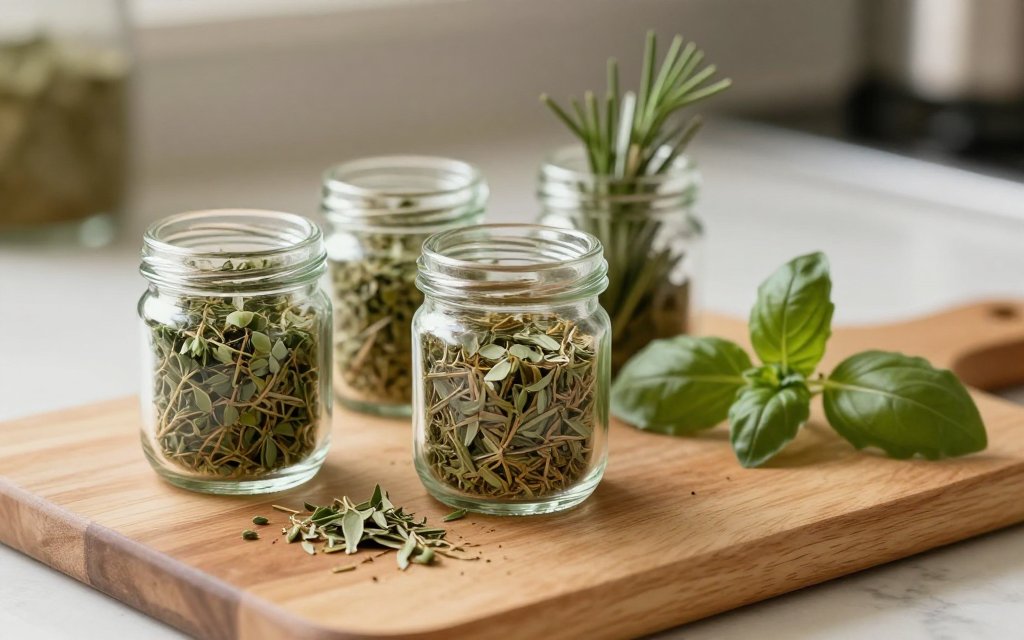
Dried leafy herbs weigh dramatically less than ground spices because the fragile, airy leaves leave large gaps in the spoon. Volume measurements for dried herbs are less critical in casual cooking, but the difference still adds up when scaling a batch for a crowd.
How Many G in a Tablespoon: Scaling Up Recipes
A tablespoon holds exactly three teaspoons, so how many g in a tablespoon of any spice is the teaspoon weight multiplied by three. Garlic powder is 3.5 g per teaspoon, which means how many g is a tablespoon of garlic powder comes to 10.5 g. Dry rub recipes often specify tablespoons because that quantity is more practical for coating meat or seasoning a large pot.
One tablespoon always equals three teaspoons in volume, but not in weight. A tablespoon of garlic powder weighs 10.5 g; a tablespoon of dried oregano weighs only 2.7 g. When tripling a recipe, the difference compounds fast.
When scaling a recipe for a crowd, working in tablespoons and then converting to grams keeps the math clean. How many grams in a tablespoon of sugar is 12.6 g for granulated white, and how many grams per teaspoon of sugar comes to 4.2 g, useful to know when a rub formula mixes spice tablespoons with sugar teaspoons in the same blend. Our cup of sugar in grams guide covers granulated, brown, and confectioners in detail.
Measuring Spices Without a Kitchen Scale
Keep Your Technique Consistent
Without a kitchen scale, the most reliable approach is to use consistent measuring spoons and always level them with a straight edge, not a finger or a rounded scoop. A heaped teaspoon of cumin can weigh 30 percent more than a level one, which matters for a spice rub that depends on specific balance.
Estimate Jar Weight From a Photo
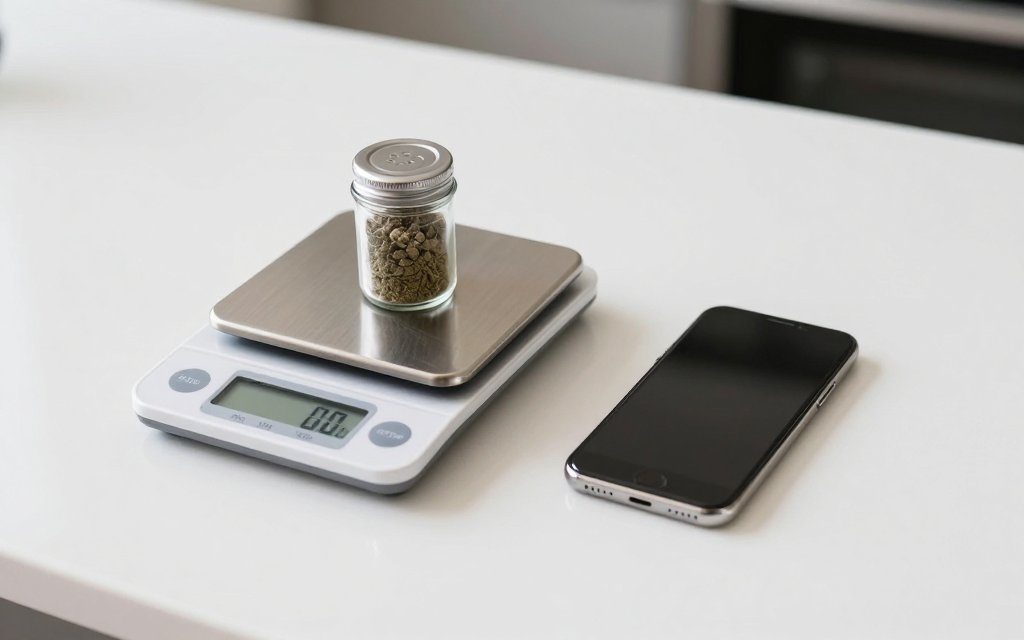
For estimating the weight of a sealed spice jar or a bag of dried herbs before you buy, the Scale for Grams app uses your phone camera to estimate the weight from a photo. It works on packaged goods and sealed containers where you need a quick gram figure without unpacking anything.
Why Measuring by Weight Beats Volume
Volume measurements depend on how the spice was handled before it reached the spoon. A jar of paprika that settled during shipping packs more densely than a freshly ground batch. Measuring how many grams per teaspoon of a spice you actually have, rather than accepting a volume figure, removes that variable entirely.
A loosely scooped teaspoon of paprika can weigh 10 to 15 percent less than a packed one. For everyday cooking that is forgiving, but in a dry rub or a brine formula, those few tenths of a gram shift the flavor balance noticeably.
Quick Answers to Common Measurement Questions
How Many Grams Is One Teaspoon Exactly?
For water, one US teaspoon holds 4.93 mL and weighs 4.93 g, since water's density is 1 g per mL. How many gram is a teaspoon of a dry ingredient depends entirely on that ingredient's density. For dry granulated sugar, how many grams in 1 spoon of sugar is about 4.2 g when the teaspoon is leveled.
How Many Teaspoons Are in a Tablespoon?
Three teaspoons make one tablespoon in all US standard measurements, and how many teaspoons are in a tablespoon is the same answer globally with one caveat. The Australian tablespoon holds 4 teaspoons, so recipes from Australian food sites can catch US cooks off guard. When in doubt, how many teaspoons make a tablespoon is three for every US, UK, and Canadian recipe.
How Many ML in a Teaspoon?
One US teaspoon holds 4.93 mL, rounded to 5 mL for most practical purposes. How many ml a teaspoon holds matters when converting between metric recipes and US-style ones, or when measuring liquid spice extracts like vanilla. The UK and metric teaspoon are standardized at exactly 5 mL.
How Many Ounces Is a Tablespoon?
One tablespoon equals 0.5 fluid ounces for liquids, but how many ounces is a tablespoon of a dry spice depends on that spice's density. A tablespoon of garlic powder (10.5 g) converts to about 0.37 oz by weight, while a tablespoon of dried oregano (2.7 g) is only about 0.10 oz. The grams to ounces converter handles this calculation for any spice in one step.
For a longer list of spice and herb weights, the ChefSolver spice measurement chart covers 40+ ingredients with both teaspoon and tablespoon equivalents.
Need to weigh something fast? Download Scale for Grams and get an AI-powered weight estimate from a photo in seconds. Point the camera at a spice jar, a bag of dried herbs, or a filled measuring spoon and get a working gram figure without unpacking a scale. Get the app here: iOS.
Scale for Grams
Need to Weigh Something?
Download Scale for Grams and get an AI weight estimate from a photo in seconds.