Chart of Flour Cups to Grams, Plus How to Measure It
A cup of flour is not one weight. It ranges from 120 to 160 grams depending how you scoop. Here is a clear chart of flour cups to grams by type, the fluff-spoon-level method, and how to turn grams back into cups.
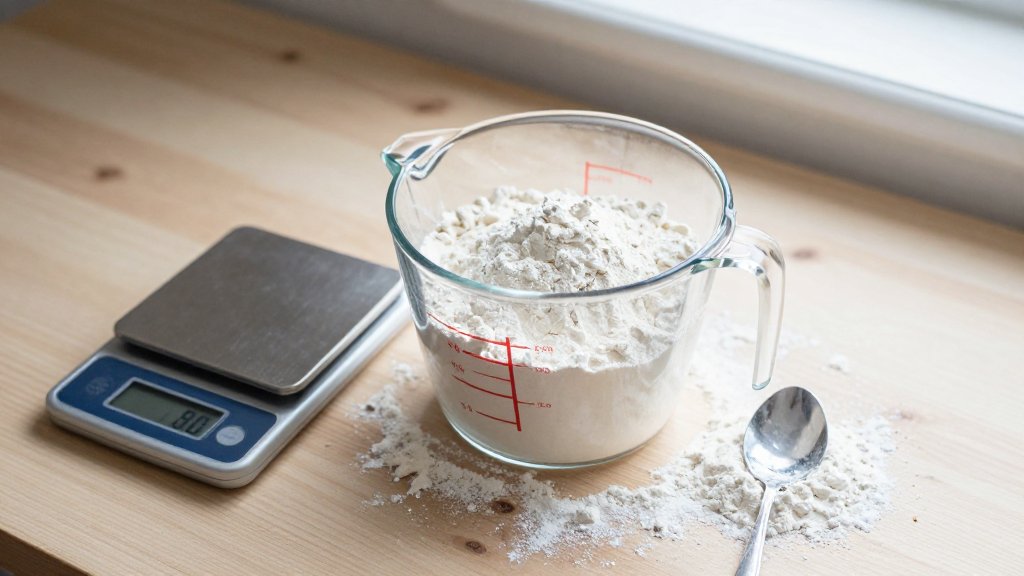
A cup of flour can weigh anywhere from 120 to 160 grams, and that 40 gram gap is why one batch of cookies spreads perfectly and the next comes out dry. Converting flour cups to grams removes the guesswork, because grams do not care how hard you packed the cup. If you bake by volume, you are trusting a number that shifts every time you dip the scoop.
Most charts settle on 125 grams for one spooned cup of all-purpose, though King Arthur uses 120 and Bob's Red Mill lists 136. So the honest answer to how many grams in a cup of flour is a range, not a single figure. A kitchen scale, or a quick photo estimate, ends the argument. You can double check any result against our grams to ounces converter when a recipe mixes units.
Flour Cups to Grams by Type
Not every flour packs the same. Bran and germ make whole wheat heavier by volume, while cake flour is milled fine and sits lighter. The table below uses King Arthur's spoon-and-level standard, so you can read flour cups to grams for the types most home bakers keep on the shelf. Notice how close the wheat flours land and how the specialty flours drift.
| Flour type | One cup | Two cups |
|---|---|---|
| All-purpose | 120 g | 240 g |
| Bread flour | 120 g | 240 g |
| Cake flour | 120 g | 240 g |
| Whole wheat | 113 g | 226 g |
| Self-rising | 113 g | 226 g |
| 00 pizza flour | 116 g | 232 g |
Those are careful, spooned weights. Bob's Red Mill measures by dipping the cup into the bag, which is why its chart runs higher, with 136 grams for all-purpose, 144 for artisan bread, and 152 for whole wheat, as the King Arthur weight chart and the Bob's Red Mill chart both show. Neither chart is wrong. They just describe two different hands reaching for the same bag.
How many grams in a cup of flour, exactly?
Spoon it in gently and level the top and you land near 120 grams, the figure King Arthur prints on its bags. The common recipe standard is 125. Scoop straight from the bag and you can hit 160. So cup of flour how many grams depends entirely on your hand, which is the whole case for weighing.
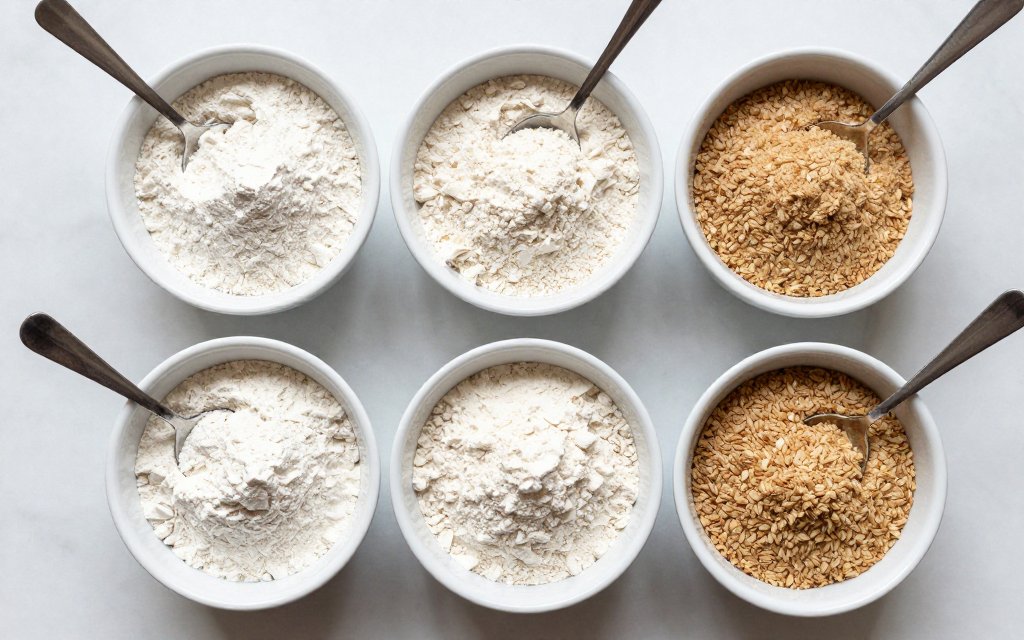
Why a Cup of Flour in Grams Is Never Exact
Flour compresses. Left in the bag it settles, and the scoop you use to fill a cup presses it tighter still. The Calculator Site puts a spooned cup at 125 grams, a sifted cup about 5 percent lighter near 119, and a dip-and-sweep cup 15 to 20 percent heavier at 144 to 150 grams. That is roughly a 26 percent swing for the same measuring cup.
Scoop straight from the bag and a single cup can hold up to 160 grams of flour, about 40 grams more than a careful spoon-and-level.
Forty grams sounds tiny until you scale it. A recipe calling for three cups can carry an extra 120 grams, most of a full cup you never meant to add. That is enough to turn tender bread dense and cookies chalky. The King Arthur Baker's Hotline says flour is the first thing they ask about when a bake goes wrong.
How to Measure Flour Without a Scale
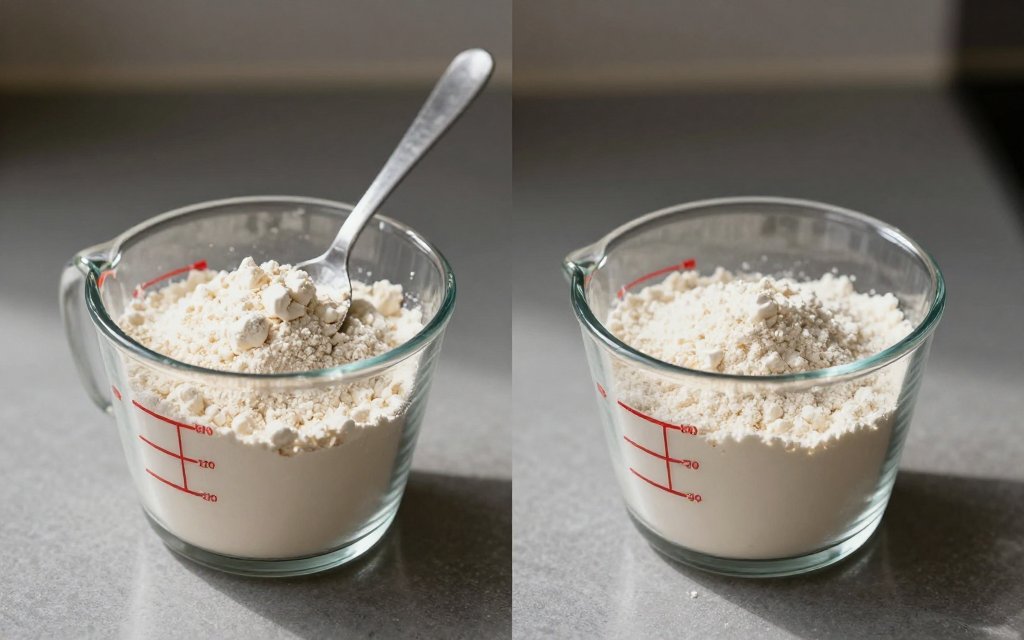
No scale in the drawer? The fluff, spoon, and level method gets you closest to the intended 120 grams. It takes about ten seconds and beats scooping every time.

It still is not perfect, and two careful bakers will land a few grams apart. That is fine for a quick loaf and risky for macarons. When precision matters, weigh it, or snap a photo estimate and lean on our butter conversion chart and cup of sugar in grams guides for the rest of the recipe.
How much does a cup of flour weigh?
Between 120 and 160 grams of flour in one cup, with 125 grams as the safe middle for all-purpose. Whole wheat runs lighter at about 113 grams a cup, and dense flours like semolina climb to 180. If a recipe skips grams, assume 125 per cup of all-purpose and you will rarely be far off.
When a recipe lists grams, trust the grams. The cup is only a rough stand-in for the weight the baker actually meant.
Turning Grams Back Into Cups
Recipes from Europe and the UK often list flour in grams only, so you need the math in reverse. At 125 grams per cup, the conversions stay clean. That makes 500 gm flour in cups an easy 4 cups, and a 250 gram batch exactly 2 cups.
| Flour weight | Cups | Ounces |
|---|---|---|
| 125 g | 1 cup | 4.4 oz |
| 250 g | 2 cups | 8.8 oz |
| 500 g | 4 cups | 17.6 oz |
| 1000 g | 8 cups | 35.3 oz |
Those cups assume a gentle spoon-and-level fill. If you plan to scoop, expect to use a little less flour than the chart says, since your packed cups already weigh more. For odd amounts, our grams to ounces converter handles the fractions faster than a calculator.
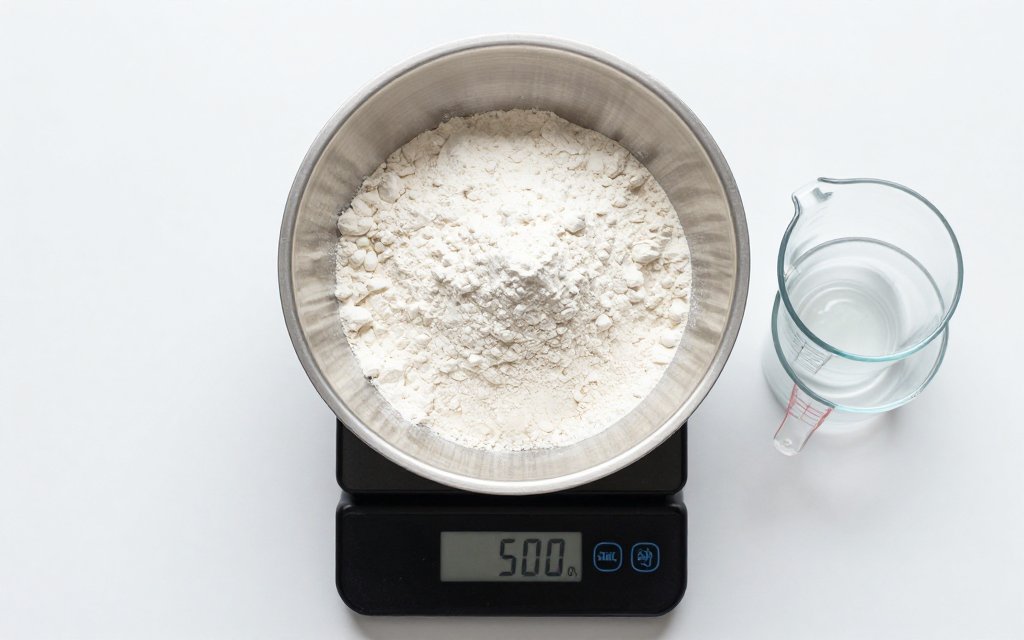
What Getting the Weight Wrong Costs You
The cost is not just a flat cake. Over-flouring wastes the eggs, butter, and time that went into the batch, and those cost more than the flour itself. A failed loaf might mean a second bag of flour and another hour, plus a grocery run you did not plan. Weighing turns a cheap scoop of flour into a repeatable result instead of a coin flip.
Consistency also stretches the ingredients you buy in bulk. Bakers who weigh use exactly what a recipe needs, so a 5 pound bag reaches its full yield instead of vanishing 15 percent faster into overpacked cups. Across a month of weekend baking, that is real flour and real money staying in the pantry.
Weigh your flour and a 5 pound bag delivers every loaf it promises, instead of quietly disappearing into cups packed too tight.
Common Questions About Flour Weights
How many grams in a cup of flour for bread?
Bread flour spooned and leveled comes in near 120 grams a cup on King Arthur's chart, the same as all-purpose. Dip into the bag, as Bob's Red Mill does, and artisan bread flour reads 144. Follow whichever number your recipe used, since that is the weight the writer tested.
Is 2 cups of flour grams the same for whole wheat?
No. Two cups of all-purpose is about 240 grams, but 2 cups of flour grams for whole wheat climb to roughly 226 by King Arthur's chart and 304 by Bob's dip method. Whole grain flour is denser, so always check the specific flour you are using.
How many grams a cup of flour after sifting?
Sifting aerates the flour, so a sifted cup weighs about 5 percent less, near 119 grams for all-purpose. If a recipe says sift then measure, expect a lighter cup. If it says measure then sift, weigh the flour first for accuracy.
Does 500 gm flour in cups differ between brands?
The math is the same, but the result you scoop is not. At 125 grams a cup, 500 gm flour in cups is 4 cups. Scoop a heavier brand and you might fill only about 3.5 cups to reach 500 grams, which is exactly why weighing wins.
Need to weigh flour fast without digging out a scale? Scale for Grams gives you an AI powered weight estimate from a photo in seconds, so you can hit 120 grams a cup every time. Get the app here: iOS.
Scale for Grams
Need to Weigh Something?
Download Scale for Grams and get an AI weight estimate from a photo in seconds.