Digital Scale Calibration Takes One Nickel and Two Minutes
A fresh US nickel weighs exactly 5 grams, so it doubles as a free calibration weight. Here is how to calibrate a digital scale in about two minutes with pocket change, when the coin trick works, and when you need a certified weight.
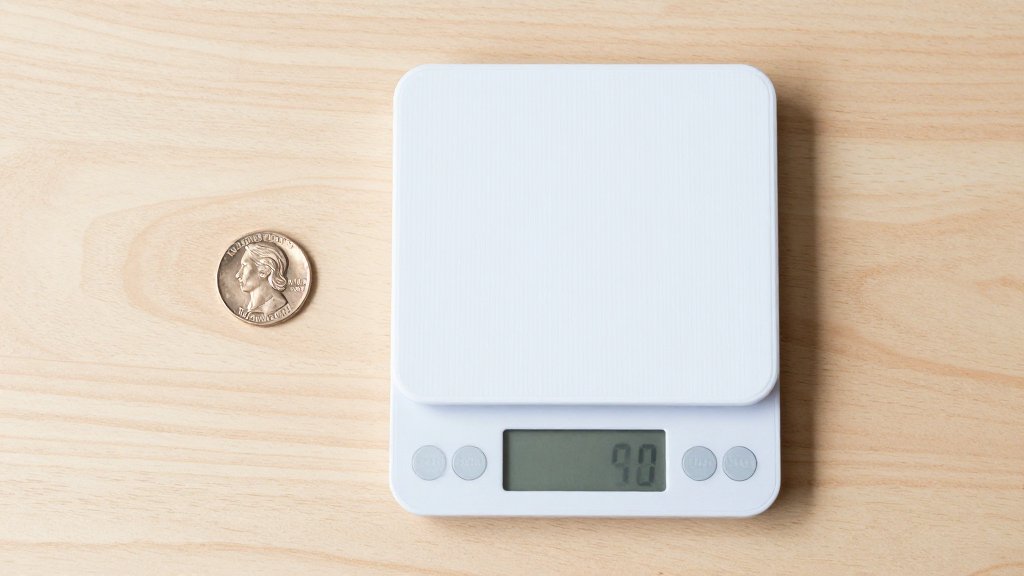
A brand new United States nickel weighs exactly 5 grams, and that one fact is the cheapest quality check your kitchen owns. Set a nickel on a gram scale, and if the number is not 5.0 g, the scale is fibbing. Good digital scale calibration sounds like lab work, yet it usually takes one coin and about two minutes.
Most home scales read in 1 gram steps, and plenty are off by 2 g or 3 g right out of the box. Bakers notice first, because bread and pastry ratios live or die on a few grams. Below is how to calibrate a digital scale with pocket change, when the coin trick is enough, and when you need a real weight.
Why a Nickel Is the Perfect 5 Gram Weight
The United States Mint strikes every nickel to a target of 5.000 grams, and it has held that spec since 1866. The coin is 75 percent copper and 25 percent nickel, 21.21 mm across, with no plating to flake off. That makes a fresh nickel a pocket reference weight you already carry.
Other coins work too if you know their numbers. A penny is 2.5 g, a dime is 2.268 g, and a quarter is 5.67 g, so two quarters land within a hair of 11.3 g. Stack coins and you can hit almost any small target weight.
A US nickel has been struck to 5.000 grams since 1866, which makes it the most accurate free calibration weight most people will ever own.
| Coin | Grams | Diameter |
|---|---|---|
| Penny | 2.5 g | 19.05 mm |
| Nickel | 5.0 g | 21.21 mm |
| Dime | 2.268 g | 17.91 mm |
| Quarter | 5.67 g | 24.26 mm |
| Half dollar | 11.34 g | 30.61 mm |
For every coin at once, keep our coin weight chart and the standard coin weights guide handy. Both list the exact gram figure the Mint publishes.
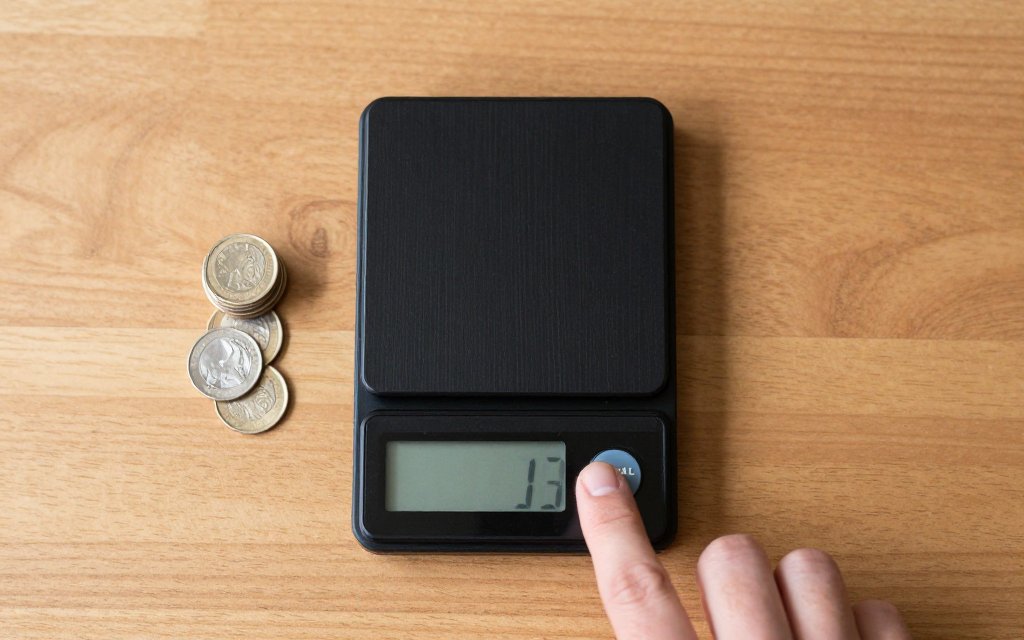
Digital Scale Calibration, Step by Step
Here is the short version. Nearly every digital scale hides a calibration mode behind its mode or units button, and it wants one known weight to lock onto.
That is how you calibrate a digital scale by hand. The question of how to calibrate an electronic scale has the same answer, since electronic and digital mean the same load cell inside. If the display shows 4.9 g or 5.1 g after a PASS, that load cell may be worn and the coin trick will not save it.
If your scale asks for 100 grams
Cheaper scales often demand a 100 g, 200 g, or 500 g calibration point. So how do you calibrate a digital scale that wants 100 g? Twenty nickels stack to 100.0 g, and forty make 200.0 g, which is how to calibrate a scale for grams without buying anything. Keep the coins clean and centered, or the total drifts.
When the Coin Trick Fails You
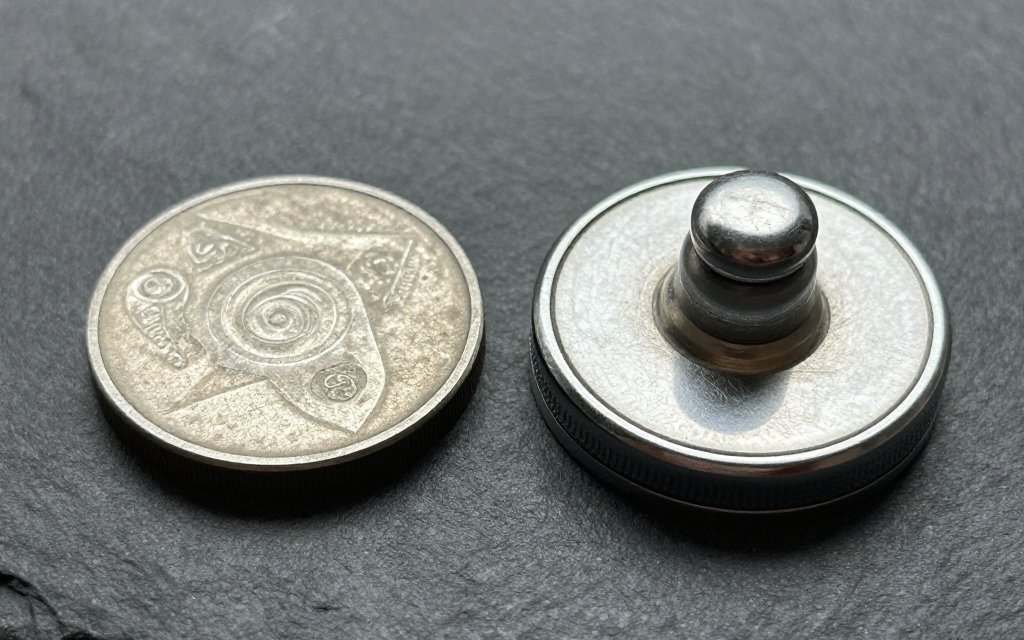
Circulated coins are the weak link. Grime in the grooves and plain wear can shift a coin by a few tenths of a gram, and across a stack that error adds up to a full gram, according to scale maker Truweigh.
People also ask how much does a silver nickel weigh, since the 1942 to 1945 war nickels swapped in 35 percent silver. They were still struck to the same 5 gram target, but eighty year old coins are worn, so they make a poor reference.
One clean nickel is a fine check. A jar of old change is not, because wear and grit can push a stack a full gram off target.
Shiny coins only
Use coins that look close to new, wipe them first, and handle them by the edge so skin oil does not add weight. When you need to trust a number to a tenth of a gram, buy a calibration weight for a scale instead. A 100 g class M weight runs about 8 to 15 dollars.
What Being Off by 3 Grams Really Costs
Consumer scales are held to a loose bar. Reviewers treat plus or minus 3 g as acceptable on a 1 gram home scale, which is fine for soup and rough for espresso. The cost of that slop depends on what you weigh.
A 2 g miss on an 18 g espresso dose sours or weakens the shot. A letter that creeps past 1 ounce, which is 28.35 g, jumps to the next postage tier. And with gold near 141 dollars per gram, a 0.5 g error on a scrap sale is about 70 dollars in your pocket or theirs.
When you are moving between metric and imperial, our grams to ounces converter keeps the math honest, so a calibration error is the only thing left to worry about.
| Task | Error | Result |
|---|---|---|
| Espresso dose | 2 g | Sour or weak shot |
| Mailing a letter | 1 oz line | Higher postage tier |
| Scrap gold sale | 0.5 g | About 70 dollars |
| Protein scoop | 5 g | Wrong macro count |
Plus or minus 3 grams is fine for stew and expensive for gold. Calibrate for the tightest job your scale actually does.
Calibrating Bathroom and Larger Scales
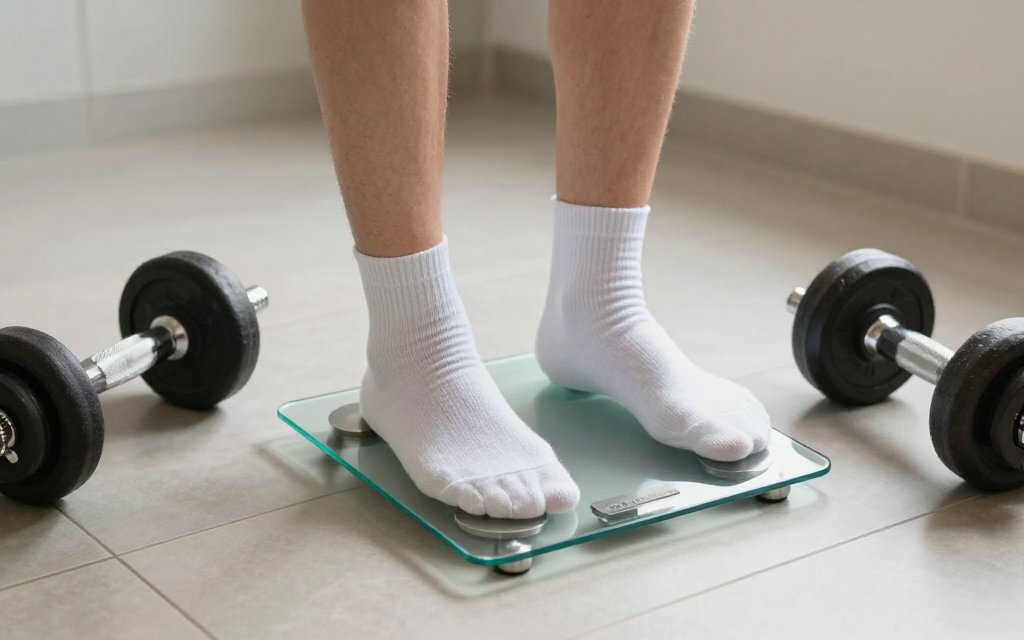
A nickel cannot calibrate a bathroom scale, since those read in the 50 to 300 pound range. Bathroom scale calibration usually means a reset, then a check against a known load like a 25 pound dumbbell or a full gallon of water at 8.34 pounds.
Some manuals call any of these a weighing machine, and the idea never changes. Give the device a weight you already trust, then confirm the readout matches. The same routine covers how to calibrate a digital weight scale on a shipping bench.
Questions People Ask About Scale Calibration
How much does a nickel weigh on a scale?
A US nickel weighs 5.000 grams by the Mint standard, or about 0.176 ounces. A new coin reads 5.0 g on a gram scale, and anything more than a tenth off usually means a dirty coin or a scale that needs work.
How do I calibrate a scale without weights?
Use coins as your weights. One nickel is 5 g, twenty nickels are 100 g, and a quarter is 5.67 g, so most calibration targets are a stack of change away. That answers how do I calibrate a scale when no proper weight is in the house.
How do I calibrate a scale for grams accurately?
Clean the coins, place them dead center, and calibrate on a solid surface away from drafts and phone chargers. To calibrate a scale for grams to a tenth, though, a certified weight beats any coin.
Do digital scales lose calibration over time?
Yes. Heat, drops, and years of use pull the load cell out of true, so a scale that was perfect can drift. Check yours with a nickel every few months, and recalibrate when the 5 g reading strays.
No coin in the drawer and no scale on the counter? Scale for Grams estimates weight straight from a photo, so you can sanity check a portion or a parcel in seconds while your kitchen scale is off getting calibrated. Get the app here: iOS.
Scale for Grams
Need to Weigh Something?
Download Scale for Grams and get an AI weight estimate from a photo in seconds.