Weighing beats counting, how many pennies in a pound is about 181
The Mint stopped making pennies a year ago, and jars of them are still sitting in kitchens. Here's how many pennies in a pound by year, what every US coin weighs, and what a jar is worth before a coin machine takes its cut.

The US Mint struck its last circulating penny a year ago this week, on November 12, 2025, and the jars of them haven't gone anywhere. If you've got one on a shelf, don't count it. Weigh it. For modern coins, the answer to how many pennies in a pound is about 181, which means a pound of pennies is worth roughly $1.81.
That figure falls straight out of the penny weight in grams. A zinc penny made since 1982 weighs 2.50 g, and a pound is 453.59 g, so you get just over 181 coins. Older copper cents weigh 3.11 g, so the same pound holds only about 146 of them. Put the jar on a scale, take off the jar's weight, and you'll be within a few cents of a hand count in about 30 seconds.
How many pennies in a pound, by year
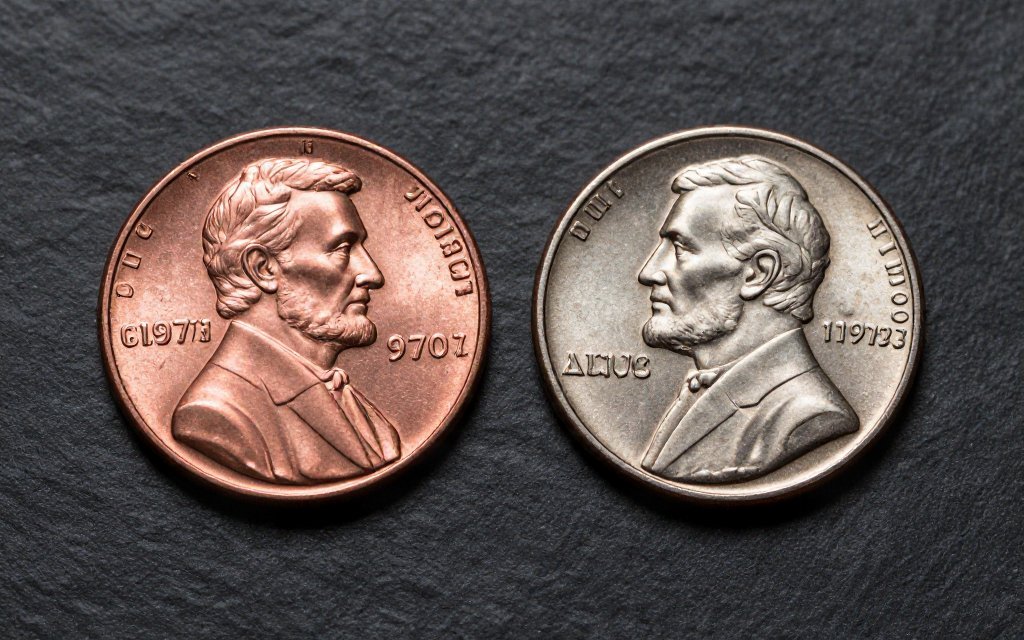
The weight of a penny has changed three times in the last century, and that's why one number doesn't fit every jar. Collector references break it down by era, and the figures line up with the Mint's own specifications.
| Penny type | Weight | Per pound |
|---|---|---|
| Wheat cents, 1909 to 1942 | 3.11 g | about 146 |
| Steel cents, 1943 | 2.70 g | about 168 |
| Copper cents, 1944 to 1982 | 3.11 g | about 146 |
| Zinc cents, 1982 to 2025 | 2.50 g | about 181 |
Why 1982 is the tricky year
The Mint switched from 95% copper to a zinc core with a thin copper plating partway through 1982, so cents from that year come in both weights. Everything dated 1983 or later is zinc, and everything from 1944 through 1981 is copper. A mixed jar from a grandparent's dresser will land somewhere between 146 and 181 coins per pound.
A zinc penny never tops 3 grams. If a single cent reads 3.0 g or more on a scale you trust, it's copper.
How much does a penny weigh next to the other coins?
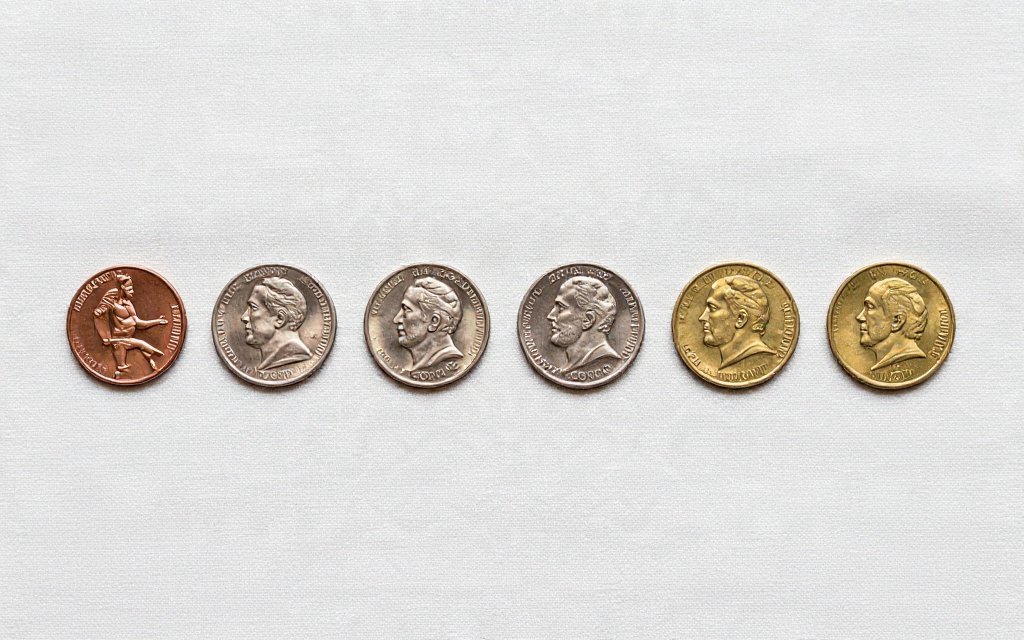
Every current US coin has an official target weight, and they're surprisingly round numbers once you look at them in grams. Here's the penny coin weight beside the rest of your pocket change.
| Coin | Weight | Per pound |
|---|---|---|
| Penny | 2.50 g | about 181 |
| Nickel | 5.00 g | about 91 |
| Dime | 2.268 g | about 200 |
| Quarter | 5.67 g | about 80 |
| Half dollar | 11.34 g | about 40 |
| Dollar coin | 8.10 g | about 56 |
How much does a nickel weigh?
A nickel weighs exactly 5.000 g, which makes it the handiest test weight in your house. Drop two on a kitchen scale and you should see 10 g. If you're reading 9 or 11, the scale needs attention before you trust it with yeast or spices.
How much does a dime weigh?
A modern dime is 2.268 g, the lightest coin the Mint still makes. That's slightly less than a penny, even though the dime is worth ten times more.
How much does a quarter weigh?
A quarter is 5.67 g, which is exactly 0.2 ounces. You can check that against our grams to ounces converter: 5.67 g comes out at 0.200 oz.
What a coin jar is worth by the pound
Here's where weighing pays off. Divide each coin's face value by its weight and you get a dollar value per pound that holds for any jar of a single coin type.
Dimes and quarters both come out at $20 a pound because the Mint sized them in proportion to their value. Pennies are the opposite story. A 10 lb jar of zinc cents holds about 1,814 coins, or $18.14, and a coin machine charging up to 12.5% plus a 99-cent fee, as GOBankingRates reports for Coinstar, would hand you back about $14.88. Picking the e-gift card option skips the percentage, which is worth it if you'd spend at one of the listed stores anyway.
A pound of pennies is worth $1.81. A pound of quarters is worth $20.00. Sort before you haul the jar anywhere.
How much is a roll of pennies?
A standard bank roll holds 50 pennies, so it's worth 50 cents. At 2.50 g each, a roll of zinc cents weighs 125 g, or about 4.4 oz.
How much does a roll of quarters weigh?
A roll of quarters holds 40 coins worth $10, and it weighs 226.8 g. That's 8.0 oz, or exactly half a pound, which you can confirm with the grams to pounds converter. If you're mailing a few rolls, those 8 oz each add up fast on postage, so check our holiday shipping guide before you send them.
Weighing a coin jar instead of counting it
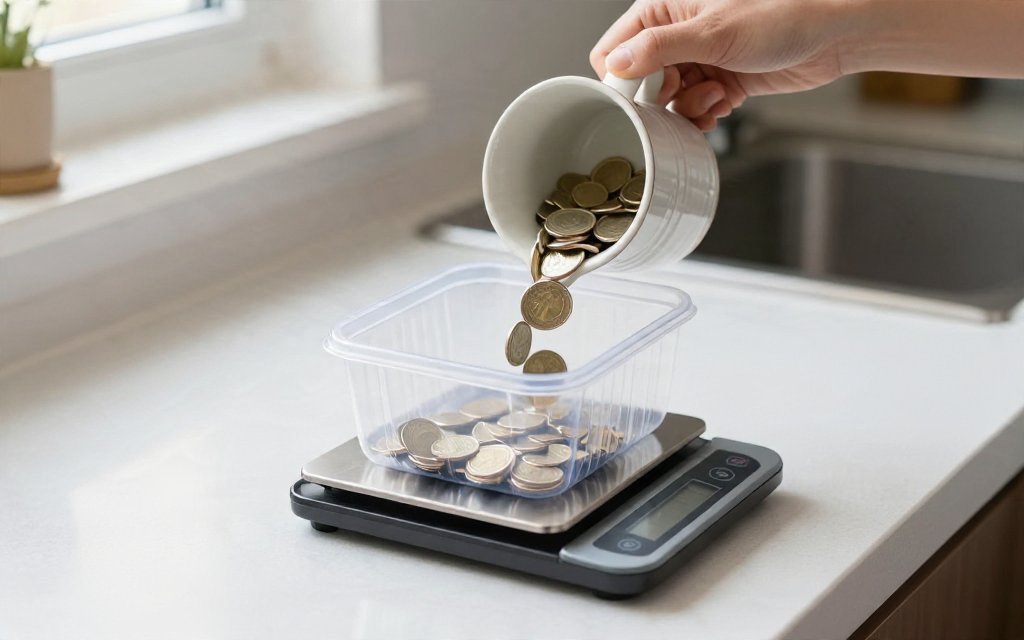
You don't need a jeweler's scale for this. A basic kitchen scale that reads in grams gets a full jar within a handful of coins, and that's closer than most people manage counting by hand.
For a mixed penny jar, weigh a sample of 100 coins first. If the 100 come out near 250 g, they're almost all zinc. Closer to 311 g means mostly copper, and anything in between tells you the mix so your estimate for the whole jar stays honest.
Silver coins and old copper pennies run heavier
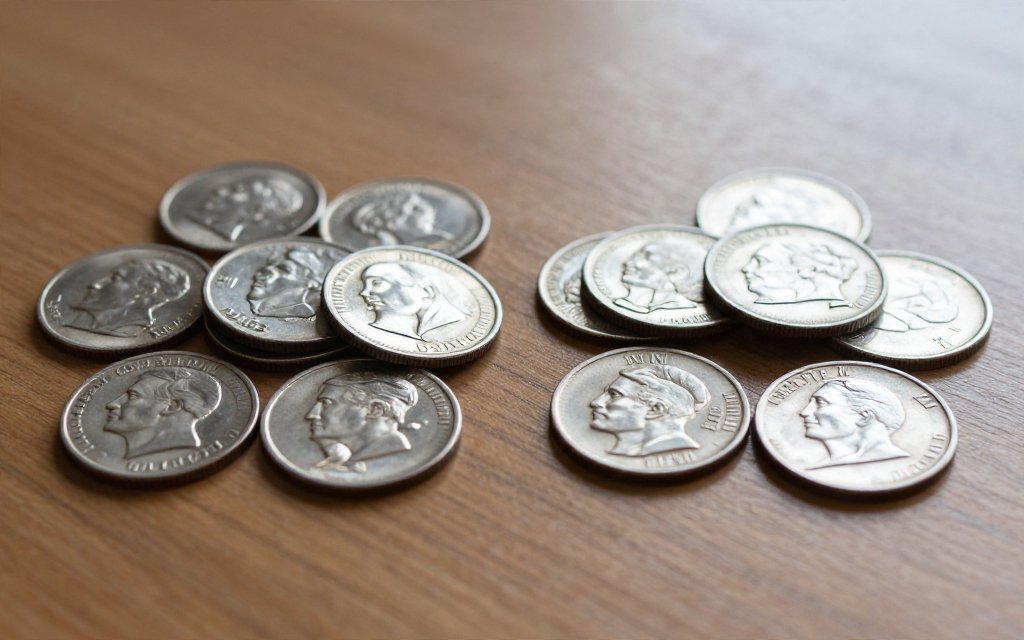
Before 1965, dimes, quarters and half dollars were 90% silver, and they weighed more than today's copper-nickel versions. A silver dime is 2.5 g against 2.268 g now, and a silver quarter is 6.25 g against 5.67 g. A pre-1965 half dollar weighs 12.5 g. If a quarter in your jar reads 6.2 g or more, set it aside, because it's worth well over 25 cents. Our guide to silver price per gram walks through what that metal is worth.
How many copper pennies are in a pound?
About 146 when they're new, since each weighs 3.11 g. Worn coins from circulation have lost a little metal, so a real pound of old cents might hold one or two more. That's the number people want when they're pulling pre-1982 cents out of rolls to keep.
Penny weight questions people ask
Are pennies still legal tender after production ended?
Yes. The Mint stopped making circulating pennies because each one cost nearly 4 cents to produce, according to ABC7's coverage of the final strike, but existing cents still spend. Some stores have taken to rounding cash totals down when they run short.
Does a worn penny weigh less than a new one?
A little. Decades of handling rub metal off, and corrosion in soil can eat into zinc cents. The loss on any one coin is small, so it only matters when you're weighing hundreds of them at once.
Can a kitchen scale tell copper pennies from zinc ones?
One coin at a time, probably not, since most kitchen scales read in whole grams and the gap is 0.61 g. Weigh ten instead. Ten zinc cents come to 25 g and ten copper cents come to about 31 g, which any kitchen scale can tell apart.
Got a jar of change and no scale handy? Download Scale for Grams and get an AI-powered weight estimate from a photo in seconds, then do the penny math yourself. Get the app here: iOS.
Scale for Grams
Need to Weigh Something?
Download Scale for Grams and get an AI weight estimate from a photo in seconds.
