Your Luggage Weight Limit Is 50 Pounds, Then the Fees Begin
Most US airlines cap a checked bag at 50 pounds, and going over means $100 or more each way. Here is what the limit is in pounds and kilos, the overweight fees by airline, and how to weigh luggage at home before you reach the counter.
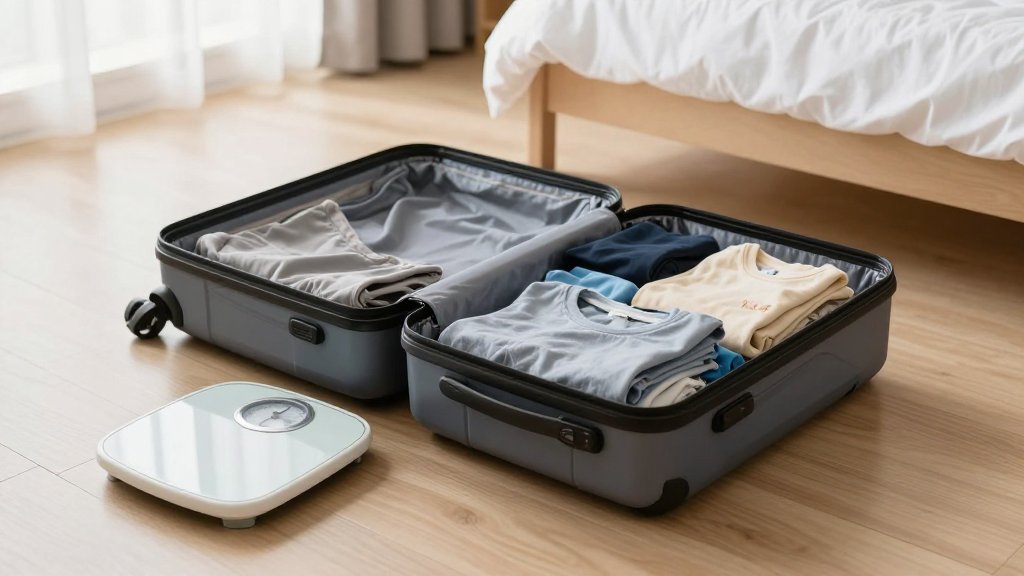
Most US airlines draw the line at 50 pounds for a checked bag, and the scale at the counter doesn't round down. Step one ounce over and the agent slides an overweight tag onto your suitcase before you've finished fishing out your ID.
Your luggage weight limit is the easiest travel rule to break, because a hair dryer, a pair of boots, or a stack of paperbacks can push a full bag past the mark. The fix costs nothing. Weigh the bag at home, shift a few things around, and you keep the money that would have gone to a fee.
What your luggage weight limit really is
For a standard economy ticket, nearly every major US carrier sets the checked bag weight limit at 50 pounds, which is 22.7 kilograms. Airlines print the metric version as 23 kg on the same rule, so the two numbers describe one line, not two. You can move between them with our kilograms to pounds converter if the tag on your bag shows kilos.
The number is about the people lifting your bag, not the airline being petty. Once a suitcase crosses 50 pounds, ground crews are supposed to treat it as a two person lift, so the airline baggage weight limit doubles as a safety cutoff. Business and first class often buy you 70 pounds, and a few international routes vary, but 50 is the figure to plan around. For the full metric picture, our guide to kilograms and pounds breaks it down.
Fifty pounds is 22.7 kilograms. Most airlines round it to 23 kg and print that on the very same rule.
| Pounds | Kilograms | Status |
|---|---|---|
| 50 lb | 22.7 kg | Standard limit |
| 51 to 70 lb | 23 to 32 kg | Overweight fee |
| 71 to 100 lb | 32 to 45 kg | Higher fee |
The overweight baggage fees that begin at 51 pounds
The gap between 50 and 51 pounds is the most expensive pound in travel, and it's exactly where the checked baggage weight limit stops being free. On the legacy carriers, Delta, United, and American, a bag from 51 to 70 pounds runs $100 each way, and one from 71 to 100 pounds runs $200, stacked on top of the normal checked bag fee. A 2026 roundup of airline fees lays out the tiers carrier by carrier.
Delta sets its weight limit at 50 pounds and charges that $100 the moment you hit 51. American softens the first slice, asking about $30 from 50 to 53 pounds before the $100 kicks in, while JetBlue keeps it simple with a flat $150 from 51 to 99 pounds. Southwest matches the $100 and $200 tiers but doesn't stack the overweight fee with an oversize one. Go past 62 linear inches in size and most airlines add a separate charge near $200.
| Airline | 51-70 lb | 71-100 lb |
|---|---|---|
| Delta | $100 | $200 |
| United | $100 | $200 |
| American | $30 to $100 | $200 |
| Southwest | $100 | $200 |
| JetBlue | $150 flat | $150 flat |
| Allegiant | $50 | $75 |
A single bag tagged at 71 pounds can cost $200 each way, which is more than plenty of the plane tickets it flies with.
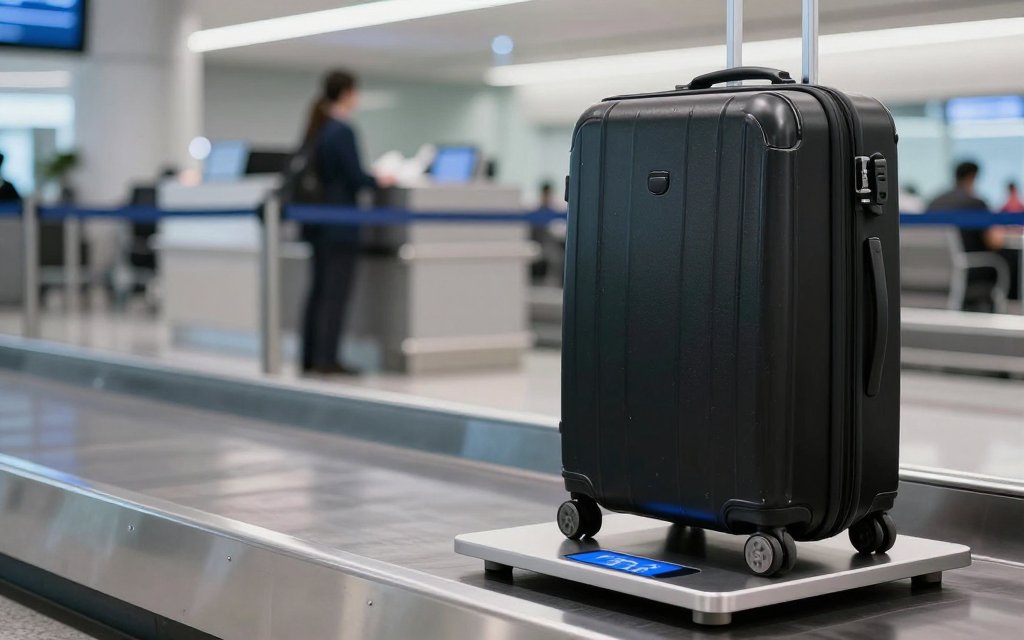
Carry on weight limit rules are mostly about size
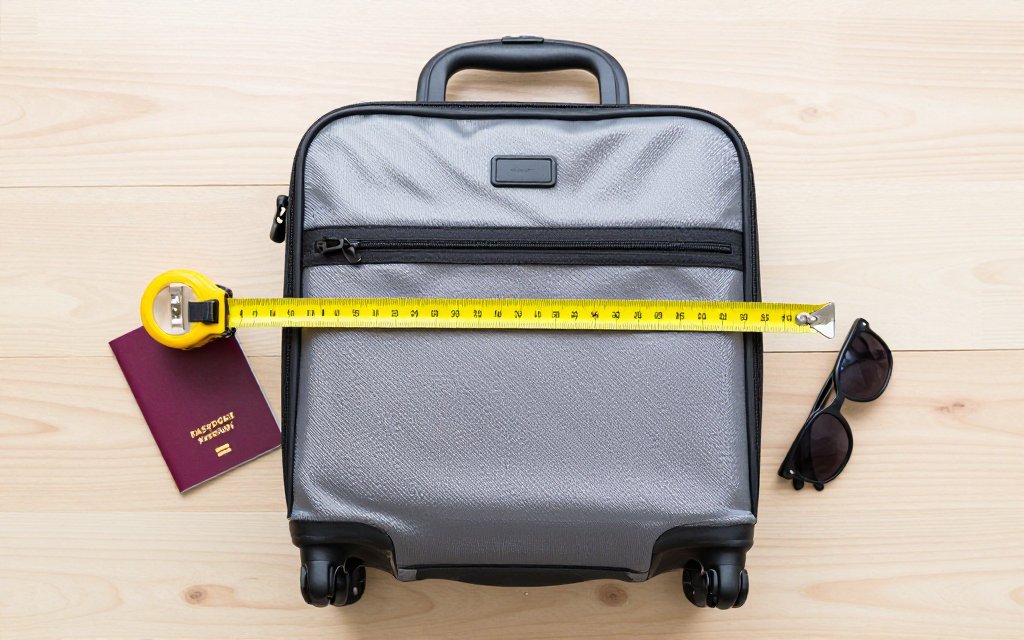
For most US domestic flights there's no carry on weight limit that anyone weighs, as long as you can lift the bag into the bin yourself. The real gate is the size limit of carry on luggage: 22 by 14 by 9 inches on American, Delta, United, JetBlue, and Alaska, with Southwest allowing a roomier 24 by 16 by 10 inches. Gate scanners now measure the outside, so wheels and handles count.
The carry on weight restriction shows up the moment you fly international. Many European and Asian carriers cap a cabin bag at 15 to 22 pounds, roughly 7 to 10 kg, and they actually put it on a scale at the gate. Miss the number and the bag gets checked, sometimes with a fee attached, so a light carry on is worth the effort abroad.
International carry on weight caps
If your trip crosses an ocean, check the cabin allowance before you pack. A common cap is 7 kg, about 15 pounds, on many flag carriers in Europe and Asia, and budget airlines abroad can be stricter still. That leaves little room once you add a laptop and a water bottle, so plan the heavy items into your checked bag instead.
How to weigh luggage without a scale at home
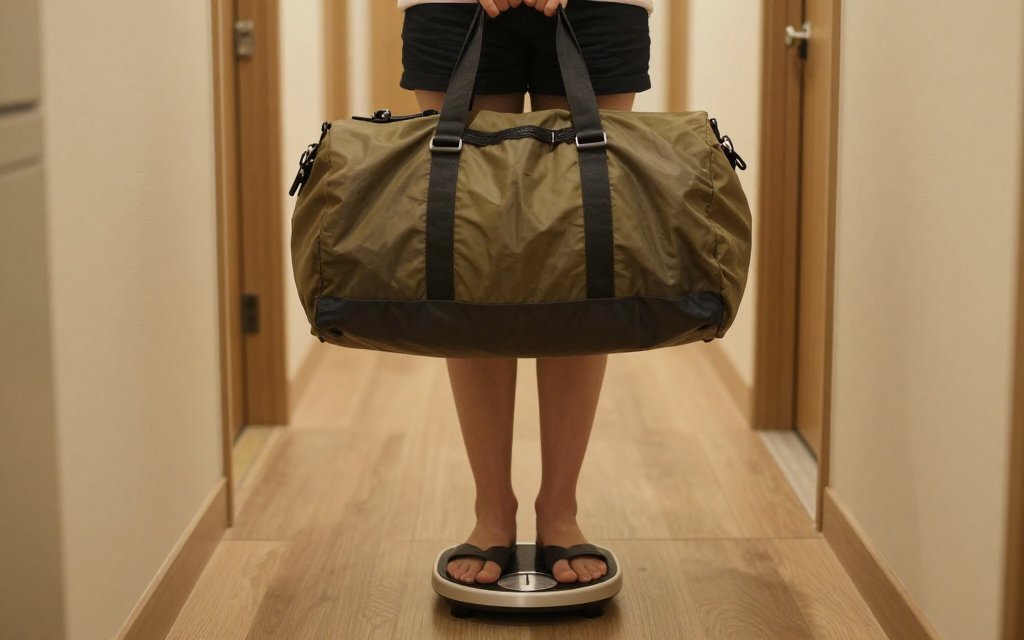
You don't need a luggage scale to learn how to weigh luggage without a scale. A bathroom scale and a little subtraction get you within a pound or two, which is all you need to clear the counter with room to spare.
Accuracy depends on holding still. Put the scale on hard, flat flooring, not carpet, and stand centered while you hold the bag against your chest. The reading wobbles when you shift, so take it twice and trust the lower, steadier number. This step by step method walks through the same trick.
Weigh yourself, then weigh again holding the bag. The difference is your suitcase, no counter surprise required.
No scale in the house? Use something you already own
When there's no scale at all, borrow a known weight. A gallon of water weighs about 8.3 pounds, and our note on how much a gallon of water weighs explains why. Lift your bag in one hand and two full gallon jugs in the other, roughly 17 pounds, and you get a quick feel for whether the bag is light, borderline, or trouble.
None of these beat the real thing. A handheld luggage scale costs about $10 to $15, clips onto the handle, and reads out in seconds, so it pays for itself the first time it saves you a fee. Keep one in an outside pocket and the guessing stops.
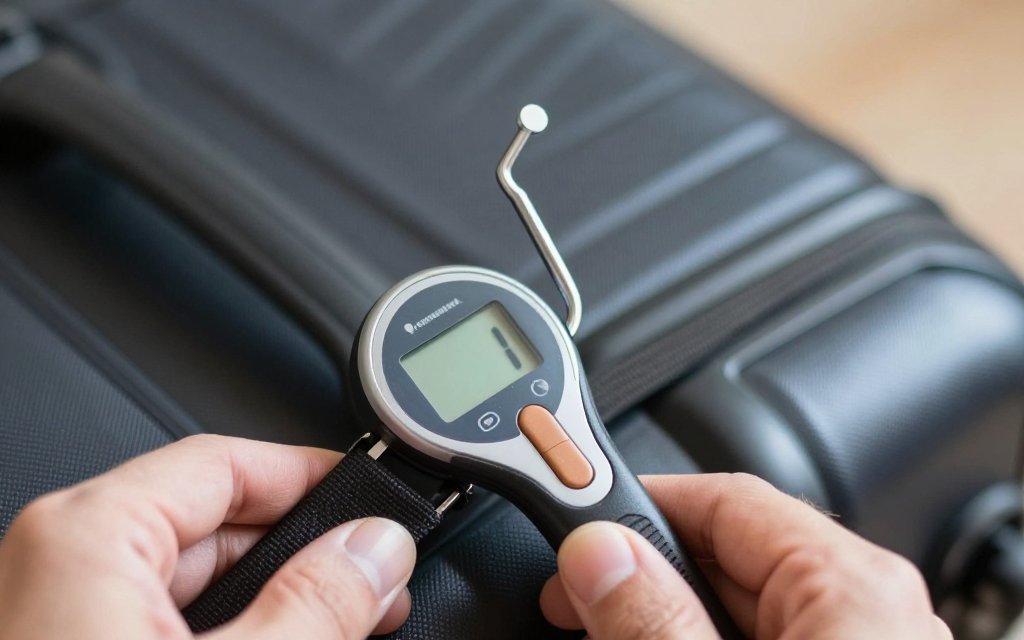
What a few extra pounds really costs
Run the money and the case for weighing at home makes itself. A 55 pound bag on Delta is $100 over each way, so $200 round trip, on top of the checked bag fee you already paid. A $15 luggage scale erases that on the first flagged bag and then rides along free for every trip after.
Remember that the bag itself eats your allowance. An empty hardside large checked suitcase averages 11.19 pounds, so your 50 pound limit really leaves about 39 pounds for what goes inside. When a full bag creeps over, the cheapest move is to shift the dense items, shoes, books, and toiletry bottles, into your carry on, then wear the heaviest coat through security. Three or four pounds is usually the whole problem.
Luggage weight questions travelers still ask
How much does a suitcase weigh empty?
More than most people guess. An empty hardside large checked bag averages 11.19 pounds, or 5.08 kg, and even a carry on runs about 7 pounds before you pack a thing. Softside bags shave a pound or two. That empty weight counts against your limit, so weigh the bag full, not just the contents.
How many kilograms is the 50 pound limit?
Fifty pounds equals 22.68 kilograms, which airlines round up to 23 kg on the ticket. If your bag tag or a foreign scale shows kilos, our pounds to kilograms converter turns your number into the unit the agent is reading.
What happens if my checked bag is overweight?
The agent tags it and charges the overweight fee, commonly $100 for a bag from 51 to 70 pounds, before it goes on the belt. You can also open the bag and move items into a carry on or a second checked bag right there. Weighing at home is simply the version of that where you keep the $100.
Does every airline use the same weight limit?
Most large US carriers share the 50 pound checked bag weight limit, but it isn't universal. Some budget and international airlines set lower caps or price the tiers differently, so the airline baggage weight limit on your specific ticket is worth a 30 second check before you pack.
Before you zip the bag, weigh the heavy things going into it. Scale for Grams gives an AI weight estimate from a photo in seconds, so the boots and books don't quietly blow your limit at the counter. Get the app here: iOS.
Scale for Grams
Need to Weigh Something?
Download Scale for Grams and get an AI weight estimate from a photo in seconds.