Egg Protein by Weight: How Much Protein in an Egg
A large egg carries about 6.3 grams of protein and 71 calories, and the number rises with weight. See the protein, calories, and grams for every USDA egg size, plus how to weigh eggs without a scale.
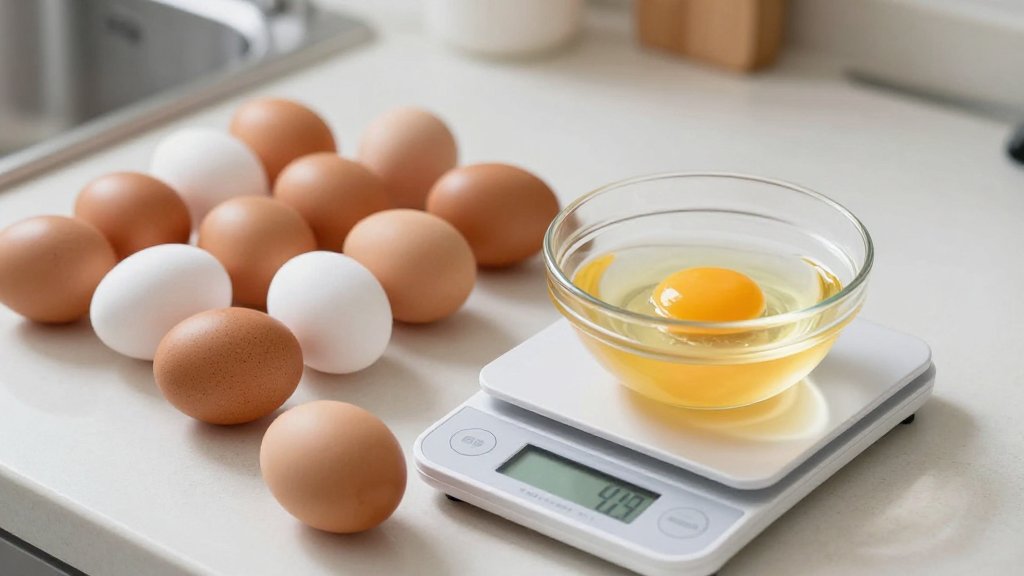
If you have ever wondered how much protein in an egg you actually get, the honest answer depends on the egg's weight. A standard large egg weighs about 57 grams in the shell and roughly 50 grams once cracked, and it carries close to 6.3 grams of protein. Bigger eggs hold more and smaller eggs hold less, so knowing how many grams in an egg you are cooking with matters for anyone counting macros.
Egg protein tracks almost in step with size, which means a kitchen scale turns guesswork into real numbers. This guide lays out the weight of every USDA egg size, how much protein and how many calories each one delivers, and how to weigh eggs even without a scale. Every figure below comes from USDA sampling and published nutrition data.
How Much Protein in an Egg, the Short Answer
A large egg, the size most recipes and nutrition labels assume, gives about 6.3 grams of protein and about 71 calories. So how much protein in one egg really comes down to which size sits in your carton. Step up to extra large and you get roughly 7 grams, while a medium egg falls to about 5.5 grams.
A large egg packs 6.3 grams of protein for only about 71 calories, one of the best protein to calorie ratios in any whole food.
Egg Size Chart: Weight From Peewee to Jumbo
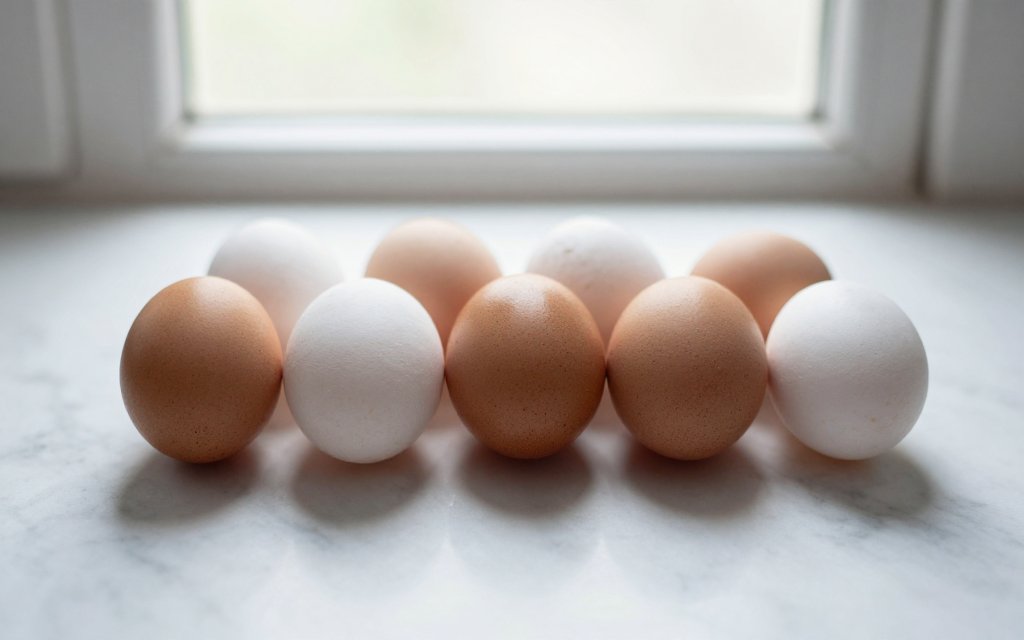
The USDA does not weigh eggs one at a time. It sorts them by minimum net weight per dozen, so a carton of large eggs must weigh at least 24 ounces, or about 680 grams. That rule sits behind every egg size chart, and it explains the USDA size classes. When people ask how much does an egg weigh, the useful answer is the per-egg average those dozen weights produce.
The shell is not trivial. It makes up 8 to 9 percent of the total, so a 57 gram large egg carries about 5 grams of shell and roughly 50 grams of edible white and yolk.
| Egg Size | Per Dozen | Per Egg |
|---|---|---|
| Peewee | 15 oz | 35 g |
| Small | 18 oz | 43 g |
| Medium | 21 oz | 50 g |
| Large | 24 oz | 57 g |
| Extra Large | 27 oz | 64 g |
| Jumbo | 30 oz | 71 g |
Keep this egg weight chart handy when a recipe lists eggs by weight instead of by count. To move between metric and imperial in one step, our grams to ounces converter does the math for you.
How Many Grams of Protein in an Egg by Size
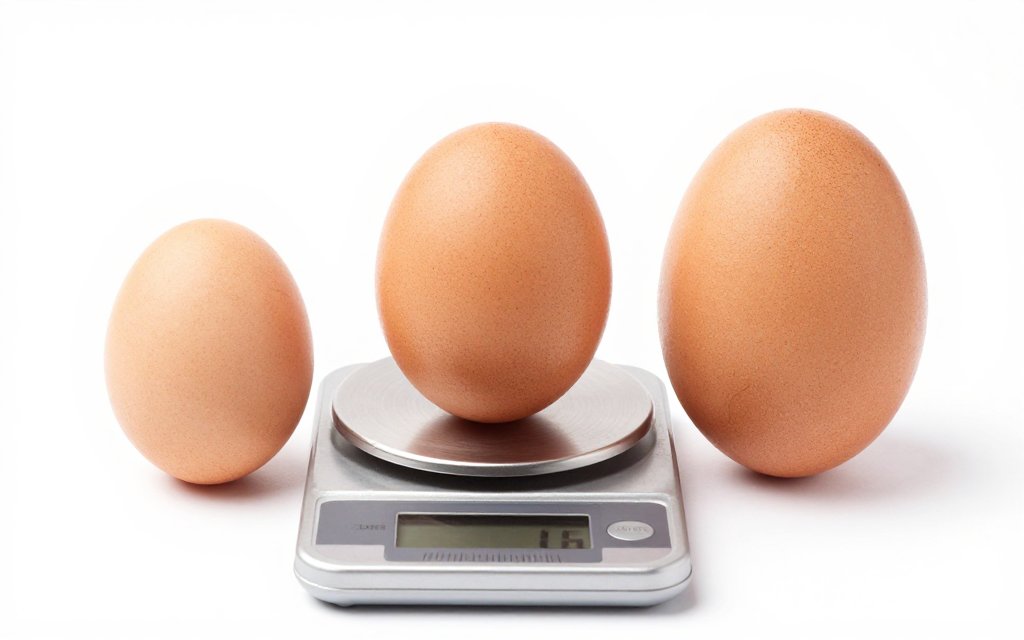
Because protein rides along with weight, how many grams of protein in an egg climbs step by step from peewee to jumbo. The white holds most of it, though the yolk adds a real share. The table pairs each common size with its protein and calorie payoff, in line with Healthline's protein breakdown.
| Egg Size | Protein | Calories |
|---|---|---|
| Small | 4.8 g | 54 cal |
| Medium | 5.5 g | 63 cal |
| Large | 6.3 g | 72 cal |
| Extra Large | 7 g | 80 cal |
| Jumbo | 7.9 g | 90 cal |
Those calorie figures trace back to the USDA value of 143 calories per 100 grams of whole egg. Multiply by the edible weight and the math lines up, since a 50 gram large egg lands near 72 calories.
How much does a large egg weigh?
How much does a large egg weigh? In the shell it averages about 57 grams, or 2 ounces. Crack it and you are left with roughly 50 grams of edible egg, split into about 33 grams of white and 17 grams of yolk.
White vs Yolk: Where the Protein Hides
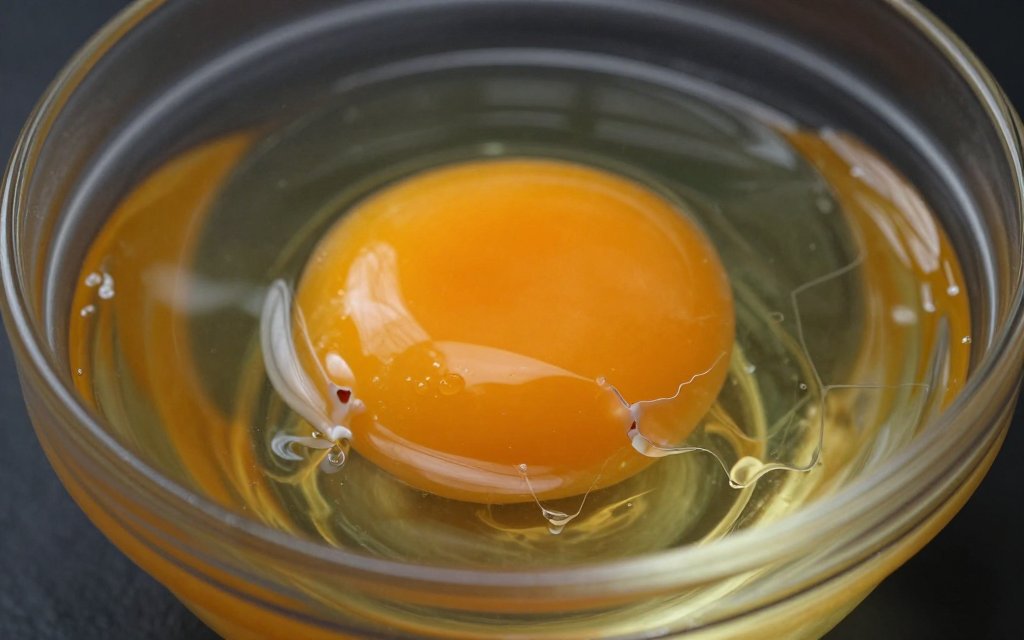
In a large egg the white carries about 3.6 grams of protein and the yolk about 2.7 grams. The white is the leaner source, holding roughly 60 to 65 percent of the protein for only about 17 of the egg's calories.
The yolk is more than fat. It adds about 2.7 grams of protein plus most of the egg's vitamins, and it accounts for around 55 of the 72 calories. People chasing lean protein sometimes use two whites for every whole egg to raise protein while trimming calories.
How much does an egg white weigh?
How much does an egg white weigh? In a large egg the raw white runs about 33 grams and the yolk about 17 grams. That 33 gram white delivers roughly 3.6 grams of protein for only about 17 calories.
The white of a large egg holds about 3.6 grams of protein in just 33 grams of liquid and only 17 calories.
Egg Calories and Protein for Meal Tracking
For meal planners the question is often how many calories an egg contains and how the protein adds up across a serving. A single large egg contains about 71 calories, so how much protein in 2 eggs works out to roughly 12.6 grams for about 143 calories. Ask how much protein in three eggs and the total is close to 18.9 grams.
Eggs are a compact protein source, yet they are not the densest. A chicken breast carries far more, as our guide to chicken breast portions in grams shows. Weighing both lets you hit a protein target without guessing.

Weighing Eggs Without a Kitchen Scale
You will not always have a scale in reach, yet recipes and macro apps still want grams. A quick way to estimate how many grams in an egg is to match it to its size class, since a large egg is about 57 grams and a jumbo about 71. For baking, total weight is what counts, so if your eggs run small you can add one more to reach the recipe's gram target.
Bakers who weigh by grams already know the payoff in steady results, the same logic behind our cup of flour in grams guide. When no scale is nearby, an AI weight estimate from a photo can get you close in seconds.
Four large eggs total about 200 grams of edible egg, a handy benchmark when a recipe lists eggs by weight rather than by count.
Frequently Asked Questions
How much protein in one egg?
A large egg gives about 6.3 grams of protein and 71 calories. A medium egg offers about 5.5 grams, while a jumbo reaches nearly 8 grams. The exact figure follows the egg's weight.
How many grams of protein in an egg white?
The white of a large egg holds about 3.6 grams of protein, roughly 60 to 65 percent of the egg's total. It delivers that in only about 17 calories, so the grams of protein in an egg white are the leanest part of the egg.
How many calories does an egg contain?
A large egg contains about 71 to 72 calories, with roughly 55 in the yolk and 17 in the white. Smaller eggs contain less, near 54 calories for a small egg, because calories scale with weight.
How much does an egg weigh in the shell?
A large egg weighs about 57 grams, or 2 ounces, in the shell. The shell is 8 to 9 percent of that, leaving about 50 grams edible. Converting count to grams is easy once you know the size.
Need to weigh eggs or anything else fast? Scale for Grams gives you an AI-powered weight estimate from a photo in seconds, so you can turn any egg into real grams of protein and calories without hunting for a scale. Get the app here: iOS.
Scale for Grams
Need to Weigh Something?
Download Scale for Grams and get an AI weight estimate from a photo in seconds.