Chicken Breast Portion Size in Grams, Raw and Cooked
A raw chicken breast runs 180 to 200 grams, but a cooked serving is closer to 85 to 140 grams. Here is every weight in grams, raw and cooked, plus portion sizes for beef, fish, and the protein targets you can actually plate.
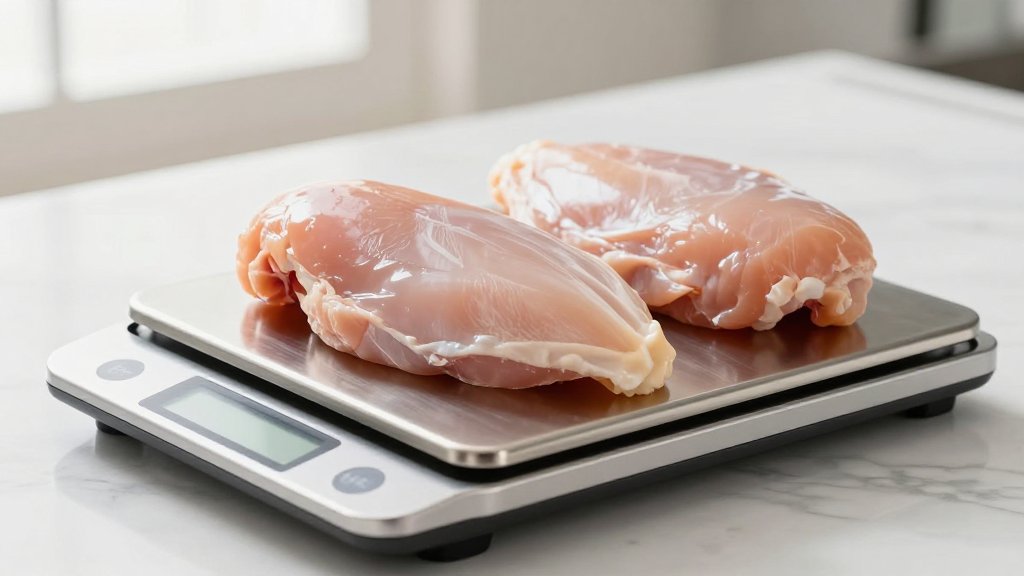
If you are tracking macros or plating dinner for a family, one question comes up fast: how much does a chicken breast weigh, and what counts as a sensible chicken breast portion size? The answer shifts depending on whether you weigh the meat raw or cooked, and the gap is bigger than most people expect.
A raw boneless skinless breast usually runs 180 to 200 grams, while a healthy chicken breast portion size sits closer to 85 to 140 grams on the plate. This guide lays out both numbers with real weights, plus a fast way to check any cut using the grams to ounces converter when a recipe switches units.
How Much Does a Chicken Breast Weigh?
So how much does an average chicken breast weigh? A raw boneless skinless breast averages 180 to 200 grams, roughly 6.3 to 7 ounces, according to weight data from Weigh School. Leave the skin on and the same cut climbs to 210 to 230 grams, because the skin alone adds about 30 grams.
Small, Medium, and Large Breasts
Sizes vary widely at the store. A small fillet lands near 140 to 150 grams, and shoppers asking how much does a large chicken breast weigh will find the biggest cuts reach 250 grams. On its own, how much does 1 chicken breast weigh usually settles at 180 to 200 grams, and a two-pack answers how much do chicken breasts weigh together, often 400 grams or more.
Chicken Breast Portion Size, Raw and Cooked
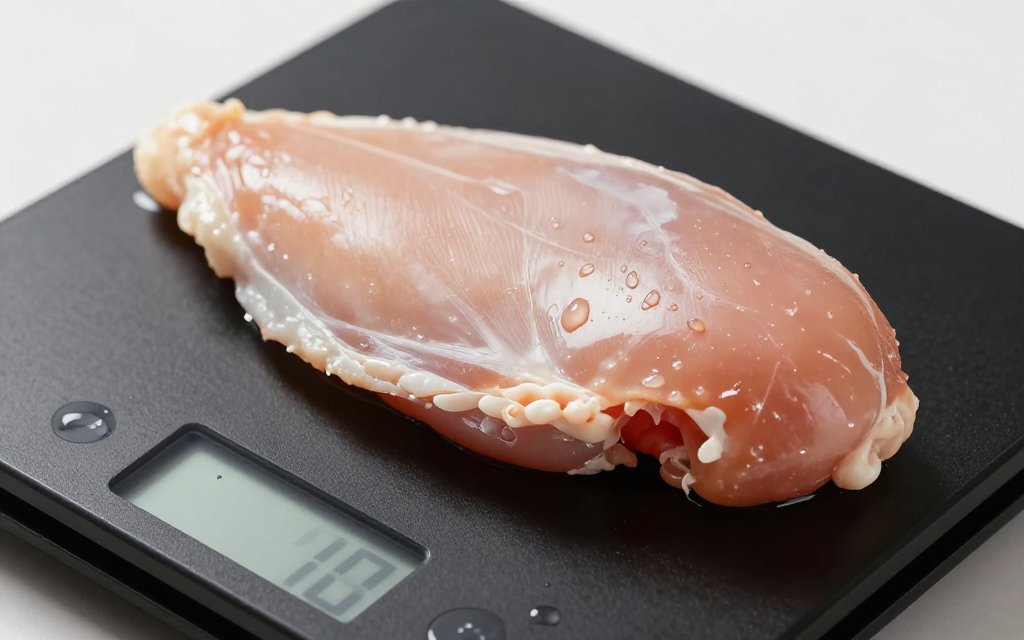
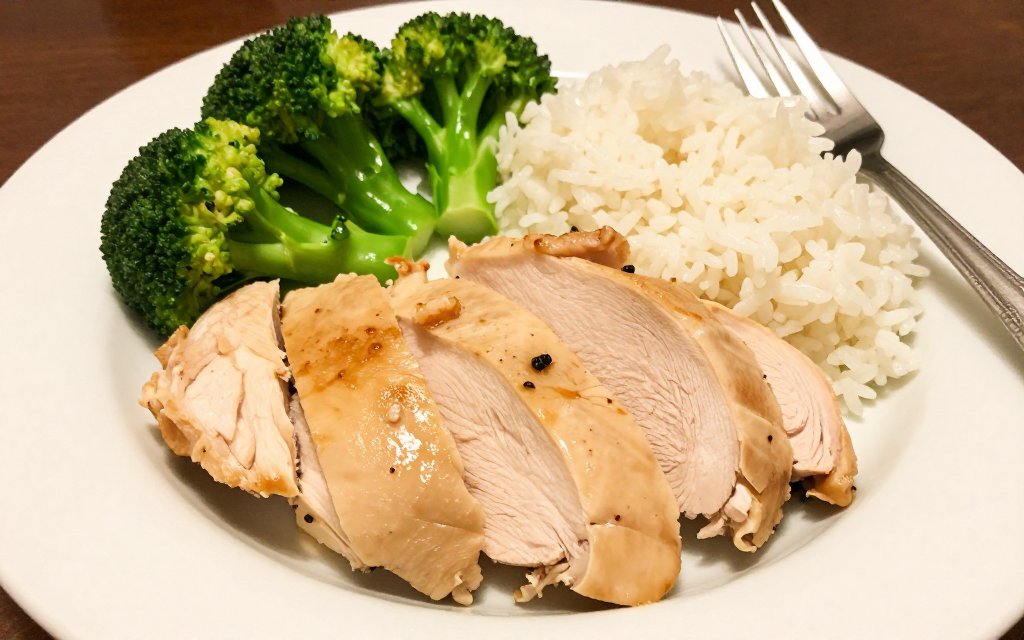
A standard chicken breast serving is 85 to 115 grams of cooked meat, about 3 to 4 ounces per person. That is close to half of one average breast, so a single large fillet can feed two lighter eaters or one hungry one.
Portion targets rise for active adults. A generous chicken breast portion size for a workout day sits near 140 grams cooked, and you can double-check any figure against the ounces to grams table when a plan lists imperial units.
| Portion | Grams | Ounces |
|---|---|---|
| Small | 110 g | 4 oz |
| Medium | 140 g | 5 oz |
| Large | 170 g | 6 oz |
A safe rule of thumb: one cooked serving of chicken breast is 85 to 140 grams, about the size of a deck of cards.
Raw vs Cooked: Why the Weight Drops
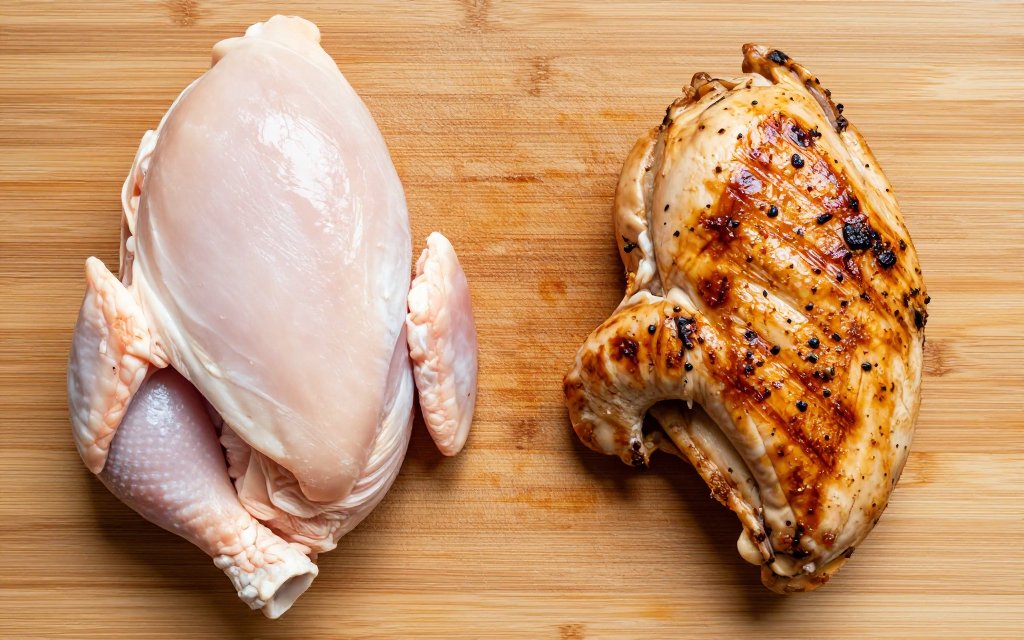
Chicken loses water as it cooks, so the cooked weight always reads lower than raw. Quality free-range meat drops about 25 percent, while cheaper water-added supermarket chicken can shed up to 40 percent. Weigh School tested one breast that fell from 200 grams to 123 grams.
That shrink matters for macros. If your plan lists 150 grams of cooked chicken, you likely started with roughly 200 grams raw. Weighing before cooking removes the guesswork and keeps your numbers honest.
Most chicken breasts lose about 25 percent of their weight during cooking, so a 200 gram raw fillet finishes near 150 grams.
Meat and Fish Portion Sizes in Grams
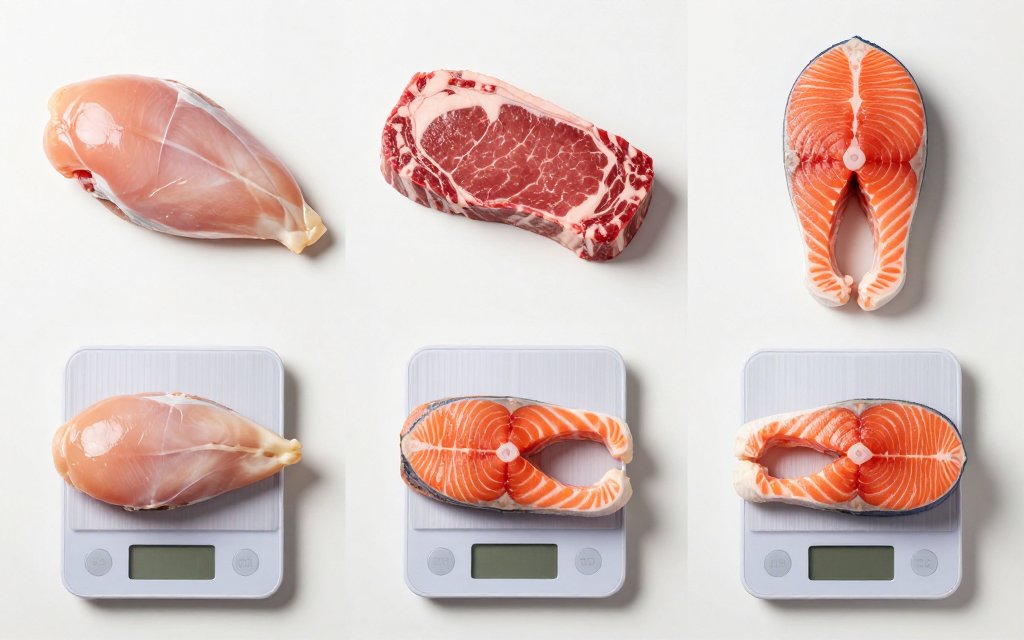
Chicken is not the only protein worth weighing. A medium adult portion of beef or pork is about 140 grams, while salmon and white fish run closer to 170 grams per serving, based on the portion chart from CookTimePro.
Bone-in cuts weigh more on the scale because bone and skin make up roughly a third of the raw weight. Chicken thighs with the bone run about 230 grams, so trim your target if you only eat the meat off them.
| Protein | Serving | Grams |
|---|---|---|
| Beef or pork | 5 oz | 140 g |
| Chicken breast | 5 oz | 140 g |
| Chicken thigh | 8 oz | 230 g |
| Salmon or fish | 6 oz | 170 g |
| Ground meat | 5 oz | 140 g |
Protein Serving Size: What 100 Grams Delivers
A 100 gram serving of cooked chicken breast carries about 31 grams of protein and 165 calories, according to USDA nutrition data. Raw breast holds less by weight, near 22 grams per 100 grams, because water has not cooked off yet.
For planning, a practical protein serving size is 85 to 140 grams of cooked breast, which delivers roughly 26 to 43 grams of protein. That single portion covers a large share of the daily protein target for most adults.
Weigh the raw meat when you can. Protein concentrates as water cooks off, so cooked grams read higher per bite than raw grams do.
Weighing Chicken Without a Kitchen Scale
No scale on the counter? A cooked serving of chicken breast is about the size of a deck of cards, and your palm is a close stand-in for one 85 gram portion. The same trick works for the pasta beside it, as covered in our no-scale pasta portions guide.
For a faster read, snap a photo and let an app estimate the weight from the image. It will not replace a lab scale, but it gets you close enough to portion a fillet or price a package for shipping.
Chicken Breast Weight FAQ
How much does one chicken breast weigh?
One average raw boneless skinless breast weighs 180 to 200 grams, about 6.3 to 7 ounces. Small fillets start near 140 grams and large ones reach 250 grams, so put yours on a scale when the recipe is strict.
How heavy is a chicken breast in ounces?
An average breast is 6.3 to 7 ounces raw. Once cooked it drops to about 4.5 to 5 ounces because water leaves the meat. How heavy is a chicken breast on the plate depends entirely on that cooking loss.
Should I track raw or cooked weight for protein?
Track whichever your recipe or plan specifies, but stay consistent. Raw weight is easier to measure before cooking, while cooked weight reads higher in protein per gram since the water has cooked off.
Need to weigh a chicken breast fast without dragging out the kitchen scale? Download Scale for Grams and get an AI-powered weight estimate from a photo in seconds, whether you are portioning dinner or checking a serving. Get the app here: iOS.
Scale for Grams
Need to Weigh Something?
Download Scale for Grams and get an AI weight estimate from a photo in seconds.