Grams to ml and ml to Grams Are Rarely Equal
Grams to ml only match for water. Flour, oil, milk, and honey each weigh something different at the same volume, so 240 ml can be 127 grams or 341 grams. Here is the density math and a per ingredient chart.
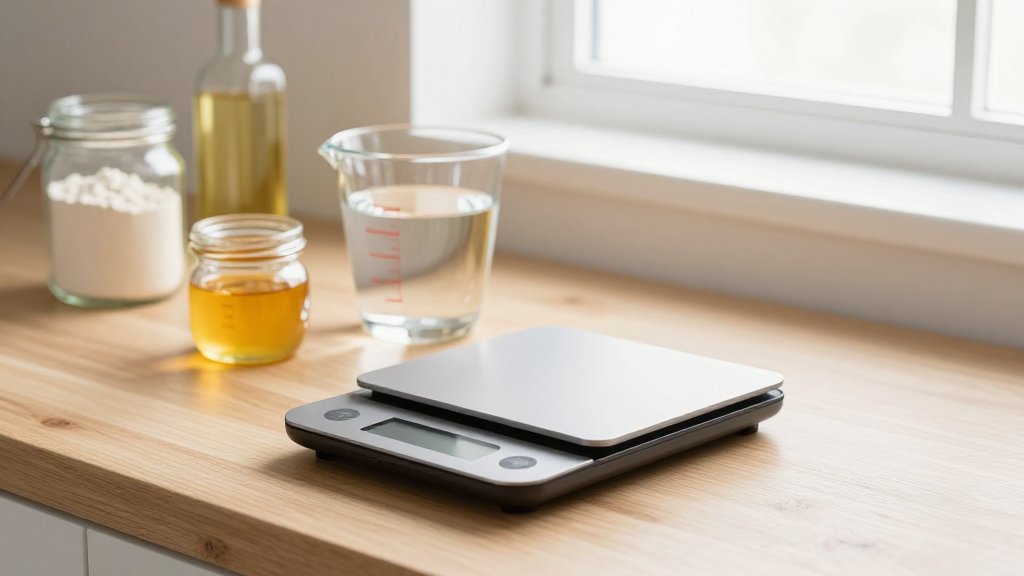
Grams to ml only line up when the liquid is water. Weigh out 100 grams of water and you get exactly 100 ml, every single time. Pour in flour, oil, or honey instead and that tidy match falls apart, sometimes by half.
The culprit is density, which is just how much mass gets packed into a given space. Grams measure weight and ml measure volume, and water is the rare ingredient that sits at 1 gram per ml. That one quirk is why grams to ml and ml to grams throw off so many recipes and dosing charts.
Why grams and ml drift apart
Density is mass divided by volume, and every ingredient has its own. A cup of feathers and a cup of sand take up the same room, but the sand weighs far more. Kitchen ingredients behave the same way, so the same volume can hide very different weights.
A milliliter of water weighs exactly one gram. Nothing else in your kitchen plays that fair.
Because water anchors the metric system at 1 gram per ml, it is the only ingredient where grams and ml are interchangeable. Move to anything lighter or heavier and you need its density to convert. That is the whole reason a single grams to milliliters rule cannot exist.
How many grams in a ml, ingredient by ingredient
Here is where the numbers get useful. The table below shows how many grams in a ml you get for the staples most recipes lean on, from airy flour at 0.53 grams to thick honey at 1.42 grams. All of these come from published cooking density data.
| Ingredient | Grams per ml | 100 ml weighs |
|---|---|---|
| Water | 1.00 | 100 g |
| Milk | 1.03 | 103 g |
| Honey | 1.42 | 142 g |
| Sugar | 0.85 | 85 g |
| Flour | 0.53 | 53 g |
| Oil | 0.92 | 92 g |
| Butter | 0.96 | 96 g |
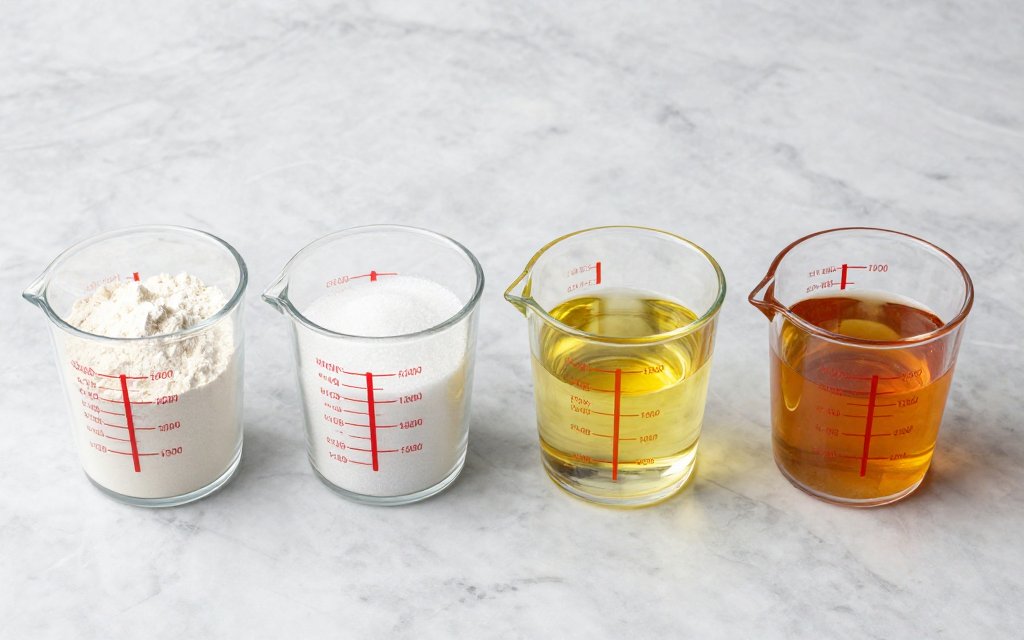
Grams to ml conversion for common kitchen liquids
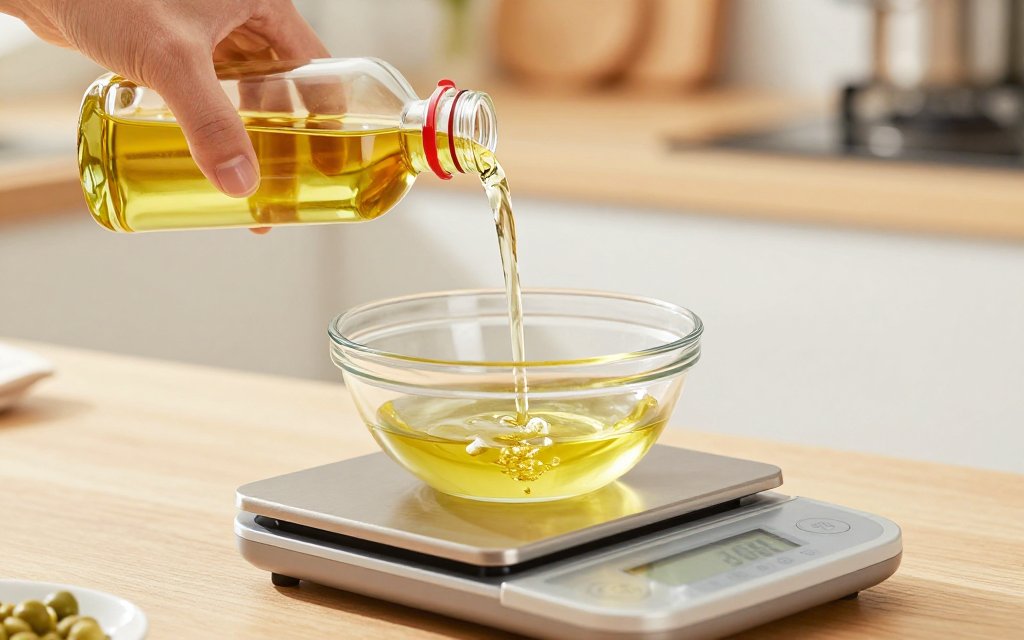
Oil is the classic trap. Most cooking oils land around 0.91 to 0.92 grams per ml, so a tablespoon weighs about 13.6 grams and a cup runs near 218 grams, lighter than the same cup of water. If a recipe gives oil in grams and you measure by volume, you will overpour.
Milk tips the other way at about 1.03 grams per ml, so it weighs a touch more than water. Honey is the heavyweight at roughly 1.42 grams per ml, which means 100 ml of it weighs 142 grams. Any grams to ml conversion for these liquids has to start with the right density, not a blanket 1 to 1.
Swap flour for honey at the same volume and the weight nearly triples, from 53 grams to 142 grams per 100 ml.
What 240 ml to grams looks like
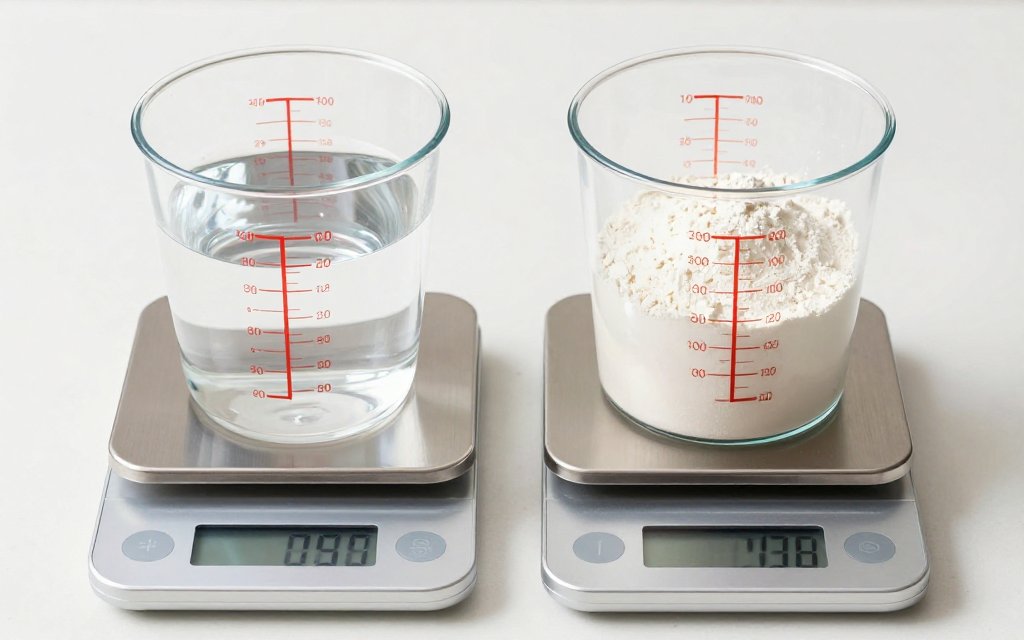
One US cup is about 240 ml, so it makes a clean test case. Fill that cup with water and you have roughly 240 grams. Fill it with honey and you are closer to 341 grams, while the same cup of flour is only about 127 grams. Working the 240 ml to grams math for each ingredient is the only way to stay accurate.
What getting this wrong costs you
Guessing here is not free. Overpouring oil by 20 grams a batch adds up across a week of cooking, and a bottle you thought would last a month empties sooner. For a small bakery running dozens of loaves a day, a steady 10 percent flour overage is money walking out the door.
The bigger cost is failed food. Bread that gets too much flour turns dense and dry, and a cake with too little sugar collapses. Weighing in grams removes the guesswork, which is why serious bakers weigh almost everything. Our flour cups to grams guide and sugar in grams chart show how far volume can drift.
Weigh it instead of guessing
The fix is simple. Keep a scale set to grams and weigh ingredients straight into the bowl, and the density problem disappears. When a recipe only gives volume, reach for a milliliters to grams calculator or a converter that knows each ingredient, like our grams to ounces converter, so you are not stuck doing math mid recipe. For bulk staples, our pounds to grams chart covers the larger jumps.
Common questions about grams and ml
Is grams the same as ml?
No. Grams measure weight and ml measure volume, so is grams the same as ml only holds true for water at 1 gram per ml. For every other ingredient you need its density to convert between the two.
How many grams in 1ml?
It depends on what you are measuring. For water, 1 ml is 1 gram. For oil it is about 0.92 grams, for milk about 1.03 grams, and for honey about 1.42 grams. So how many grams in 1ml always tracks the ingredient's density.
How do I convert grams to milliliters?
Divide the weight in grams by the ingredient's density in grams per ml. Honey at 142 grams divided by 1.42 gives 100 ml. That single step is all any grams to milliliters conversion needs, and a milliliters to grams conversion just runs it in reverse.
Does ml to grams change for every ingredient?
Yes. Because density varies, ml to grams changes with each ingredient, and there is no universal grams equivalent to ml. Water is the only 1 to 1 case, which is exactly why weighing beats measuring by volume.
Tired of guessing whether grams and ml line up? Point your phone at the bowl and let Scale for Grams estimate the weight from a photo in seconds, no measuring cup needed. Get the app here: iOS.
Scale for Grams
Need to Weigh Something?
Download Scale for Grams and get an AI weight estimate from a photo in seconds.