Salmon Serving Size and Salmon Protein, by the Gram
A salmon serving size is 6 ounces of raw fillet per person, about 170 grams that cooks to 4.5 ounces. Here are the per person portions, raw versus cooked weights, and the salmon protein and calorie numbers by the gram.
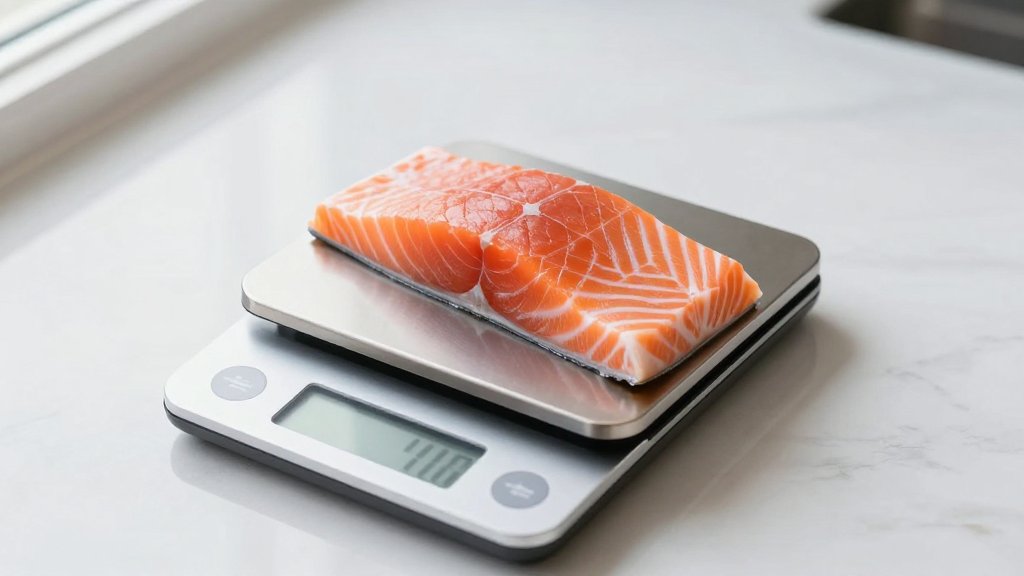
A good salmon serving size starts at 6 ounces of raw fillet per person, which is about 170 grams and cooks down to roughly 4.5 ounces on the plate. That single number solves most weeknight guesswork, and it matches how restaurants portion a main course.
Weigh the fillet before it hits the pan and the salmon portion size math gets simple. The raw weight is what you shop by, because a fillet loses a fifth of its weight or more once it cooks. Protein and calories both follow from that cooked weight, so they matter when you track macros.
What a Standard Salmon Serving Size Weighs
For a main course, plan on 6 ounces of raw salmon per adult, or 170 grams. Lighter eaters do fine with 3 to 4 ounces, while big appetites want 6 to 8 ounces. A cooked portion the size of a deck of cards is only about 3 to 3.5 ounces, so the 6 ounce raw target lands well above the bare minimum. If a recipe speaks in ounces, a quick grams to ounces check keeps your scale and your recipe on the same page.
One pound of raw salmon feeds about four people at a modest portion, or two hungry ones. Always weigh before cooking, never after.
How Much Salmon per Person for Dinner
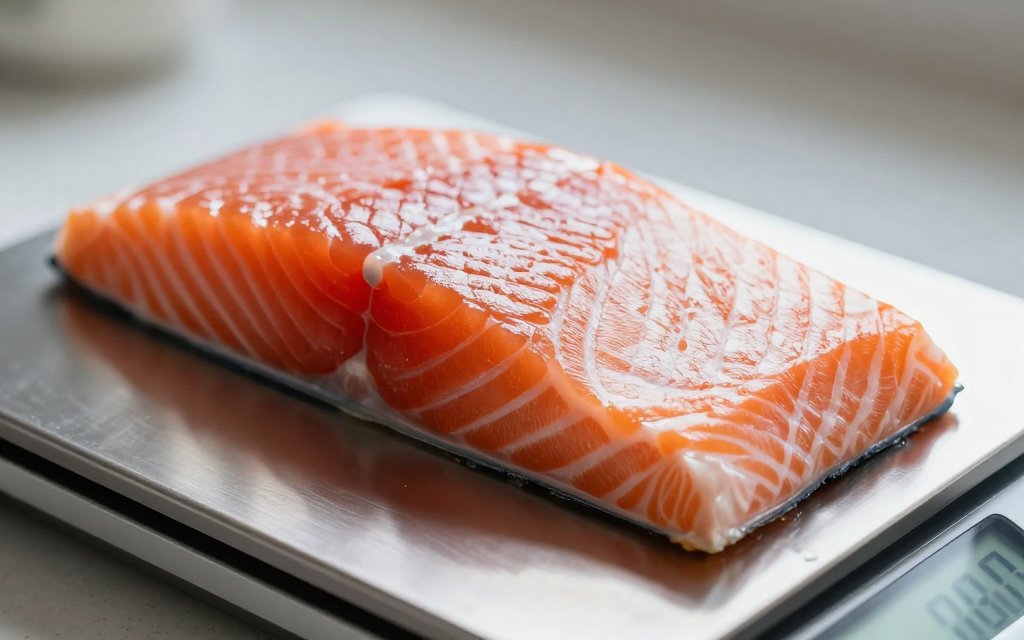
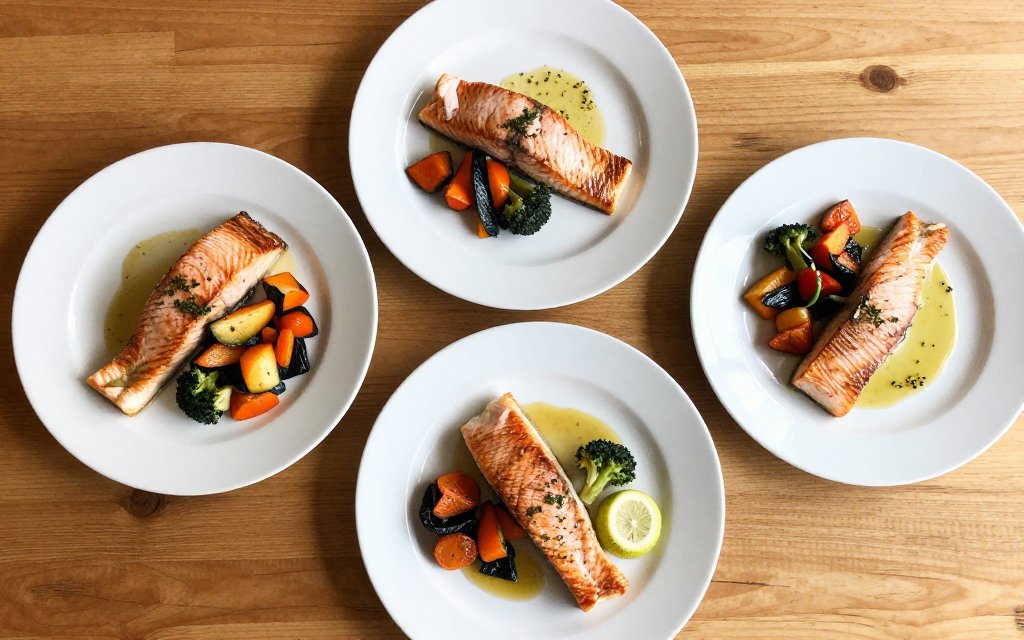
Serving a table? Six to eight ounces of boneless fillet per adult is the standard, and children ages 6 to 12 do well with 3 to 4 ounces. For a buffet with other mains, drop to 4 to 5 ounces a head, and for a first course, 2 to 3 ounces is plenty. Not sure how many grams in an ounce? It is about 28, so 6 ounces is close to 170 grams.
Buying a whole fish changes the math, because bones and skin are not edible. A boneless fillet yields about 85 to 90 percent, a dressed fish 55 to 60 percent, and a whole bone-in fish only 40 to 45 percent. A 10 pound whole salmon leaves roughly 4 to 4.5 pounds of meat, enough for 8 to 10 servings.
| Meal type | Raw per person | Cooked |
|---|---|---|
| Light meal | 3-4 oz | ~3 oz |
| Standard dinner | 6 oz | ~4.5 oz |
| Hearty plate | 8 oz | ~6 oz |
| Buffet, many mains | 4-5 oz | ~3.5 oz |
Raw vs Cooked Salmon Weight
Salmon shrinks as water leaves the flesh, so the cooked piece always weighs less than what you bought. Pan searing and grilling take off about 20 to 25 percent, baking 15 to 20 percent, and gentle poaching only 10 to 15 percent. An 8 ounce raw fillet lands near 6 ounces cooked, and a 6 ounce raw fillet finishes around 4.5 to 5 ounces. The same shrink logic drives the steak serving size rules, just with a leaner fish.
Shop by raw weight every time. A scale reading before cooking is the only number that predicts what ends up on the plate.
Salmon Protein and Calories by the Gram
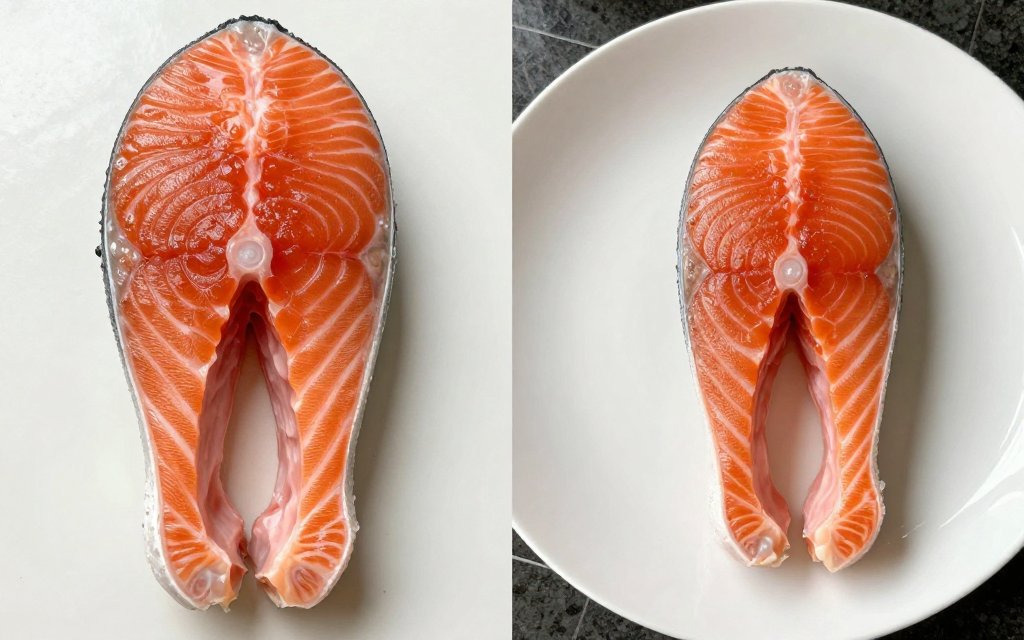
Here is where the salmon protein numbers earn their keep. Every ounce of cooked salmon carries about 6 grams of protein, so a 3 ounce cooked serving of farmed Atlantic gives roughly 18.8 grams for 175 calories. Sockeye is leaner at 22.5 grams of protein and 133 calories for the same 3 ounces, and coho sits between them at 20.7 grams and 152 calories.
Salmon calories per ounce run about 58 for farmed Atlantic and closer to 44 for sockeye, which is why grilled salmon calories add up faster with fattier cuts. A 6 ounce cooked Atlantic fillet lands near 350 calories with 37.6 grams of protein, while the same size sockeye is about 265 calories and 45 grams of protein.
Cooking concentrates protein because water leaves but the protein stays. Three ounces of raw salmon has about 17.4 grams of protein, and the same piece cooked has 18.8 grams. On the salmon nutrition side, a 4 to 6 ounce serving of king or sockeye delivers roughly 1,500 to 2,000 milligrams of EPA and DHA omega 3s, well past the 250 milligram daily average federal guidance aims for.
| Salmon type | Protein (g) | Calories |
|---|---|---|
| Farmed Atlantic | 18.8 | 175 |
| Sockeye | 22.5 | 133 |
| Coho | 20.7 | 152 |
What This Means for Your Grocery Budget and Goals
Turn the shrink rate into a shopping rule. If you want 6 ounces of cooked salmon on each plate, buy about 8 ounces of raw fillet per person, since roughly a quarter of the weight cooks away. A 1 pound fillet then covers two hearty servings, and a 3 pound side feeds six at a dinner party. If you rotate proteins, line these up against chicken breast portions to plan a week.
The macros drive the other half of the budget. Hitting a 30 gram protein target takes about 5 ounces of cooked salmon at 6 grams per ounce, and the guidelines suggest 8 ounces of cooked seafood per week, or two 4 ounce servings, with salmon named a Best Choice fish. Weigh each portion once and you stop overbuying, which is where the real savings show up.
Weigh once, then buy once. A quick gram reading before you shop turns portion guessing into a grocery total you can predict.
Common Questions About Salmon Portions
How many ounces of salmon per person should you buy?
For a main course, buy 6 to 8 ounces of raw fillet per adult and 3 to 4 ounces for younger children. If salmon shares the plate with other mains, 4 to 5 ounces is enough. Shop by raw weight, since the fillet shrinks once it cooks.
How much protein in salmon per serving?
A 3 ounce cooked serving holds about 18.8 grams for farmed Atlantic and 22.5 grams for sockeye. Scale that up and a 6 ounce cooked fillet clears 37 grams. That makes salmon an easy way to hit a protein goal without a huge plate.
How much smoked salmon per person at brunch?
Smoked salmon is richer and sliced thin, so 2 to 3 ounces per person is a generous brunch portion. For a bagel spread with other toppings, 1.5 to 2 ounces holds up fine. Cured and smoked fish also weigh more per bite than a plain cooked fillet.
What is a typical salmon fillet serving size?
A single salmon fillet serving size is 6 ounces raw, close to 170 grams, which cooks down to about 4.5 ounces. Grocery fillets often run 8 ounces or more, so one large fillet can be a serving and a half. Split oversized fillets before cooking to keep portions even.
Getting a salmon serving size right comes down to one honest gram reading before the fillet ever touches heat. Scale for Grams estimates the weight of a fillet, a portion, or a whole side from a single photo, so you can buy the right amount and portion it without hunting for a kitchen scale. Get the app here: iOS.
Scale for Grams
Need to Weigh Something?
Download Scale for Grams and get an AI weight estimate from a photo in seconds.