Coffee to Water Ratio and How Much Coffee Per Cup
The coffee to water ratio decides whether your cup reads flat or balanced. Here are the exact grams per cup for drip, pour over, french press, and cold brew, plus a simple scale trick to hit it every time.
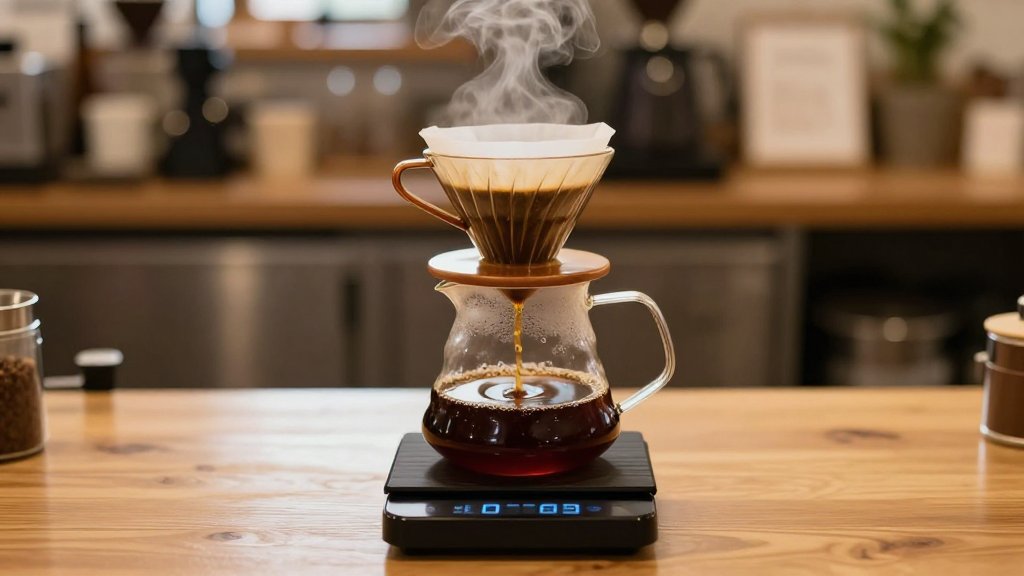
Weigh your coffee and your water instead of scooping by feel, and the difference shows up in the very first sip. The coffee to water ratio is the single number that decides whether a cup tastes flat, sour, or balanced, and it all comes down to grams. Most of us pour by eye, then wonder why today's pot tastes nothing like yesterday's.
Here's the short version. Coffee pros brew somewhere between 1 gram of coffee for every 15 to 18 grams of water, a range the Specialty Coffee Association baked into its Golden Cup standard. Food Network puts the everyday sweet spot at 60 grams of coffee per liter, roughly 1:17. Lock that in once and every cup after it tastes the same.
What the coffee to water ratio actually means
A ratio like 1:16 just means 16 grams of water for every gram of ground coffee. Because it's measured by weight, it holds at any size: scale both numbers up and the strength stays put. That's the reason a kitchen scale beats a scoop, since ground coffee density shifts with roast and grind.
The numbers behind the common ratios are easy to keep in your head. At 1:16 you're using about 62.5 grams of coffee per liter, at 1:17 it's 58.8 grams, and at 1:18 it slips to 55.6 grams. Lower ratios pour stronger and bolder, higher ratios come out lighter and cleaner.
One gram of coffee to 16 or 17 grams of water is the window most cafes rarely leave. Everything past that is fine tuning to taste.
How much coffee grounds per cup, in grams
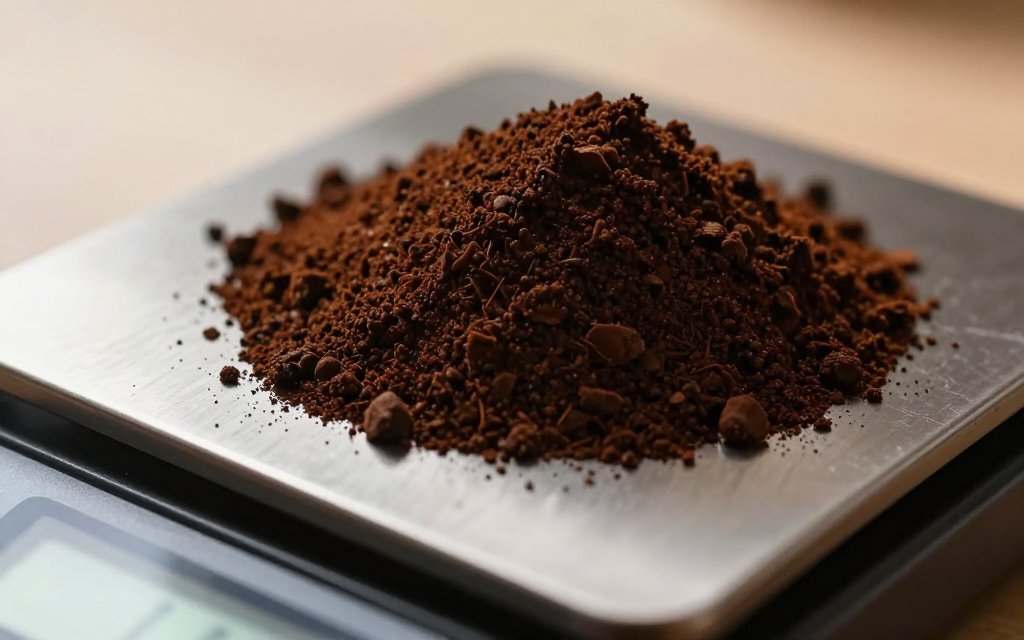
Wondering how much coffee grounds for one cup? The old SCAA answer is 10 grams for a 6 ounce cup, which works out to about 2 level tablespoons. A smaller 5 ounce cup wants roughly 8.3 grams, and the European standard runs 7 grams per 125 milliliters, according to the Espresso and Coffee Guide.
Watch that word cup, though. A coffee maker's cup is usually 5 or 6 ounces, not a full 8 ounce measuring cup, so a 12 cup carafe holds closer to 60 ounces than 96. That gap is exactly why so many pots come out weak and watery.
If you would rather scoop, one level tablespoon of grounds weighs about 5 grams, and you can double check any dose with a grams to tablespoons converter. So how many tablespoons of coffee per cup? Around 2 for a standard 6 ounce cup. The trap is that a heaping spoon can hold 7 grams, and those extra grams pile up fast across a full pot.
The good news is that the grams of coffee per cup barely move once you fix your ratio. Here's what a few common pot sizes call for.
| Cup count | Coffee grams | Tablespoons |
|---|---|---|
| 1 (6 oz) | 10 g | 2 tbsp |
| 8 | 67 g | 13 tbsp |
| 10 | 83 g | 16 tbsp |
| 12 | 100 g | 19 tbsp |
Ratios by brew method, from pour over to french press
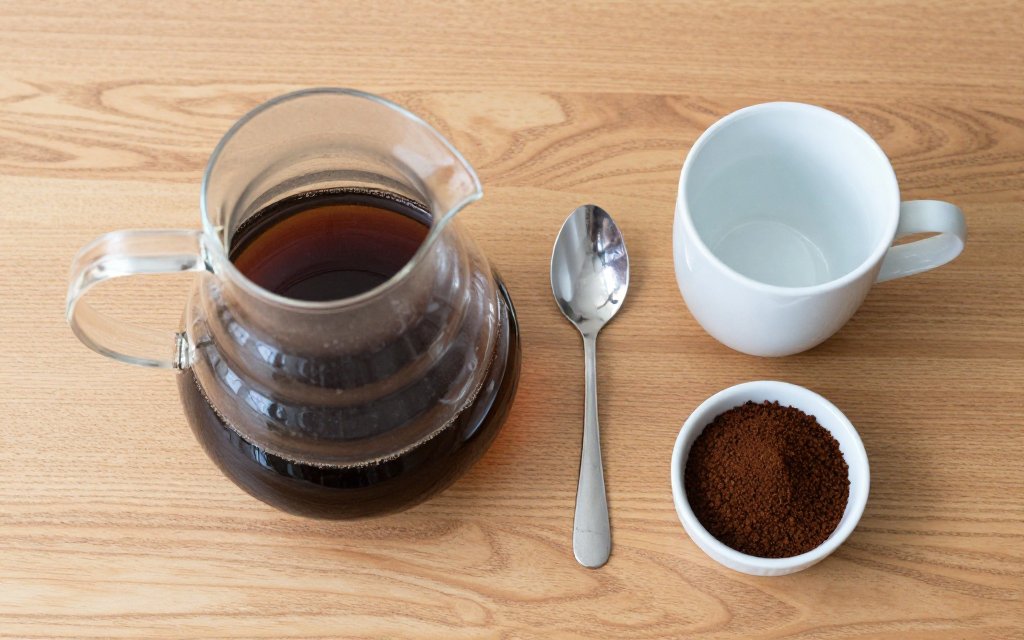
Drip and pour over sit right on the golden ratio. A pour over coffee ratio of 1:16 to 1:17 gives a clean, bright cup, so 25 grams of coffee to 400 grams of water fills a 12 ounce mug nicely. Nudge it to 1:15 if you like more punch.
Immersion methods run stronger. A french press ratio sits nearer 1:14 to 1:15, because the grounds soak in the water the whole time instead of passing through in a rush. For a standard 1 liter press, that lands around 60 to 70 grams of coffee.
| Method | Ratio | Per liter |
|---|---|---|
| Pour over | 1:16 | 62 g |
| Drip | 1:17 | 59 g |
| French press | 1:15 | 67 g |
| Cold brew RTD | 1:8 | 125 g |
| Cold brew conc. | 1:5 | 200 g |
Why french press tastes stronger than drip
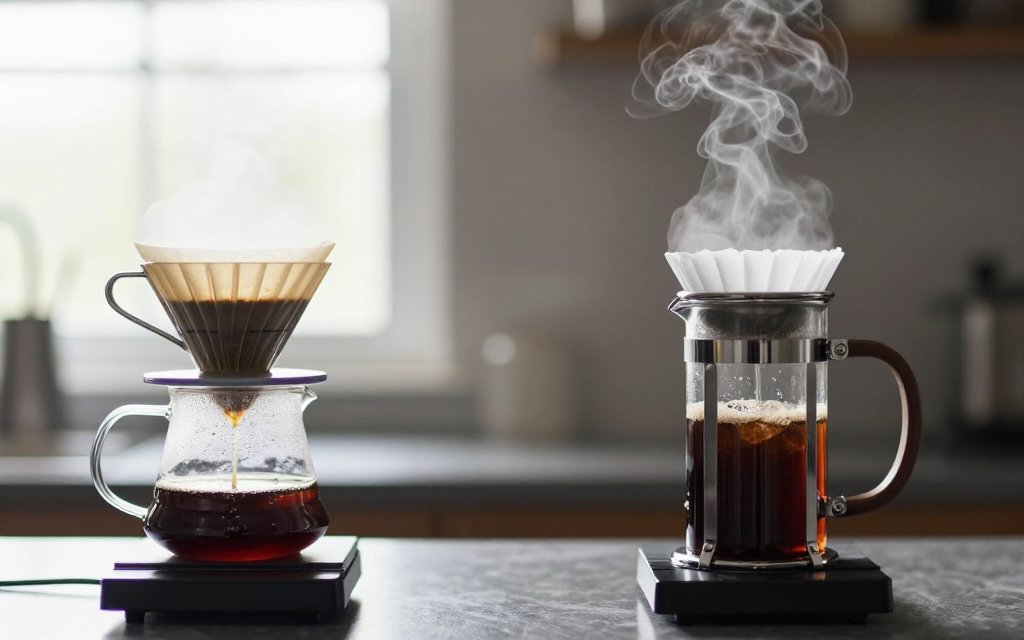
Two things stack up here. The lower ratio packs in more coffee, and the long steep pulls more flavor out of every gram. Drip water only touches the grounds for a few minutes, so the same beans give you a lighter, softer cup.
The cold brew coffee ratio is a different animal
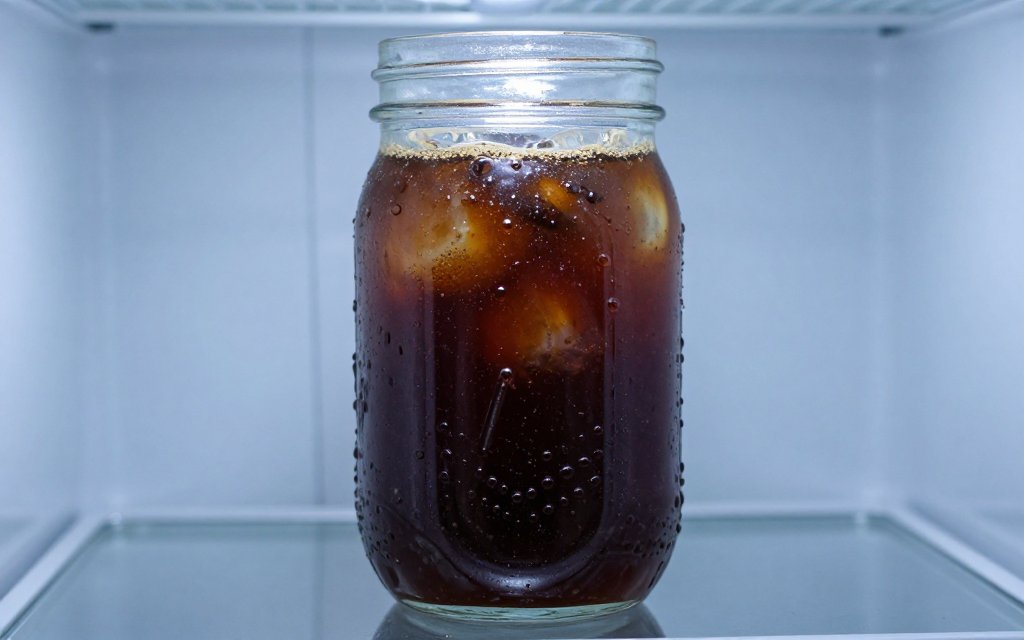
Cold brew skips heat entirely, so it leans on more coffee and a lot more time. A 1:8 ratio makes a ready to drink batch, which is 125 grams of coffee to 1 liter of water in a jar. Want a concentrate to stash and cut later? Drop to 1:5.
Grind it coarse, about the texture of raw sugar, and steep in the fridge for 12 to 24 hours, with 14 to 16 hours as a safe first target. Shorter and it reads thin, and much past a day the flavor turns muddy.
Cold brew uses roughly twice the coffee of a hot pour over, then swaps a four minute brew for a 16 hour soak in the fridge.
What dialing in the ratio saves you
Weighing your dose is not fussiness, it's math that lands on your grocery bill. A bag of coffee usually holds 340 grams, or 12 ounces, and how far it stretches depends entirely on your ratio.
Say that 12 ounce bag holds 340 grams. At a balanced 1:17, a big 355 milliliter mug takes about 21 grams, so one bag brews close to 16 mugs. Over scoop to a heavy 1:12 and each mug jumps to roughly 30 grams, which cuts the same bag down to about 11 mugs. If the units trip you up, a grams to ounces converter sorts it in a second.
There's a flavor cost on top of the money. Under dosing to save a few grams usually just makes weak, sour coffee you don't finish, so you brew a second cup and spend the savings anyway. For more on the weights, see our grams to ounces chart.
How to nail the ratio without gear
No scale on the counter right now? You can still get close. Two level tablespoons per 6 ounce cup lands you in the right neighborhood, and a phone app can estimate a pile of grounds by weight straight from a photo when you're truly stuck.
The honest fix is to weigh once and then remember the number. Fill your usual mug with water, weigh it in grams, divide by 16 or 17, and that's your coffee dose from here on. Write it on the side of the bag so you never guess again.
Coffee ratio questions people ask
How much coffee per cup should I use?
For a standard 6 ounce cup, use about 10 grams of ground coffee, or 2 level tablespoons. If your mug runs bigger, weigh the water and divide by 16 or 17 to get the grams. Go up for bolder, down for milder.
How many tablespoons of coffee per cup of coffee?
Roughly 2 tablespoons per 6 ounce cup, since one level tablespoon of grounds is about 5 grams. Tablespoons stay rough, though, because a heaping spoon can hold 7 grams. A scale takes the guessing out of it.
What is the best coffee to water ratio calculator method?
The simplest coffee to water ratio calculator is a scale and a bit of division. Weigh your water in grams, divide by your target ratio, and brew that many grams of coffee. For 500 grams of water at 1:16, you would grind about 31 grams.
Is more coffee always stronger?
More coffee raises strength up to a point, but grind size and brew time matter just as much. A very fine grind or a long steep can over extract and turn bitter even at a normal ratio. Change one thing at a time and taste as you go.
Need to weigh your coffee dose fast? Scale for Grams gives you an AI powered weight estimate from a photo in seconds, so you can hit your coffee to water ratio without digging out the kitchen scale. Get the app here: iOS.
Scale for Grams
Need to Weigh Something?
Download Scale for Grams and get an AI weight estimate from a photo in seconds.