Here's How Much Yeast in a Packet, in Grams and Teaspoons
A standard packet of yeast weighs 7 grams and holds 2 1/4 teaspoons. Here are the gram and teaspoon numbers for strips, jars and bags, plus fresh yeast swaps, water temperatures and what buying in bulk saves per loaf.
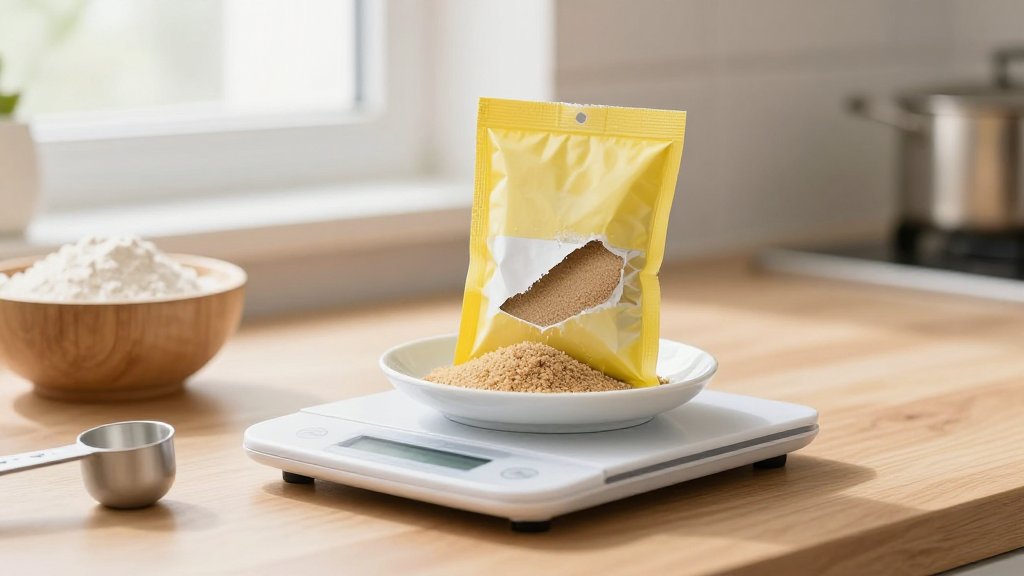
A standard packet of yeast weighs 7 grams, or 1/4 ounce, and holds about 2 1/4 teaspoons. That's true for active dry, instant and rapid rise envelopes alike, so the number on your recipe card doesn't change when the brand does.
Most people asking how much yeast in a packet are standing over a jar with a recipe that only says "1 envelope." Weigh out 7 grams and you're done. If you don't have a scale handy, 2 1/4 level teaspoons gets you within a few tenths of a gram.
How much yeast in a packet, by weight and by spoon
Red Star lists each dry packet at 0.25 ounce, or 7 grams, and describes it as about 2 1/4 teaspoons. King Arthur calls the same 7 grams "a slightly heaped 2 teaspoons," which is the same thing said by someone holding a spoon. Divide 7 by 2.25 and one level teaspoon of dry yeast comes out near 3.1 grams.
How many grams of yeast in a packet, exactly?
Seven grams is the label weight, rounded from 1/4 ounce (7.09 grams). Packets are filled by weight, not volume, so a slightly fluffy pour can read 2 1/4 teaspoons and still weigh a touch under. For one loaf that difference won't show; for a batch scaled up to eight loaves it starts to.
How much yeast in a package, strip or jar
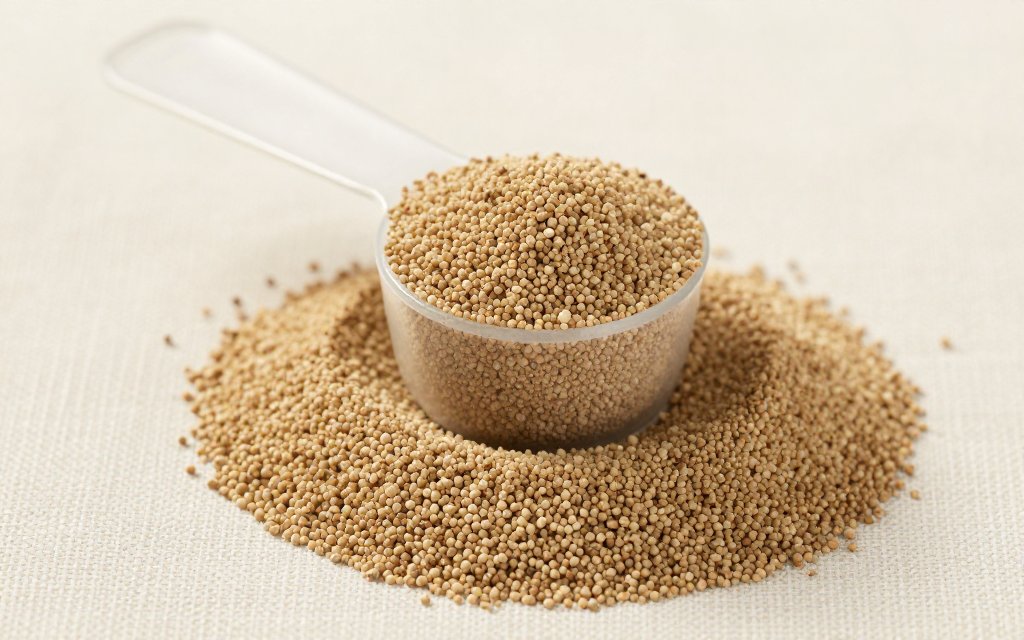
Supermarket yeast usually comes as a strip of three packets, a 4 ounce jar or a 1 pound bag. A three-packet strip is labeled 0.75 ounce, so it's simply 21 grams split three ways. The jar and bag are where conversions get handy, because recipes still talk in envelopes.
| Amount | Grams | Teaspoons |
|---|---|---|
| 1 packet | 7 g | 2 1/4 tsp |
| Strip of 3 packets | 21 g | 6 3/4 tsp |
| 1 teaspoon | about 3.1 g | 1 tsp |
| 1 tablespoon | about 9.3 g | 3 tsp |
| 4 oz jar | 113 g | about 36 tsp |
| 1 lb bag | 454 g | about 146 tsp |
A 4 ounce jar works out to roughly 16 packets' worth, and a 1 pound bag to about 65. If you'd rather sanity check those numbers in other units, the grams to ounces converter does the 113 grams to 4 ounces math for you.
Quick rule: one packet is 7 grams, a strip is 21 grams, and a 4 ounce jar holds about 16 packets. Weigh it once and you'll never need the envelope again.
Instant yeast vs active dry yeast, and when to swap
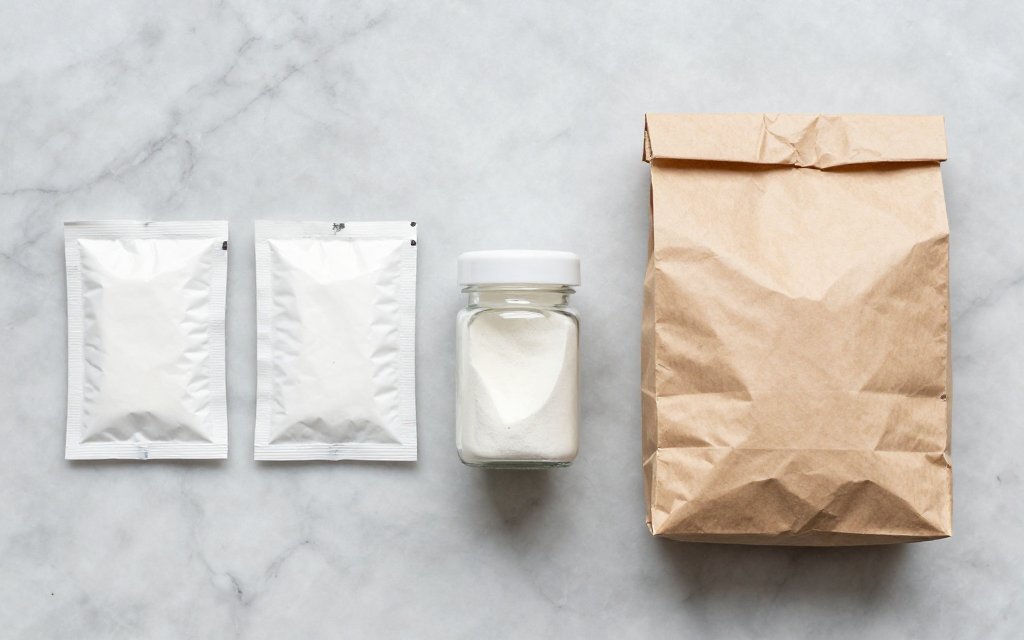
King Arthur's bakers swap the two 1:1, by weight or by volume, so a 7 gram packet of one replaces a 7 gram packet of the other. The real difference is speed. Active dry starts a little slower, so they add 15 to 20 minutes to a rise that the instant version finishes in about an hour.
Do you still need to proof active dry?
Not usually. Older drying methods left a lot of dead cells, which is why recipes told you to dissolve the yeast first and watch for foam. Modern active dry is gentler made and can go straight into the flour, and skipping the proof saves about 10 minutes.
Active dry yeast for pizza dough versus instant
Pizza dough follows the same rule as a sandwich loaf. If your recipe was written with active dry yeast for pizza dough and you only have instant, use the same grams and expect the dough to be ready a bit sooner. Going the other way, with instant yeast for pizza dough swapped out for active dry, just give the rise those extra 15 to 20 minutes.
Fresh yeast to dry yeast without guessing
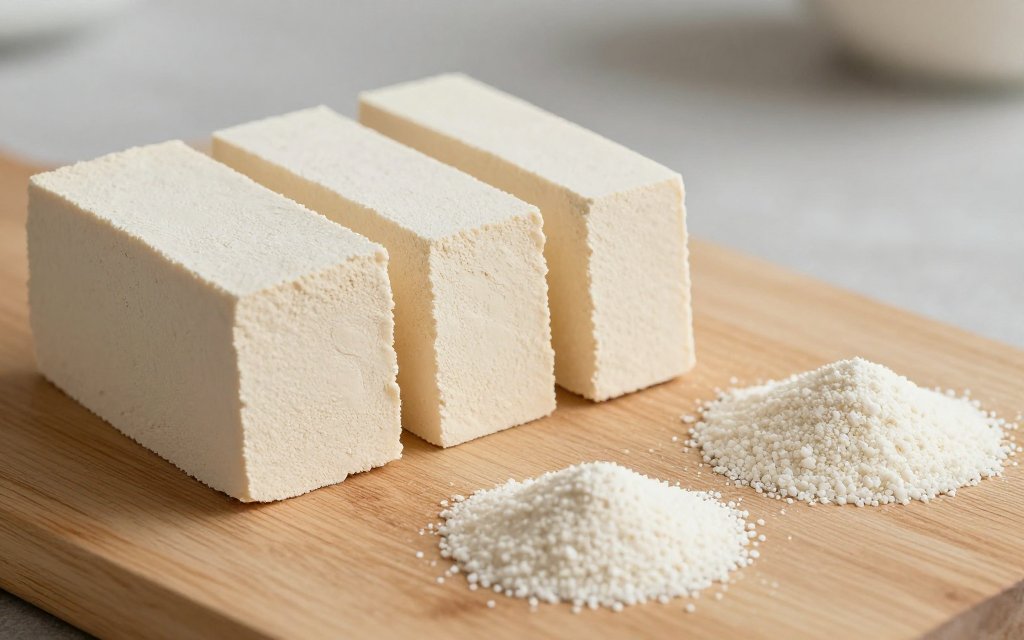
Fresh cake yeast is sold in 2 ounce foil blocks, and Red Star says one block equals three dry packets. That means a third of a cake, about 19 grams, stands in for one 7 gram packet. Put another way, you need roughly 2.7 times as much fresh yeast by weight as dry.
One 2 ounce cake of fresh yeast does the work of three 1/4 ounce dry packets. Cut it into thirds and each piece equals one packet.
Fresh yeast is also the fussiest to keep. Red Star dates it about 5 weeks from production and wants it refrigerated below 45°F. If you freeze it, portion it first into thirds, thaw it overnight in the fridge, and test it before you trust it with a holiday loaf.
What a jar or bag saves you per loaf
Here's where the packet habit costs real money. King Arthur figures a 7 gram serving scooped from a 1 pound bag of instant yeast costs about 11 cents per loaf, against roughly 90 cents for a single supermarket packet. That's 79 cents saved every time you bake.
Bake one loaf of active dry yeast bread or one pizza a week and the gap comes to about $41 a year. Twice a week is over $80. Bulk yeast keeps for years in an airtight container at the back of the freezer, so the usual worry about it dying before you finish the bag mostly goes away.
About 11 cents of yeast from a bag versus about 90 cents from a packet. For a weekly baker, that's roughly $41 a year for the same bread.
Getting the water temperature right
Temperature matters more than the brand. Tasting Table rounds up the common guidance: 105 to 115°F for dissolving active dry, 120 to 130°F when instant goes straight into the flour, and as low as 95°F for fresh yeast. Past about 140°F you risk cooking it.
| Yeast Type | Water Temp | How to Add |
|---|---|---|
| Active dry | 105 to 115°F | Dissolve first or mix into flour |
| Instant | 120 to 130°F | Mix straight into the dry ingredients |
| Fresh cake | 90 to 95°F | Crumble in or dissolve in 1/2 cup water |
Your wrist is a poor thermometer, and so is your digital scale if it's drifting. A quick nickel calibration keeps small weighings like 7 grams honest, and weighing flour with the flour cups to grams chart keeps the yeast to flour ratio where the recipe meant it.
Packet questions bakers ask most
How many teaspoons in a packet of yeast?
About 2 1/4 level teaspoons, which some bakers describe as a slightly heaped 2 teaspoons. If you're measuring from a jar, level the spoon with a knife for the most consistent result.
Can I use a whole packet if my recipe calls for 2 teaspoons?
Yes, for most single loaves. The extra quarter teaspoon is under a gram, and the main effect is a slightly faster rise, so keep an eye on the dough rather than the clock.
Is rapid rise yeast the same size packet?
Yes. Rapid rise and quick rise packets are 1/4 ounce, or 7 grams, just like active dry. Treat them like instant yeast and mix them straight into the flour.
Need to weigh 7 grams of yeast and your scale is buried in a drawer? Download Scale for Grams and get an AI-powered weight estimate from a photo in seconds. Get the app here: iOS.
Scale for Grams
Need to Weigh Something?
Download Scale for Grams and get an AI weight estimate from a photo in seconds.
