Kosher salt vs table salt can make or break a turkey brine recipe
A cup of Diamond Crystal weighs 128 grams and a cup of table salt weighs 288. Here's the turkey brine recipe ratio in grams, wet and dry, so any salt brand gives the same 6% brine and a juicy bird.
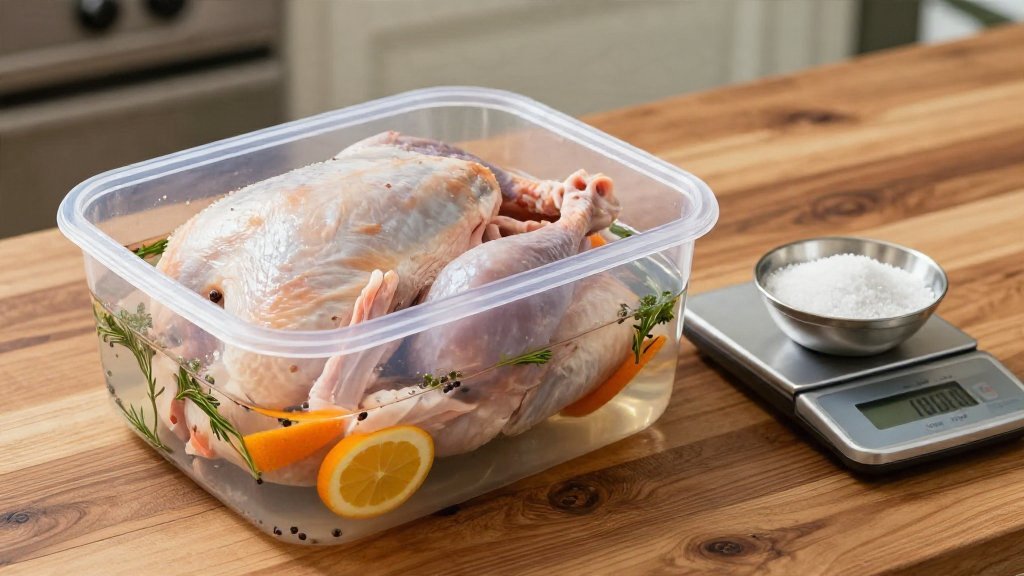
A cup of Diamond Crystal kosher salt weighs about 128 grams. A cup of table salt weighs about 288. Pour the wrong one into a turkey brine recipe and you've more than doubled the salt before the bird even touches the water.
That's why the best brine for turkey is written in grams, not cups. The salt brands don't pack the same way, and a spoon can't tell the difference. A kitchen scale can, and so can a quick check with our grams to ounces converter if your recipe speaks imperial.
Why kosher salt vs table salt changes a turkey brine recipe
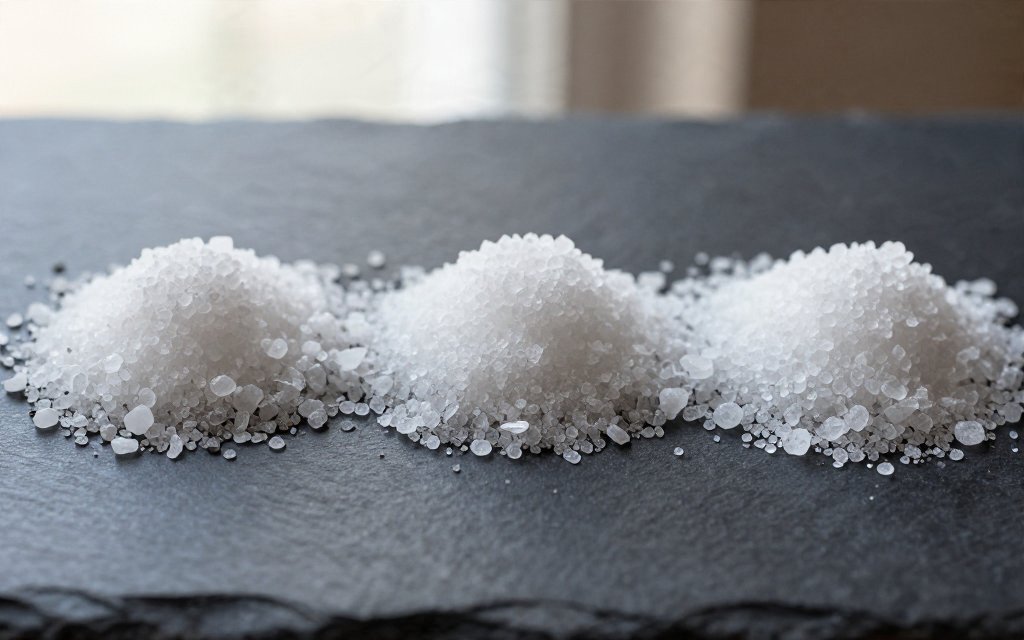
Table salt is made of tiny, dense cubes that settle tight in a spoon. Diamond Crystal flakes are big and hollow, so a spoonful is mostly air. Morton kosher salt sits in between, with flatter, heavier crystals that pack about twice as much salt into the same spoon as Diamond.
The spoon measures air, not salt
King Arthur Baking's ingredient weight chart lists one tablespoon of table salt at 18 grams, Morton kosher at 16 grams and Diamond Crystal kosher at only 8 grams. Scale those up to a full cup and the gap becomes impossible to ignore.
| Salt type | 1 tablespoon | 1 cup |
|---|---|---|
| Table salt | 18 g | 288 g |
| Morton kosher | 16 g | 256 g |
| Diamond Crystal kosher | 8 g | 128 g |
One cup of Diamond Crystal and one cup of table salt look identical in a measuring cup. On a scale, the table salt weighs 2.25 times as much.
The turkey brine ratio that works by weight
J. Kenji López-Alt's Serious Eats brining guide aims for a wet brine turkey solution of around 6% salt by weight. His chart gives 450 grams of salt in 2 gallons of water for an 8 to 12 pound bird, which works out to about 225 grams per gallon.
Grams per gallon for any bird size
Bigger birds need more liquid to stay submerged, so the salt climbs with the water rather than with the turkey's weight. Here's his chart, the one place where the cups stop mattering:
| Turkey size | Water | Salt |
|---|---|---|
| 8 to 12 lb | 2 gallons | 450 g |
| 13 to 17 lb | 2.5 gallons | 570 g |
| 18 to 22 lb | 3 gallons | 675 g |
Turn 225 grams into spoons and the brand problem shows up fast. With King Arthur's numbers, that's about 28 tablespoons of Diamond Crystal (1 3/4 cups), roughly 14 tablespoons of Morton, or about 12 1/2 tablespoons of table salt.
How to brine a turkey without guessing
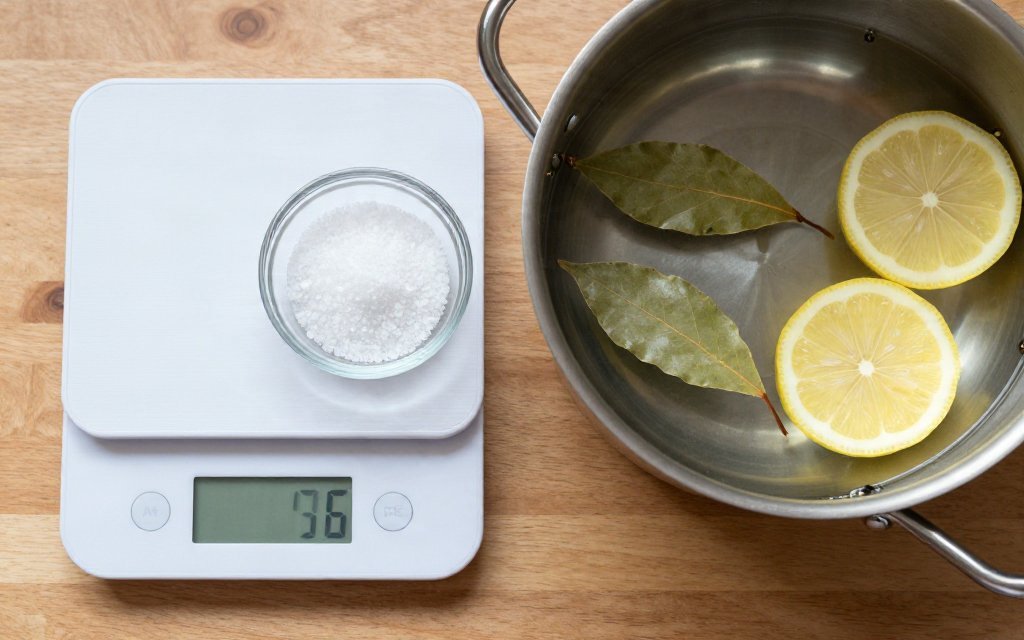
A gallon of water weighs 8.34 pounds, as our water weight guide shows, so you can even weigh the water straight into the container. The rest is simple, and the USDA's brining advice fills in the safety side.
A dry brine turkey recipe by the gram
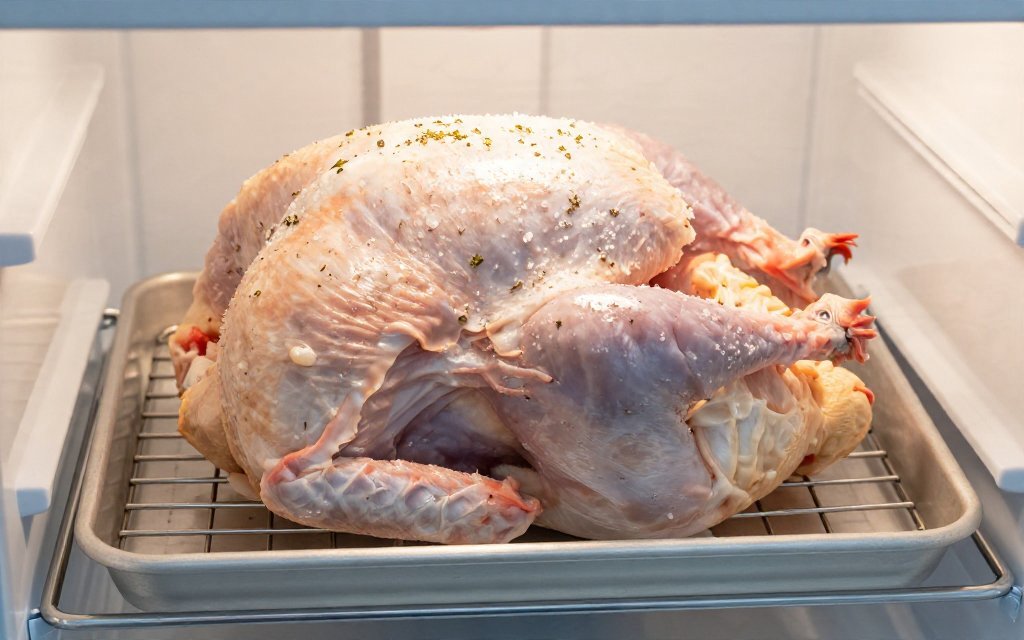
Dry brining skips the bucket. You rub salt straight onto the bird and let it sit in the fridge, and the skin comes out crisper because nothing is soaking it. The trouble is that every dry brine turkey recipe gives salt in teaspoons per pound, and the brand problem comes right back.
Teaspoons per pound, translated
Alexandra Stafford's widely shared method uses 1 teaspoon of Diamond Crystal per pound, about a quarter cup for a 12 pound bird. At 8 grams per tablespoon, that teaspoon weighs about 2.7 grams. Morton gets you the same 2.7 grams in about half a teaspoon, and table salt in a little less than that.
Kenji's dry brine calls for half a cup of Diamond Crystal or six tablespoons of Morton for the whole bird, and he warns you probably won't need all of it.
How long to brine a turkey, and where the USDA draws the line
Serious Eats suggests 12 to 18 hours in a wet brine and 12 to 24 hours uncovered for a dry brine, stretching to three days if you cover the bird loosely. The USDA's own brining guidance, written by FSIS specialist Archie Magoulas, sets the hard ceiling: never brine longer than two days, and keep the turkey and brine at 40°F or colder the whole time.
Don't wash the bird before it goes into the brine. The USDA says rinsing raw poultry splashes bacteria around the sink, and it's not needed for a good result. A fresh turkey only keeps one to two days in the fridge, so plan your shopping around the brine time.
What a salty mistake costs at the table
The American Farm Bureau's 2025 survey put a 16 pound turkey at $21.50, or $1.34 a pound, out of a $55.18 dinner for 10. That one bird is about 39% of the whole meal, and an over-salted turkey can't be fixed once it's cooked.
Here's how it goes wrong. A recipe written for Diamond Crystal says 1 3/4 cups per gallon, about 224 grams. Pour 1 3/4 cups of Morton and you've added about 448 grams, a brine near 12% instead of 6%. Use table salt and it's around 504 grams. The grams don't lie, which is the whole case for weighing.
Same recipe, same cup, three different brines: about 224 grams with Diamond Crystal, 448 with Morton, 504 with table salt.
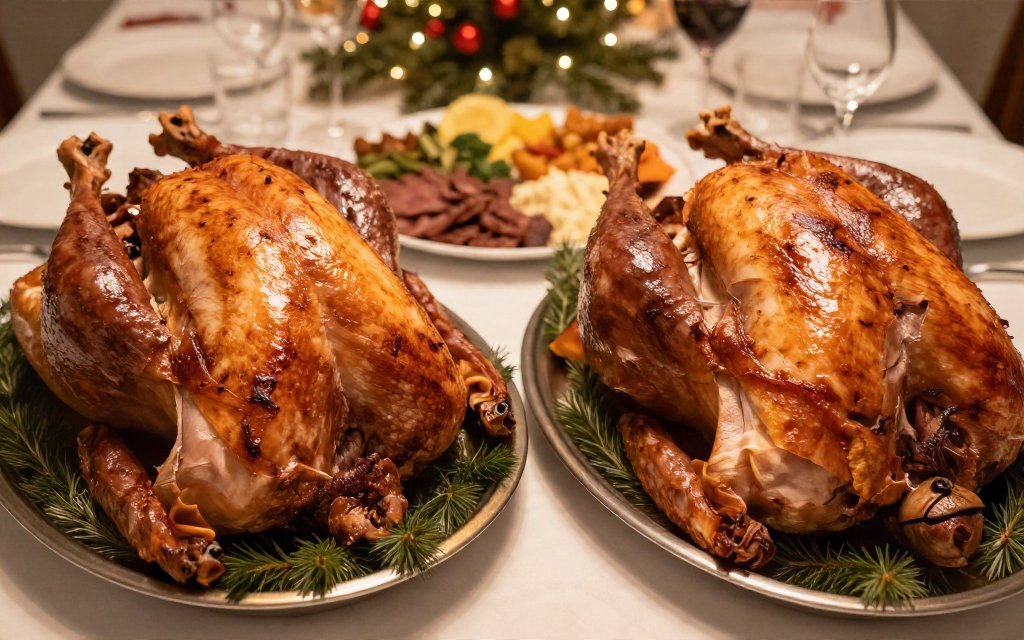
If your scale reads a few grams off, a two-minute nickel calibration check fixes it before the big day. And if you're still deciding on bird size, our turkey per person guide has the pounds worked out.
Turkey brine questions people keep asking
Is kosher salt vs sea salt a fair swap in a brine?
Only by weight. Sea salt comes in everything from fine grains to big flakes, so a cup of one can weigh very differently from a cup of another. Weigh out the same grams your recipe calls for and the crystal size stops mattering.
Can I brine a turkey that was already brined?
Skip it. Pre-brined, self-basting and enhanced turkeys already carry a salt solution, and brining them again usually gives a bird that's too salty to enjoy. Check the label for a salt solution before you mix anything.
Should I rinse the turkey after brining?
Most cooks just pat it dry. If you do rinse, the USDA says to clear the sink area, line it with paper towels, use gentle cold water, and scrub the sink with hot soapy water afterward.
Need to weigh salt for the brine fast? Download Scale for Grams and get an AI-powered weight estimate from a photo in seconds. Get the app here: iOS.
Scale for Grams
Need to Weigh Something?
Download Scale for Grams and get an AI weight estimate from a photo in seconds.
