Weigh this easy pie crust recipe, 3 parts flour to 2 parts butter
Weigh 340 g flour, 227 g butter and 113 g ice water for a flaky double crust. Here's the 3-2-1 ratio in grams, how to scale it to any pan, and why homemade costs about $2.40 while the boxed two-pack runs $3.99 or more.
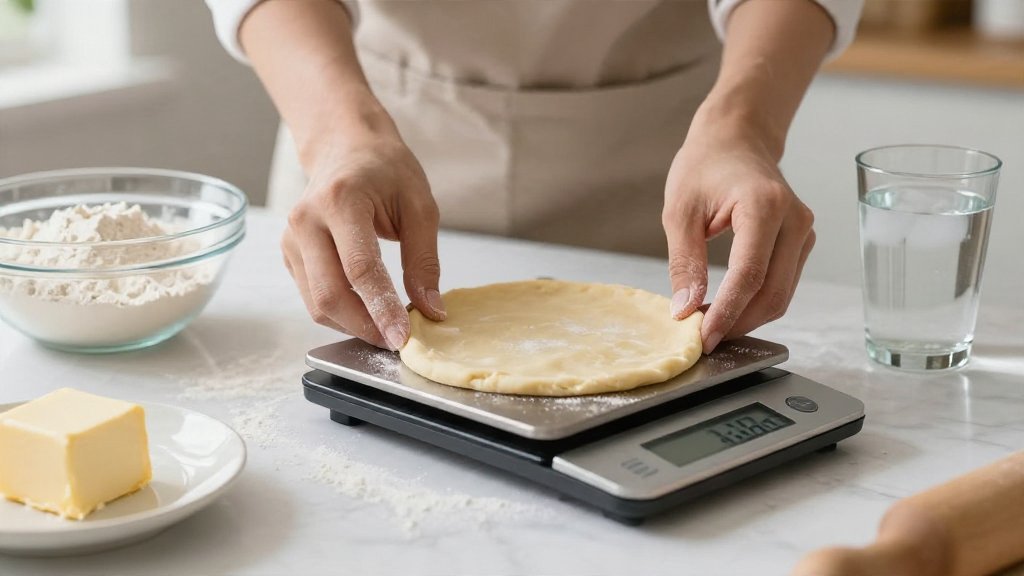
Three parts flour, two parts butter, one part ice water, all measured in grams. That's the whole easy pie crust recipe, and once you weigh it instead of scooping it, the dough comes out the same every time, whether it's your first pie or your fortieth.
Cups are where most crusts go wrong. King Arthur's ingredient weight chart puts a cup of all-purpose flour at 120 grams, but how hard you pack the cup changes what actually lands in the bowl. Put this pie crust recipe on a scale and a double crust takes 340 g flour, 227 g butter and 113 g ice water, which matters with Thanksgiving less than a week out.
The basic pie crust recipe in grams
These numbers follow the version in Andy and Jackie King's book Baking By Hand, as reprinted by The Saturday Evening Post: 12 ounces of chilled flour, 8 ounces of cold unsalted butter, 4 ounces of ice water and 1 teaspoon of fine sea salt. That makes one two-crust pie. In metric it's 340 g, 227 g and 113 g, which you can double check with our grams to ounces converter.
| Ingredient | Single crust | Double crust |
|---|---|---|
| All-purpose flour | 170 g (6 oz) | 340 g (12 oz) |
| Cold butter | 113 g (1 stick) | 227 g (2 sticks) |
| Ice water | 57 g (2 oz) | 113 g (4 oz) |
| Fine salt | 3 g (1/2 tsp) | 6 g (1 tsp) |
The single-crust column is the double cut in half, and it lands on a lucky number. One stick of butter weighs 113 grams, so a pumpkin or pecan pie needs exactly one stick and 170 g of flour. Our guide to why a stick of butter is 113 grams covers the wrapper markings if you're cutting from a block.
Rule of thumb: whatever your butter weighs, use 1.5 times that much flour and half that much water. 200 g of butter means 300 g of flour and 100 g of water.
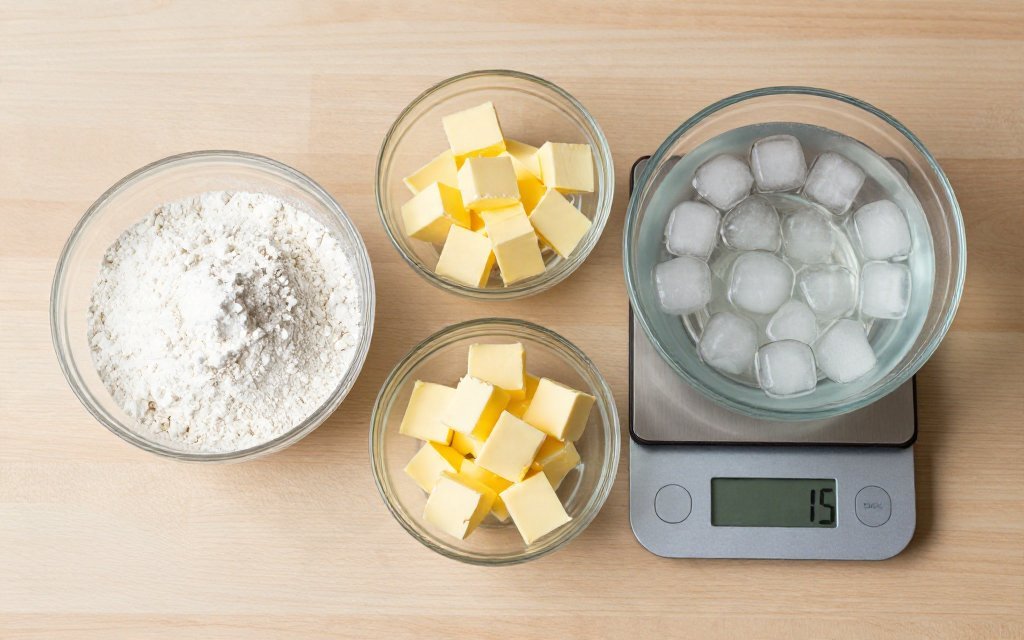
Why the 3-2-1 pie crust only works by weight
The ratio holds only when all three numbers are weights. Chowhound notes the method echoes traditional European pastry technique, where bakers measure by mass rather than volume. Flour is light and airy, butter is dense, and a cup of each weighs something very different.
What a cup-based version would actually weigh
Run three cups of flour, two cups of butter and one cup of water through the King Arthur figures and you'd get 360 g flour, 454 g butter and 227 g water. That's more butter than flour. It would slump and leak in the oven, while the weighed version always keeps flour half again heavier than the fat.
Salt is the sneaky one. A spoonful of Diamond kosher weighs less than half as much as the same spoon of table salt, which is why our kosher salt vs table salt guide says to weigh it. Six grams is six grams, whatever the crystal size.
Keep the water on a short leash
Water is the one number to treat as a ceiling. Chowhound's advice is to add it slowly, just until the dough holds together when pinched, because less water means less gluten and a more tender bite. Set the bowl on the scale, tare it, and pour ice water in a few grams at a time so you know exactly how much went in.
How to make an all butter pie crust from scratch
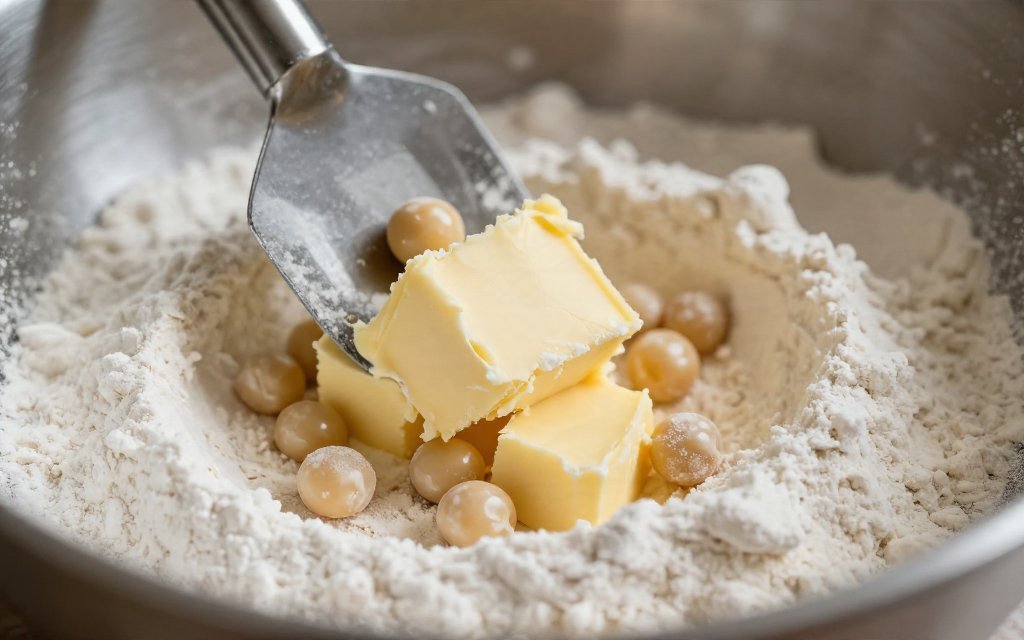
Cold is the whole game. Chowhound calls warm butter a major mistake because it smears into the flour instead of staying in flakes, and it suggests freezing the butter if you tend to handle dough a lot.
Splitting the dough evenly
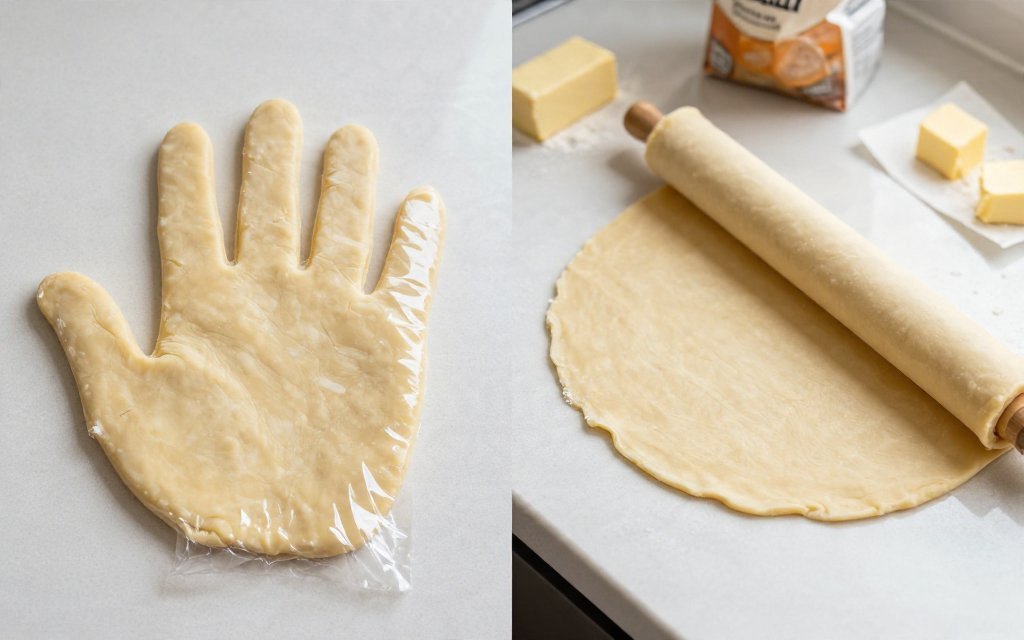
Here a scale pays for itself twice. The full batch weighs roughly 686 g, so each disk should land near 343 g. Guess the split by eye and you often end up with a fat bottom and a skimpy lid, and the thin lid is the one that tears.
The Kings' recipe says the dough needs at least an hour in the fridge before rolling, and overnight is fine. It freezes well too, which makes it a handy make-ahead pie shell recipe: mix on the weekend, roll and bake on the holiday.
What homemade pie crust costs compared with the box
This is where weighing turns into money. Stick butter averaged $3.977 a pound in October 2026, according to the Bureau of Labor Statistics data on FRED's average price series, and all-purpose flour averaged about 54 cents a pound. A double batch uses half a pound of butter and three quarters of a pound of flour.
| Item | Amount | Cost |
|---|---|---|
| Butter | 227 g (0.5 lb) | $1.99 |
| Flour | 340 g (0.75 lb) | $0.40 |
| Homemade total | 686 g dough | About $2.40 |
| Boxed 2-pack | 400 g (14.1 oz) | $3.99 to $4.89 |
Target listed the Pillsbury two-pack at $3.99 on sale and $4.89 regular for 14.1 ounces of dough. Per 100 g, the boxed crust costs $1.00 to $1.22, while the homemade one runs about 35 cents. You also get roughly 70 percent more dough, enough for a thick crimped edge.
Butter is about 83 percent of the cost of an all butter crust. Flour sits near 54 cents a pound, so the butter is the ingredient worth buying on sale and stashing in the freezer before the holidays.
Butter versus lard in the boxed crust
Price isn't the only gap. The boxed crust lists lard and hydrogenated lard as its fat, along with preservatives such as sodium propionate and potassium sorbate. If you want a butter pie crust with nothing else in it, mixing your own is the only way to be sure.
Scaling the pie dough recipe for any number of pies
Because it's a ratio, you can build any batch from the butter you have on hand. Weigh the butter, multiply by 1.5 for flour and by 0.5 for water, and add about 3 g of salt per single crust.
Baking several pies? Weigh the fillings too. Our guide to how many apples go into an apple pie lands on three pounds, and the cup of flour in grams breakdown shows how far a 5 lb bag stretches.
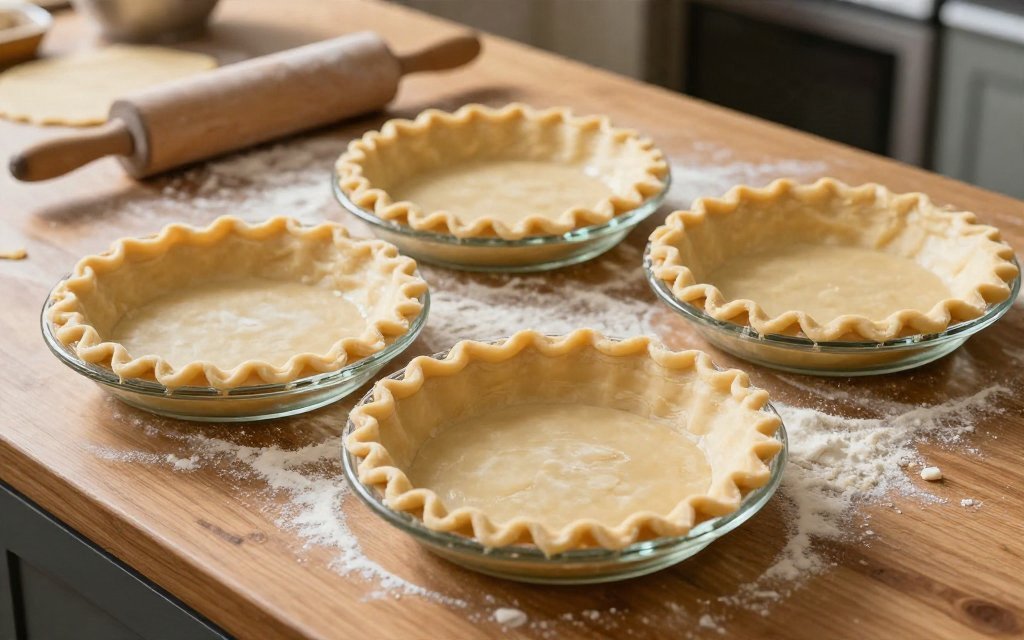
Pie crust questions bakers ask every November
How much flour is in a pie crust recipe?
For one single-crust pie, 170 g of all-purpose flour, which is about 1 1/2 cups minus a tablespoon at 120 g per cup. A double crust needs 340 g. Weighing beats counting cups here because packing can swing the amount.
Can I use shortening instead of butter?
Yes, as long as you swap by weight. King Arthur lists a quarter cup of shortening at 46 g, while the same volume of butter weighs about 57 g. Replace 227 g of butter with 227 g of shortening on the scale, not cup for cup.
Why is my homemade pie crust tough?
Usually too much water or too much handling. Water builds gluten, so add only enough for the dough to hold when pinched. Writing down what the scale showed tells you next time whether you really needed the full 113 g.
Need to check a block of butter or a half-used bag of flour before you start your crust? Download Scale for Grams and get an AI-powered weight estimate from a photo in seconds. Get the app here: iOS.
Scale for Grams
Need to Weigh Something?
Download Scale for Grams and get an AI weight estimate from a photo in seconds.